
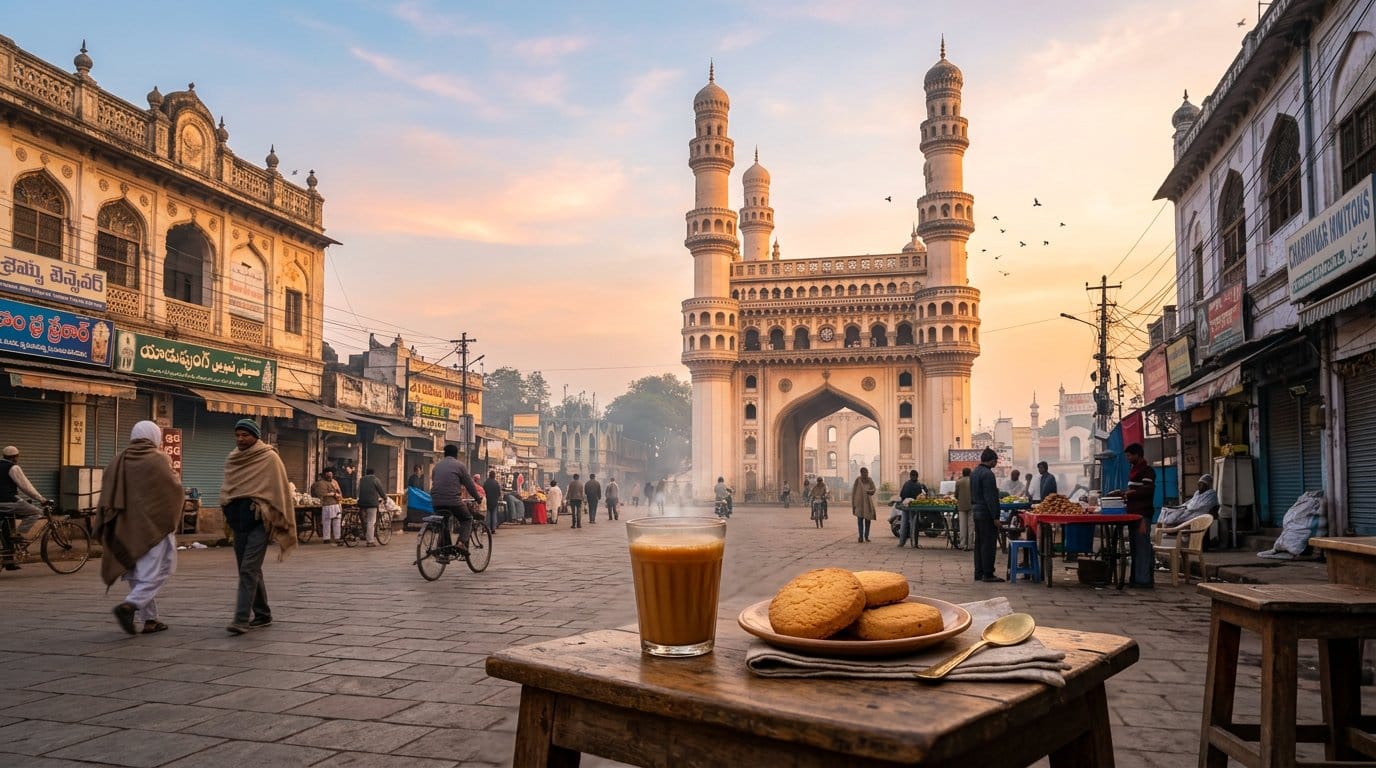
It’s barely 7 in the morning, and Nimrah Café near Charminar is already out of standing room. A glass of Irani chai costs about the same as a metro ticket, the Osmania biscuits on our table disappear faster than the waiter can replace them, and around us, old Hyderabad is simply getting on with its day.
Most state guides bury this stuff under history chapters and statistics. This Telangana travel guide won’t — because our team lives in Hyderabad, and this is exactly what we tell friends who visit: where to go, what to eat, and, just as useful, what to skip.
Here’s the surprising part. India’s youngest state — born on 2 June 2014 — sits on some of the country’s oldest stories. The gap between those two facts is where the good travel happens.
Telangana Travel Guide in 90 Seconds
| What you want to know | Answer |
|---|---|
| Capital | Hyderabad |
| Formed | 2 June 2014 (from Andhra Pradesh) |
| Languages | Telugu (official), Urdu (second official); Hindi and English work fine |
| Districts | 33 |
| Main airport | Rajiv Gandhi International, Shamshabad (24 km from city centre) |
| Best months to visit | October to February |
| Skip unless unavoidable | Mid-April to June — it touches 45°C |
| Offbeat pick | Bogatha Waterfall, Mulugu district |
Why This State Deserves More Than a Weekend
Telangana started modern life with a head start most states would trade for — a capital city that was already a global IT hub on day one. But spend a week here and you’ll notice the present tense keeps bumping into the past.
You’ll eat breakfast under a monument from 1591. You’ll stand inside a fort that once priced diamonds by the size of a man’s fist — traders from Persia and Europe actually queued for that privilege. And an hour from a glass-and-steel tech corridor, you’ll find a temple whose tower bricks float on water. Yes, literally. Tested, proven, and still slightly unbelievable.
That’s the honest pitch. The state isn’t trying to be Goa or Kerala — it’s selling layers, and layers take a few days to appreciate.
Hyderabad: Give the Old City a Full Morning
Don’t do what most visitors do — a 20-minute photo stop at Charminar and off to the mall. The old city rewards slow people.
Charminar and around. Muhammad Quli Qutb Shah raised this arch in 1591, and the bazaars that grew around it never really paused. Get there before 9 AM — by noon the lanes turn into a polite stampede. Lad Bazaar, next door, still stacks glass bangles by the thousand, the way it has for generations. Finish with that Irani chai at Nimrah; the Osmania biscuit is mandatory, not optional.
Chowmahalla Palace is a ten-minute walk south and criminally under-visited. Four palaces, a coronation hall with chandeliers that still get lit, and a garage housing the Nizam’s 1912 Rolls-Royce. Budget two unhurried hours.
Golconda Fort deserves your afternoon, then your evening. What started as a mud fort under the Kakatiyas became the Qutb Shahi diamond citadel — the Koh-i-Noor, the Hope and the Regent diamonds are all traced back to these mines. Clap at the Fateh Darwaza gate and a sentry at the citadel, almost a kilometre away and uphill, could hear you. Medieval WhatsApp, and it still works. Stay for the light-and-sound show (~₹140 extra) — it’s touristy and absolutely worth it. Entry for Indians is roughly ₹25–30; carry small cash.
Qutb Shahi Tombs, a short drive away, were restored by the Aga Khan Trust for Culture — domed mausoleums in lawns that feel a world away from the traffic outside. Locals come here for evening walks, which tells you plenty.
Round off with Hussain Sagar at dusk. The 18-metre Buddha statue on the lake has watched the city grow since 1992, and the Tank Bund breeze after a 35°C day is its own reward.
One more, if you have a full day: Ramoji Film City — certified by Guinness as the largest film studio complex on the planet, spread over roughly 1,600 acres. Day passes run around ₹1,200–1,500. It’s fun if you enjoy film sets; skip it if your time is short.
Prices and timings may change. Check the official website before visiting.
Beyond Hyderabad: Four Trips That Are Worth the Drive
Warangal and Ramappa (150 km northeast). Warangal was the Kakatiya capital, and it shows. The Thousand Pillar Temple (1163 CE) is still carved tidy after eight centuries, and the fort’s stone gateways — the Kakatiya Kala Thoranam — are literally printed on Telangana’s official state emblem. Then drive 70 km to Palampet for the Ramappa Temple, a UNESCO World Heritage Site since 2021. The temple’s lightweight bricks are traditionally said to float on water, reflecting the advanced engineering of the Kakatiya period. engineers in 1213 figured out what some modern builders still can’t.
Nagarjuna Sagar (165 km south). One of the largest masonry dams ever built, finished in 1967. When its reservoir rose, entire Buddhist monasteries faced drowning — so archaeologists moved them, stone by numbered stone, to an island museum called Nagarjunakonda. Ethipothala Falls, 21 metres of white noise framed by hills, sits 11 km downstream.
Waterfalls and hills. Bogatha Waterfall in Mulugu district swells into something photogenic right after the monsoon — locals half-jokingly call it Telangana’s Niagara. Laknavaram Lake’s hanging bridge and the monsoon-driven greenery of Ananthagiri Hills (Vikarabad, 80 km from the city) make easy weekend resets.
Temple towns. Yadagirigutta — rebuilt as Yadadri and reopened in March 2022 — is now one of the most visited shrines in the state, about 60 km out. Bhadrachalam, on the Godavari’s bank, honours the 17th-century devotee-poet Bhakta Ramadasu. Thousands still sing his verses without knowing who wrote them.
Eating Your Way Through Telangana — a Local’s Shirt-Ruining Tour
Hyderabadis will fight you over biryani opinions. Here’s ours, offered humbly: Paradise (Secunderabad, 1953) is the famous one and it’s genuinely decent — but regulars lean Shadab, Shah Ghouse or Bawarchi when they don’t want a queue with their meal. Don’t leave without mutton (dum) biryani at least once; the rice should carry the masala’s perfume all on its own.

During Ramadan, the city runs on haleem — a slow-pounded dish of wheat and meat. Hyderabadi Haleem received a GI tag in 2010 and is one of India’s best-known GI-tagged meat-based foods. Come evening, any major road grows a haleem stall.
Beyond the greatest hits: try Irani chai with fruit biscuits (Karachi Bakery has baked them since the 1950s), sakinalu — crunchy rice snacks from the old household festival kitchens — and, if you’re in Telangana’s villages or a homestyle restaurant, jonna rotte (jowar roti) with pappu. Vegetarians won’t struggle here; pachi pulusu (raw tamarind rasam, served cold) is a regional curiosity worth one spoon at least.
Festivals Worth Planning Around
| Festival | When | Where | Why go |
|---|---|---|---|
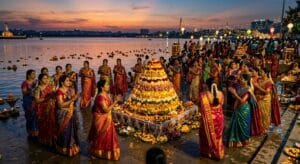
| Bathukamma | 9 nights ending just before Dasara (Sep–Oct) | Statewide; Tank Bund finale is huge | Women build flower stacks into living pyramids — the finale with thousands of them is unforgettable |
| Bonalu | Ashada month (Jul–Aug) | Hyderabad and Secunderabad | Goddess Mahankali’s festival; processions, drums, trance ritual — raw and very local |
| Sammakka Saralamma Jatara | Every two years, February | Medaram, Mulugu | Often called Asia’s largest tribal gathering — attendance crosses a crore in recent editions |
| Ramadan nights | Lunar calendar | Old Hyderabad | Haleem, kebabs, late-night shopping energy like nowhere else |
Best Time to Visit Telangana
Short answer: October to February — 15°C to 29°C, low humidity, festival season stacked on top.
Every Telangana travel guide agrees on one thing: timing makes or breaks this trip.
| Season | Months | Honest rating |
|---|---|---|
| Winter | Oct–Feb | Best for everything — temples, forts, food crawls |
| Monsoon | Jun–Sep | Green and dramatic; waterfalls at full strength. Carry quick-dry everything |
| Summer | Apr–mid Jun | 40–45°C. Golconda at noon is a penance, not a visit |
Monsoon travellers get the best waterfall photos; festival chasers should circle Bathukamma and Bonalu dates each year (they shift with the lunar calendar). If Medaram’s jatara falls in your travel year, just go — nothing else in India is quite like it.
Ready-Made Itineraries
3 days (Hyderabad-focused):
| Day | Plan |
|---|---|
| Day 1 | Charminar sunrise → Lad Bazaar → Nimrah chai → Chowmahalla → Salar Jung Museum → old-city dinner (Shadab) |
| Day 2 | Golconda Fort early → Qutb Shahi Tombs → late lunch at Tolichowki → Hussain Sagar + Tank Bund evening |
| Day 3 | Ramoji Film City (full day) or Yadadri half-day + Shilparamam crafts village + biryani night |
Got 5–7 days? Add Warangal + Ramappa as a long day trip, then Nagarjuna Sagar with Ethipothala on another. Waterfall lovers swap one of those for Bogatha + Laknavaram in or right after monsoon.
Rough Budget Per Day (per person, honest local estimates)
| Style | Stay | Food | Local travel | Total/day |
|---|---|---|---|---|
| Backpacker | ₹500–900 | ₹300–500 | Metro + buses ₹100–150 | ₹1,200–1,800 |
| Comfortable | ₹2,000–3,500 | ₹700–1,200 | App cabs ₹400–700 | ₹3,500–5,500 |
Hyderabad’s metro covers the main corridors cheaply; for day trips out of town, hire a car or catch the frequent TSRTC buses. Entry tickets stay low almost everywhere — heritage here costs less than dinner.
10 Things About Telangana Most People Don’t Know
- The Kakatiya Kala Thoranam — the stone gateway at Warangal Fort — is the official emblem printed on Telangana’s government seals and letterheads.
- Some of history’s most-argued-over diamonds — the Koh-i-Noor, Hope and Regent — all point back to Golconda’s mines and markets.
- Ramappa Temple’s tower bricks are light enough to float on water; the secret recipe died with its 13th-century makers.
- Haleem got India’s first GI tag for a meat dish in 2010. Not a textile, not a fruit — haleem.
- Nagarjunakonda’s Buddhist monuments were rebuilt stone by stone on an island after the dam waters rose in the 1960s — among independent India’s largest archaeology rescue missions.
- Vinoba Bhave launched the Bhoodan (land-gift) movement at Pochampally in April 1951 — the same village whose ikat weaves now carry a GI tag.
- Hyderabad state ran its own currency — the Hyderabadi rupee — until 1951, and its own railway, airline and postal service too.
- The state joined India only after Operation Polo in September 1948 — a five-day military action that ended over 200 years of Asaf Jahi rule.
- Osmania University (1918) was among the first Indian universities to teach in an Indian language — Urdu — instead of English.
- Bogatha’s monsoon surge earned it the nickname “Telangana’s Niagara” — locals say it, we’ll allow it, but visit in September and decide for yourself.
Did You Know?
Ramoji Film City holds the Guinness record as the largest film studio complex in the world — spreading across roughly 1,600 acres, it has over 500 permanent set locations. Tollywood shoots so regularly here that visitors occasionally end up as unplanned extras in someone else’s movie scene. Not bad for a day ticket.
What We’d Honestly Skip — or Warn You About
- Old city on a weekend evening. The crowds win. Go on a weekday morning instead.
- “Pearl shops” near Charminar that hunt tourists. Hyderabad is the City of Pearls, but buy only from certified jewellers — street offers with urgency attached are rarely pearls of wisdom, or anything else.
- Golconda after 11 AM in April or May. Chlorophyll isn’t the only thing that suffers. Go at 9, or don’t go in summer.
- Ramoji if films aren’t your thing. It’s a full day and around ₹1,500 — spend it on day trips instead if sets leave you cold.
FAQs
1. How many days are enough for Telangana?
Three for Hyderabad alone, five to seven if you want Warangal, Ramappa and one nature trip on top. Rushing the old city into half a day is the most common mistake we see.
2. Is Telangana safe for solo travellers?
Yes, broadly — Hyderabad especially is used to students and migrants from everywhere. Normal city sense applies: app cabs at night, keep valuables close in crowded bazaars.
3. What’s the best month overall?
November — post-monsoon greenery, mild 20-something days, and festival season in full swing. February runs a close second.
4. Do I need to know Telugu?
No. Telugu and Urdu are official, but Hindi works widely and English gets you through almost everything in Hyderabad’s tourist circuit. A warm “andi” after a greeting, though, earns you better chai service.
5. Can Hyderabad be a base for the whole trip?
Mostly yes — Warangal, Yadadri, Nagarjuna Sagar and Ananthagiri are all doable as day trips. Only the Mulugu waterfall belt really asks for an overnight.
6. Veg food — easy or difficult?
Easy. Every biryani house does strong vegetarian mains, Udipi-style restaurants are everywhere, and tiffin culture (dosa, idli, pesarattu) is a religion of its own here.
Our Honest Take
Telangana won’t charm you in one afternoon the way a beach state does — it asks for a bit of patience and pays it back in chapters: Qutb Shahi mornings, Kakatiya afternoons, Irani-chai evenings. The summers are harsh, the traffic is real, and no honest guide should pretend otherwise.
But give it the right months and a slow pace, and you’ll leave understanding why people who visit once tend to come back — usually with an empty bag for the bangles, a fixed biryani opinion, and a strong feeling about whether Koh-i-Noor should come home. We’ll call that a trip well spent.
Continue Exploring India
- Andhra Pradesh Complete Guide
- Karnataka Complete Guide
- Maharashtra Complete Guide
- Tamil Nadu Complete Guide
Sources & References
This guide was researched and fact-checked using the following official and authoritative sources. External links open in a new tab.
- Kakatiya Rudreshwara (Ramappa) Temple — UNESCO World Heritage inscription (25 July 2021) — UNESCO World Heritage Centre.
- India’s 39th World Heritage Site — official government announcement of the Ramappa Temple inscription — Press Information Bureau, Government of India.
- State profile and history of Telangana, including its formation and Operation Polo — Government of Telangana.
- Ramoji Film City — Guinness World Record for the largest film studio complex — Guinness World Records.
- Hyderabadi cuisine, Irani chai and food culture — Telangana Tourism.
- Osmania University (est. 1918), among the first universities to teach in Urdu — Osmania University.