
Introduction:
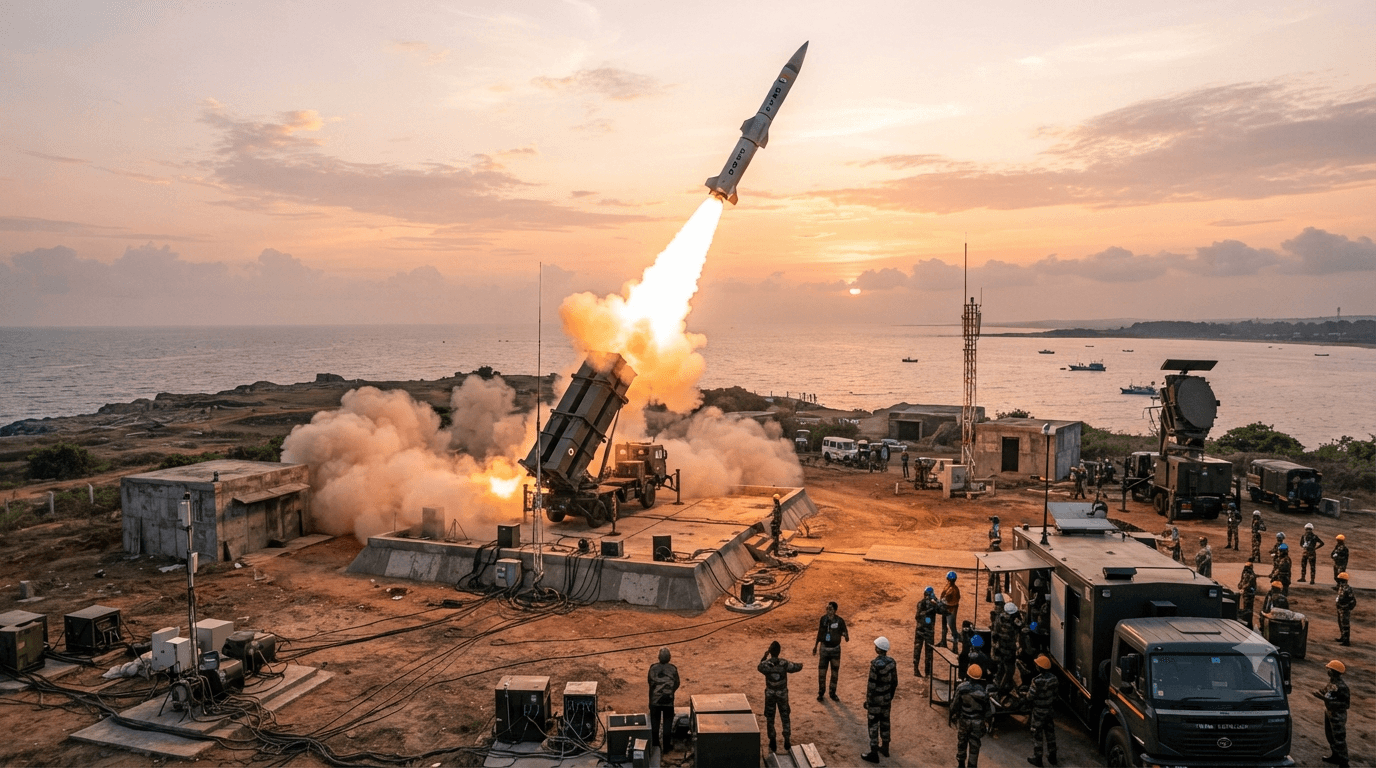
India has achieved another major milestone in indigenous defence technology with the successful flight test of the Kusha Missile System, an advanced long-range surface-to-air missile (LR-SAM) developed by the Defence Research and Development Organisation (DRDO). The successful test marks a significant step toward strengthening India’s multi-layered air defence network and reducing dependence on imported missile systems.
Designed to intercept fighter aircraft, cruise missiles, unmanned aerial vehicles (UAVs), and other high-speed aerial threats, the Kusha Missile System is expected to become one of India’s most advanced indigenous air defence platforms. Defence experts believe it will play a crucial role in protecting strategic military installations, major cities, and critical national infrastructure from modern air attacks.
The successful flight test also reflects India’s growing commitment to the Atmanirbhar Bharat initiative by promoting self-reliance in defence manufacturing. As DRDO continues to develop cutting-edge missile technologies, the Kusha Missile System represents another important achievement in enhancing India’s national security and technological capabilities. In this article, we explore the missile’s features, expected range, operational capabilities, and its strategic importance for India’s future air defence system.
What Is the Kusha Missile System?
The Kusha Missile System, also known as Project Kusha, is an indigenous long-range surface-to-air missile (LR-SAM) air defence system being developed by the Defence Research and Development Organisation (DRDO). The project aims to provide India with an advanced multi-layered air defence shield capable of intercepting a wide range of modern aerial threats, including fighter aircraft, stealth targets, cruise missiles, helicopters, drones, and certain ballistic missile threats.
Project Kusha is one of India’s most ambitious indigenous defence programmes. It has been designed to strengthen the country’s air defence capabilities while reducing dependence on imported missile systems. Once fully operational, the system is expected to protect strategic military bases, important government installations, critical infrastructure, and major cities from enemy air attacks.
The Kusha Missile System is being developed with advanced radar technology, mobile launchers, sophisticated command-and-control systems, and highly accurate interceptor missiles. These components work together to detect, track, and destroy hostile aerial targets at long distances, making the system a key part of India’s future integrated air defence network.
With successful flight testing now underway, Project Kusha represents another major step toward achieving the goals of Atmanirbhar Bharat by showcasing India’s growing expertise in designing and manufacturing world-class defence technologies.
DRDO Successfully Conducts Maiden Flight Test
The Defence Research and Development Organisation (DRDO) successfully conducted the maiden flight test of the Kusha Missile System from Dr. APJ Abdul Kalam Island off the coast of Odisha. The test marked a major milestone in the development of India’s indigenous long-range air defence system and demonstrated the missile’s ability to engage high-speed aerial threats with precision.
During the trial, the missile successfully intercepted a simulated high-speed aerial target under realistic operational conditions. Advanced tracking radars, command-and-control systems, telemetry stations, and electro-optical sensors continuously monitored the missile’s flight path and confirmed that all mission objectives were achieved successfully.
The successful flight test validates several critical technologies, including the missile’s guidance system, navigation, propulsion, and target interception capability. Defence scientists described the trial as an important step toward completing future developmental tests before the system enters operational service.
The achievement also highlights India’s steady progress in developing indigenous defence technologies under the Atmanirbhar Bharat initiative. Once fully inducted, the Kusha Missile System will significantly strengthen India’s multi-layered air defence network and provide enhanced protection against modern aerial threats.
Key Features of the Kusha Missile System
The Kusha Missile System is being developed as a next-generation indigenous long-range air defence platform equipped with advanced technologies to counter modern aerial threats. Designed by the Defence Research and Development Organisation (DRDO), the system combines high-performance interceptor missiles, powerful surveillance radars, mobile launchers, and an integrated command-and-control network to provide reliable protection against enemy aircraft and missile attacks.
- Indigenous Development: Completely designed and developed by DRDO under the Atmanirbhar Bharat initiative.
- Long-Range Air Defence: Capable of engaging multiple aerial threats at long distances with high accuracy.
- Multiple Target Engagement: Can detect, track, and intercept several incoming targets simultaneously.
- Advanced Radar System: Uses modern surveillance and fire-control radars for early warning and precise target tracking.
- Mobile Launch Platforms: Mounted on high-mobility vehicles, allowing rapid deployment across different terrains.
- Network-Centric Operations: Integrated with command-and-control systems for real-time data sharing and coordinated air defence operations.
- High Accuracy: Equipped with advanced guidance and navigation technology to improve interception success rates.
- All-Weather Capability: Designed to operate effectively during day, night, and adverse weather conditions.
- Wide Threat Coverage: Intended to intercept fighter aircraft, cruise missiles, drones, helicopters, and selected ballistic missile threats.
- Strategic Importance: Strengthens India’s multi-layered air defence network while reducing dependence on imported missile systems.
These advanced features make the Kusha Missile System one of India’s most ambitious indigenous defence projects and an important step toward building a stronger and more self-reliant national air defence capability.
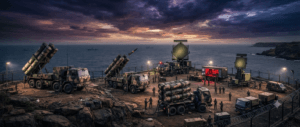
Kusha Missile Planned Range and Variants
The Kusha Missile System is being developed with multiple interceptor missile variants to provide layered air defence against different types of aerial threats. Each variant is designed to engage targets at different ranges, allowing the system to protect strategic locations against aircraft, cruise missiles, drones, and other hostile aerial objects.
According to DRDO’s development plan, the Kusha system is expected to include short, medium, and long-range interceptor missiles. This layered approach enables defence forces to respond effectively to threats approaching from various distances and altitudes.
| Variant | Expected Range | Primary Role |
|---|---|---|
| M1 | Up to 150 km | Intercept aircraft, helicopters, and drones |
| M2 | Up to 250 km | Engage high-speed aerial targets and cruise missiles |
| M3 | Up to 350 km | Long-range air defence against advanced aerial threats |
These planned variants are intended to create a comprehensive, multi-layered air defence shield capable of detecting and destroying hostile targets before they reach critical military bases, strategic infrastructure, or populated areas. The exact operational specifications may continue to evolve as DRDO completes additional development and testing phases.
Once inducted into service, the Kusha Missile System is expected to become one of India’s most capable indigenous long-range air defence platforms, significantly enhancing the country’s overall air defence preparedness.

What Targets Can the Kusha Missile System Destroy?
The Kusha Missile System is designed to defend India’s airspace against a wide range of modern aerial threats. Using advanced surveillance radars, target tracking systems, and precision-guided interceptor missiles, the system can detect, track, and neutralize multiple hostile targets simultaneously.
Its multi-layered architecture enables the Indian Armed Forces to respond quickly to different types of airborne threats before they reach critical military bases, strategic infrastructure, or populated areas. This capability significantly enhances India’s overall air defence readiness.
Major Targets the Kusha Missile System Can Engage
- Fighter Aircraft: Capable of intercepting enemy fighter jets operating at various altitudes.
- Cruise Missiles: Designed to detect and destroy fast-moving cruise missiles before they reach their targets.
- Unmanned Aerial Vehicles (UAVs): Effective against reconnaissance drones, combat drones, and other unmanned aircraft.
- Attack Helicopters: Can engage helicopters conducting combat or surveillance missions.
- Airborne Early Warning Aircraft: Potentially capable of targeting high-value airborne surveillance and command aircraft.
- High-Speed Aerial Threats: Built to intercept multiple high-speed airborne targets using advanced guidance technology.
- Selected Ballistic Missile Threats: The system is expected to provide limited capability against certain ballistic missile threats within its operational design.
By engaging multiple targets simultaneously under all-weather conditions, the Kusha Missile System will play a vital role in strengthening India’s integrated air defence network and improving protection against evolving aerial threats.

How Is the Kusha Missile System Different from the S-400?
The Kusha Missile System and the S-400 Triumf are both advanced long-range surface-to-air missile systems designed to protect against aerial threats. However, they differ in terms of origin, development, technology, and strategic objectives. While the S-400 is a Russian-made air defence system already in service with the Indian Air Force, the Kusha Missile System is an indigenous project being developed by DRDO to strengthen India’s self-reliance in defence technology.
| Feature | Kusha Missile System | S-400 Triumf |
|---|---|---|
| Developer | DRDO (India) | Almaz-Antey (Russia) |
| Country of Origin | India | Russia |
| Type | Long-Range Surface-to-Air Missile System | Long-Range Surface-to-Air Missile System |
| Development Status | Under development and testing | Operational with the Indian Air Force |
| Purpose | Indigenous multi-layered air defence | Long-range strategic air defence |
| Self-Reliance | Supports Atmanirbhar Bharat | Imported defence system |
Although the Kusha Missile System is often compared with the S-400 because both serve long-range air defence roles, the two systems are not identical. Kusha is being developed to meet India’s specific operational requirements and to reduce dependence on imported defence equipment.
Once fully operational, the Kusha Missile System is expected to complement India’s existing air defence network and enhance the country’s capability to counter future aerial threats with indigenous technology.
Why Project Kusha Is Important for India
Project Kusha is one of India’s most significant indigenous defence programmes, aimed at strengthening the nation’s long-range air defence capabilities. As modern warfare increasingly relies on advanced fighter aircraft, drones, cruise missiles, and precision-guided weapons, India requires a highly capable air defence system that can respond quickly to multiple threats. The Kusha Missile System has been developed to meet these evolving security requirements.
The project also supports the Government of India’s Atmanirbhar Bharat initiative by promoting self-reliance in defence manufacturing. Developing an indigenous long-range air defence system reduces dependence on foreign suppliers, enhances strategic independence, and strengthens the domestic defence industry.
Key Reasons Why Project Kusha Is Important
- Strengthens National Security: Enhances India’s ability to defend strategic locations, military bases, and major cities against aerial attacks.
- Supports Atmanirbhar Bharat: Encourages indigenous research, development, and manufacturing of advanced defence technologies.
- Reduces Import Dependence: Lowers reliance on expensive foreign air defence systems and improves long-term strategic autonomy.
- Protects Critical Infrastructure: Helps safeguard airports, power plants, communication networks, defence installations, and other vital assets.
- Boosts Defence Innovation: Demonstrates India’s growing expertise in missile technology, radar systems, and integrated air defence solutions.
- Enhances Multi-Layered Air Defence: Complements existing air defence systems by providing additional protection against diverse aerial threats.
As development and testing continue, Project Kusha is expected to become a cornerstone of India’s future air defence architecture. Its successful induction into the armed forces will further strengthen the country’s ability to respond to emerging regional and global security challenges while reinforcing India’s position as a leading developer of advanced defence technology.
Future Deployment Timeline
The Kusha Missile System is currently progressing through multiple stages of development, testing, and validation by the Defence Research and Development Organisation (DRDO). After the successful maiden flight test, additional developmental and user trials are expected to evaluate the system’s performance under different operational conditions before it is inducted into service.
Each phase of testing focuses on validating critical technologies such as missile guidance, propulsion, radar integration, target tracking, communication systems, and interception accuracy. The data collected from these trials will help engineers refine the system and ensure it meets the operational requirements of the Indian Armed Forces.
Expected Development Roadmap
- Developmental Flight Trials: Multiple tests to validate missile performance, accuracy, and reliability.
- System Integration: Integration of interceptor missiles, surveillance radars, command-and-control units, and mobile launchers into a complete air defence network.
- User Evaluation Trials: Operational testing by the Indian Armed Forces under realistic battlefield conditions.
- Production Phase: Manufacturing of operational systems after successful completion of all mandatory trials and approvals.
- Induction into Service: Deployment to selected military formations and strategic locations in phases after official clearance.
While DRDO has not announced an official induction date, the successful progress of Project Kusha indicates that India is moving steadily toward deploying one of its most advanced indigenous long-range air defence systems. Future official announcements from the Ministry of Defence and DRDO will provide updated timelines as the project advances.
Frequently Asked Questions (FAQs)
1. What is the Kusha Missile System?
The Kusha Missile System is an indigenous long-range surface-to-air missile (LR-SAM) air defence system being developed by the Defence Research and Development Organisation (DRDO) to protect India against modern aerial threats.
2. Who developed the Kusha Missile System?
The system is being developed by the Defence Research and Development Organisation (DRDO) with support from Indian defence industry partners under the Atmanirbhar Bharat initiative.
3. What types of targets can the Kusha Missile System intercept?
The Kusha Missile System is designed to engage fighter aircraft, cruise missiles, helicopters, drones, unmanned aerial vehicles (UAVs), and selected high-speed aerial threats.
4. What is the expected range of the Kusha Missile System?
According to publicly available information, Project Kusha is planned to include interceptor missile variants with engagement ranges of up to approximately 150 km, 250 km, and 350 km, depending on the variant.
5. Is the Kusha Missile System replacing the S-400?
No. The Kusha Missile System is not intended to replace the S-400. Instead, it is expected to complement India’s existing air defence network while increasing indigenous defence capabilities.
6. Why is Project Kusha important for India?
Project Kusha strengthens India’s national security, supports indigenous defence manufacturing, reduces dependence on imported systems, and enhances the country’s long-range air defence capability.
7. Has DRDO successfully tested the Kusha Missile System?
Yes. DRDO has successfully conducted the maiden flight test of the Kusha Missile System, marking an important milestone in its development. Further developmental and user trials are expected before operational induction.
Conclusion
The successful flight test of the Kusha Missile System marks a significant milestone in India’s journey toward building a strong and self-reliant air defence network. Developed by the Defence Research and Development Organisation (DRDO), Project Kusha demonstrates India’s growing capability to design and manufacture advanced defence technologies capable of countering modern aerial threats.
With its planned long-range interception capability, advanced radar systems, mobile launch platforms, and integrated command-and-control network, the Kusha Missile System is expected to become a key component of India’s future multi-layered air defence architecture. It will not only strengthen national security but also reduce dependence on imported defence systems while supporting the Atmanirbhar Bharat initiative.
As DRDO continues additional developmental trials and system integration, the Kusha Missile System is expected to play an increasingly important role in safeguarding India’s strategic assets, military installations, and critical infrastructure. The successful progress of Project Kusha reflects India’s commitment to technological innovation and reinforces its position as a leading defence power in the region.
Related Articles
- Dr. APJ Abdul Kalam Biography: India’s Missile Man
- AI Agents Explained: The Future of Artificial Intelligence
- Delhi: Complete Guide to India’s National Capital
- Odisha: Complete Travel, History & Culture Guide
- Mahatma Gandhi Biography: Life, Freedom Struggle & Legacy
- Subhas Chandra Bose Biography: Netaji’s Inspiring Journey
- Andhra Pradesh: Complete State Guide
- Telangana: Complete State Guide
- Virat Kohli Biography: Career, Records & Achievements
- Ratan Tata Biography: Business Leadership & Legacy
References
- Defence Research and Development Organisation (DRDO) – Official Website
- Ministry of Defence, Government of India
- Press Information Bureau (PIB), Government of India
- India Today – Defence News
- The Indian Express – Defence News
- The Hindu – National & Defence News