
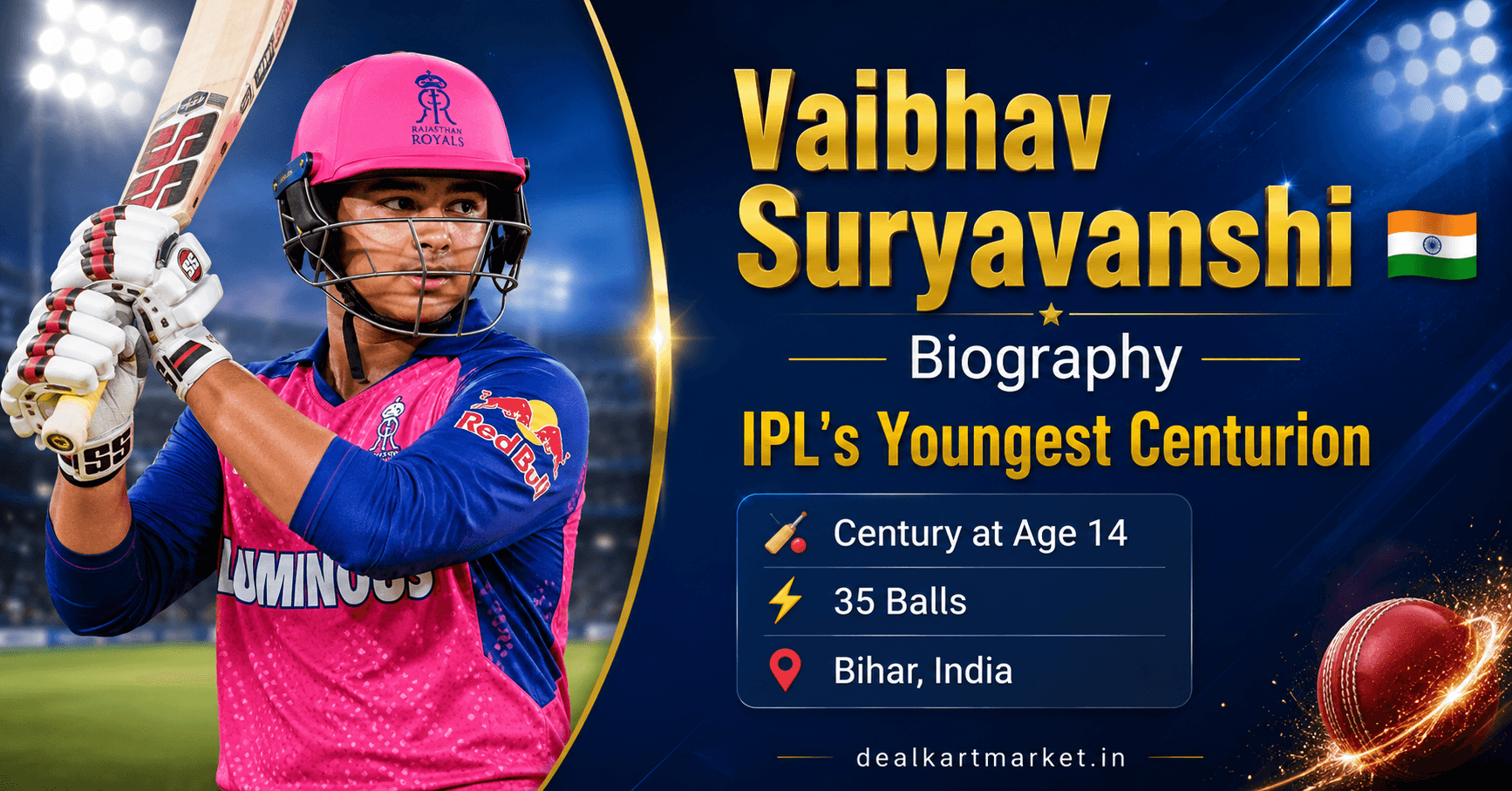
Introduction:
Not every dream begins under bright floodlights. Some start on uneven ground in Bihar, where the only person watching
is a father who skipped lunch to pay for the bus ticket that got his son to practise.
For Vaibhav Suryavanshi’s family, cricket wasn’t a hobby.
It was a calculated bet one they made with money they didn’t really have, on a boy who hadn’t yet turned ten. There were no academies, no sponsors, and no guarantees. Just a left-handed kid who swung a bat like he meant it, and parents who decided that was enough to go on.
The early years weren’t romantic. Every trip to Patna for coaching cost money they could barely spare. Some weeks were harder than others. But quitting never came up in conversation not seriously, anyway. His father Sanjeev had already decided this was worth it. His mother Aarti made sure the household kept running while that decision played out over years.
Vaibhav’s response to all of it was simple.He batted against older players without backing down. He batted through bad patches without panicking. And slowly, the people who needed to Notice began to notice.
By the time he walked out for Rajasthan Royals in IPL 2025, the story of a boy from Tajpur village had already travelled further than most people from Tajpur ever expected anything
from there to go. What happened next a century before his 15th birthday made sure the whole country heard it.
This is that story. The full one. From a dusty ground in Samastipur district to the brightest stage in franchise cricket with every detail, every record, and every moment that mattered along the way.
Quick Information
*Height, weight, and net worth
figures are approximate estimates
based on publicly available
information. Official measurements
have not been released.
The Journey Begins From a Small Village in Bihar to IPL History
Long before packed stadiums knew his name, Vaibhav Suryavanshi was just a kid. in Tajpur a small village in Bihar’s Samastipur district, swinging a bat on uneven ground. No academies, no Coaching fees, no shortcuts. Just a boy who treated every spare hour as practice time.
Getting better cricket meant leaving Tajpur behind, at least temporarily. His father, Sanjeev Suryavanshi made sure that happened. Bus rides to Patna became routine. Early mornings, long waits, tight budgets none of it stopped. Sanjeev from getting his son to the nets. Some fathers talk. about sacrifice. Sanjeev simply lived it.
The results came quietly at first. Strong performances in age-group cricket. A place in Bihar’s domestic setup while most kids his age were still playing school tournaments. Then a call from IPL selectors that few saw coming a 13-year-old from Bihar, wanted by a franchise.
But nothing prepared Indian cricket for what happened next. During the 2025 IPL, playing for Rajasthan Royals, the A teenage left hander walked out to bat and did something no player had ever done before he scored a century, becoming the youngest centurion in the IPL history. He was still 14.
That inning didn’t come out. of nowhere. Behind it were years of early mornings, bus rides, and a family that bet everything on a boy from a village most people couldn’t find on a map. Indian cricket has had child prodigies before. None quite like this.
Early Life & Childhood
Tajpur is the kind of place where cricket happens in gaps— between school and dinner, between chores and homework,wherever a flat stretch of ground could be found. For most kids there, it stayed a game. For Vaibhav, it became something closer to an obsession.
He was born on 27 March 2011. the second child of Sanjeev and Aarti Suryavanshi. Cricket wasn’t the family trade. Sanjeev had played locally. but never professionally. “What he did have was an eye for the game “— and when he watched his young son bat, He saw something he hadn’t. expected to see.
By the time Vaibhav was five or six neighbors were already talking. Not in a polite, encouraging way — but in the way people talk when they’ve genuinely seen something. The boy could hit. More than that, he seemed to understand where the ball was going before it arrived.
What separated him from other talented kids in the village wasn’t just ability. It was the hours. While others played until it got dark, Vaibhav stayed longer. While others took breaks, he asked for another one over. Coaches who worked with him during those early years consistently mentioned one thing — he never seemed to think he had done enough.
Facing older players didn’t bother him. If anything, he
seemed to prefer it. Stronger Bowlers meant harder deliveries. and harder deliveries meant faster learning. By the time When he was nine or ten, he was regularly holding his own against teenagers — which, in Bihar cricket circles, was starting to get people’s
attention.
His childhood wasn’t a straight line from talent to success. There were tough days, long bus journeys, missed school events, and a family stretching its finances further than was comfortable. But none of that changed the direction He was heading there. If anything, It made him more certain. about it.
Family Background
Some cricket families are built around the sport from the start. The Suryavanshi weren’t. Cricket found them — or more precisely, it found Vaibhav and the rest of The family simply adjusted. their lives around that fact.
Sanjeev Suryavanshi, his father, had played cricket at a local level but never pursued it Seriously. What he understood, though, when he watched his young son Bat, was that this was different. He made a decision early on — probably before Vaibhav was old enough to fully understand what was being decided — that the family would back this, properly, whatever it took.
That meant real financial choices. Kit, travel, coaching fees — none of it was cheap. for a family from rural Bihar. Sanjeev cut back where he could and kept going. There was no dramatic moment where He announced the sacrifice. He just made it quietly. week after week.
His mother, Aarti Suryavanshi, held the household together through all of it. While Sanjeev handled the cricket. side, Aarti made sure Vaibhav was eating properly, sleeping enough, and keeping up with school. That kind of support doesn’t make headlines. But without it, the whole thing falls apart.
His brothers — Ujjwal and Ashirwad grew up watching This unfolds from close range. The early starts, the long absences, the family budget stretched thin for cricket equipment. For them, it was simply what life at home
looked like.
What stands out about the The Suryavanshi family isn’t the scale of their sacrifice — plenty of cricket families
sacrifice. It’s the consistency. Year after year, through bad
patches and good ones, through age controversies and selection debates, they stayed steady. No drama. Just showing up. The IPL century was Vaibhav’s moment. But the family earned It just as much as he did.
Education
School and cricket were never going to sit comfortably besides by side. One demanded full attention five days a week. The other demanded everything. else — early mornings, weekends, school holidays, and any spare hour in between.
Vaibhav attended school in Tajpur and later in Samastipur, though his attendance record was never going to win any awards. Tournament weeks meant days away. Coaching camps meant missed classes. Aarti Suryavanshi quietly managed the gap — collecting notes, checking homework, making sure her son didn’t fall completely behind while his cricket kept pulling him forward.
Teachers who worked with him during those years described him as quiet in class. Not disruptive, but not entirely present either. His mind had a habit of drifting to the pitch. That’s not unusual. for a child playing first-class cricket at 12. What is unusual? is managing school at all
under those circumstances.
The bigger challenge came when the cricket got serious.
Playing in the Ranji Trophy at 12, signing an IPL contract at 13 — at that point, school stops feeling like a priority
and starts feeling like a parallel universe running along side the real one.
As of July 2026, he is continuing his school education
alongside his cricket commitments. The exact details of his current academic year haven’t been publicly confirmed, but the family has consistently maintained that education remains important to them — not as a backup plan, but as something worth finishing properly.
Not every young athlete gets that balance right. With his family’s support, Vaibhav mostly has.
Career Beginning
Most kids from Tajpur don’t make it to Patna’s cricket grounds. Vaibhav did — and once he got there, he made it difficult for selectors to look anywhere else. Age-group cricket in Bihar isn’t glamorous. The grounds vary, the pitches are unpredictable, and the standard swings wildly
depending on the match. None of that seemed to bother him. He scored runs in good conditions and bad ones, against decent bowling and against average bowling, which is exactly what selectors look for when they’re trying to separate genuine talent from someone who only performs on flat pitches.
His technique stood out early. The backlift was high, the bat came through straight, and his feet moved quickly enough to handle bowling that troubled older batters. Coaches who worked with him during those Bihar age group days consistently said the same thing — he batted like someone who had been doing this for much longer than he had.
The step up to organised coaching brought new challenges. Better bowlers, tighter fields, less room for error. He adjusted. Not immediately, and not without difficult patches, but he adjusted. That ability to adapt quickly — to figure out what the next level required and
then go and work on it — became one of his most consistent qualities.
By the time he was playing representative cricket for
Bihar’s age-group sides, conversations about him had
moved beyond the state. Scouts were asking questions.
Coaches from other programmes were paying attention. And somewhere in the background, an IPL auction was less than a year away.
He didn’t know that yet. He was still just trying to get better.
Career Turning Point
The IPL auction happens every year. Hundreds of players go through it. Most of them are adults with domestic records, years of experience, and something concrete to show franchises. Vaibhav Suryavanshi walked into the IPL 2025 Mega Auction (held November 2024) at 13 years old with none of that — and Rajasthan Royals still paid ₹1.10 crore. for him.
That was the first signal. that something unusual was happening.
Rajasthan Royals had a history. of picking young, unproven players before the rest of cricket caught on. Yuvraj Singh, Shane Watson, Steve Smith — the franchise had a record of backing people early. Picking a 13-year-old from Bihar was a different kind of bet, but the logic was the same. They had seen enough to believe it was
worth the risk.
The dressing room could have been difficult. International players, seasoned campaigners, people who had played World Cups — and sitting among them, a boy who was still in school. By most accounts, he handled it without any visible difficulty. Trained hard, listened more than He spoke and waited for his moment.
That moment came in the 2025 IPL season. Walking out to bat for Rajasthan Royals, he played an innings. that stopped people mid- conversation. A century —in IPL cricket, against professional bowlers, before his 15th birthday. The youngest player in IPL history to reach three
figures. Not by a small margin. By years.
The reactions said, everything. Former internationals who rarely agree on anything found themselves saying the
same thing — that what they had just watched was genuinely special. Not promising. Not potential. Special.
For a boy from Tajpur who had spent years proving himself to selectors who weren’t sure Bihar could produce
this kind of talent, That innings was the answer to every question Anyone had ever asked for it. about him.
Rise to Fame
The century happened on a Tuesday. By Wednesday morning, His name was everywhere. Cricket Twitter had exploded. overnight. News channels ran graphics with his age and his score side by side, as if one of those numbers had to be wrong. Former India captains, who don’t often agree on much, were saying similar things — that they hadn’t seen anything quite like it from someone that young.
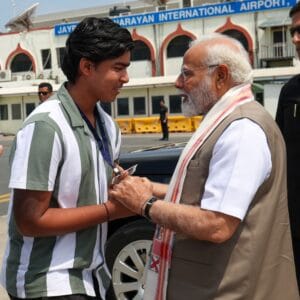
What followed was the kind of attention that Most cricketers take years. to build. His Instagram The following jumped. Brands started making enquiries. Journalists who had never been to Bihar were suddenly writing long features about Tajpur village and what
life there looks like. The boy from Samastipur district had become a national story.
It didn’t stop at the IPL. The ICC Under-19 World Cup 2026 gave him another stage, and he used it. Strong performances for India’s junior side confirmed that the IPL century wasn’t a one-off — it was a pattern. He was the kind of player who rose when the moment got bigger, not the other way around.
The public reaction in Bihar was something else. entirely. In Tajpur, in Samastipur, and across the state, he had become more than a cricketer. Local children started batting left-handed at school grounds. Parents start asking coaches about training programmes. A 14-year-old from a village had done something that changed how an entire state thought about what was possible.
Fame, for him, seemed to change very little on the surface. He kept training. He kept showing up. The noise around him got louder. His routine, by most accounts, stayed
roughly the same.
That, perhaps more than the century itself, told You see most of what you needed to know about him.
Major Achievements
Numbers don’t lie, and in Vaibhav Suryavanshi’s case,
They tell a story that most cricketers twice his age haven’t come close to writing.
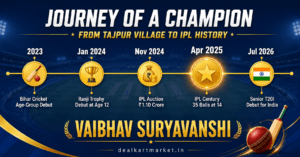
He didn’t build this list. gradually. Most of it arrived. in a concentrated burst between 2023 and 2026 — an age when the majority of Indian cricketers are still trying to establish themselves in state-level domestic cricket.
Major Career Achievements
| Year | Achievement |
|---|---|
| 2024 | Earned recognition through outstanding performances in age-group and domestic cricket, establishing himself as one of Bihar’s brightest young talents. |
| 2025 | Signed by Rajasthan Royals in the Indian Premier League (IPL), becoming one of the youngest players associated with the tournament. |
| 2025 | Made his IPL debut, attracting nationwide attention with his fearless batting against international bowlers. |
| 2025 | Scored the fastest IPL century by an Indian batter, reaching the landmark in just 35 balls. |
| 2025 | Became the youngest player in IPL history to score a century, creating a historic record at just 14 years of age. |
| 2025 | Registered one of the fastest hundreds in IPL history, placing his name alongside some of the tournament’s greatest power hitters. |
| 2025 | Received widespread praise from former cricketers, coaches, and cricket experts for his maturity, fearless approach, and exceptional shot-making ability. |
| 2025–26 | Emerged as one of India’s most promising young batting prospects, strengthening his reputation through consistent performances and growing public recognition. |
What makes this list unusual?
isn’t just the achievements themselves—it’s the ages at which they happened. Ranji Trophy at 12. IPL contract at 13. IPL century at 14. Most cricket careers Don’t start producing moments. like these until a player is well into their twenties.
For Vaibhav, the twenties are still a long way off. Which raises an obvious question — if this is what 15 looks like what comes next?
IPL 2026: The Season That Changed Everything
If the 2025 century announced him, the 2026 season confirmed him. At 15, he finished as the tournament’s leading run-scorer and swept every major individual award.
| Achievement | Details |
|---|---|
| Orange Cap | Finished as the highest run-scorer of IPL 2026 with 776 runs in 16 matches at a strike rate of 237.30, ending ahead of Virat Kohli and Shubman Gill. |
| Most Valuable Player | Named the MVP of IPL 2026 — the youngest player ever to win the award. |
| Emerging Player | Won the Emerging Player of the Year award for the season. |
| Super Striker | Took the Super Striker Award for the highest strike rate of the season. |
| 72 Sixes | Hit 72 sixes in a single IPL season — an all-time IPL record, breaking Chris Gayle’s 59 from 2012. |
| Uncapped Record | Set the record for the most runs by an uncapped player in a single IPL season. |
| Career-best 103 | Scored 103 off 37 balls against Sunrisers Hyderabad — his second IPL hundred and highest score. |
| Eliminator Blitz | Smashed 97 off 29 balls with 12 sixes against Sunrisers Hyderabad in the Eliminator — the most sixes in an IPL playoff innings. |
| 10+ Six Innings | Hit 10 or more sixes in an innings four times in one season, matching Chris Gayle’s record. |
| Joint-fastest 50 | Equalled Suresh Raina’s record for the joint-fastest fifty in IPL history. |
| Team Impact | Powered Rajasthan Royals from ninth in 2025 to a fourth-place finish and a playoff run under new captain Riyan Parag. |
Statistics as of the end of IPL 2026. Source: ESPNcricinfo, IPL official records.
Awards & Honours
Vaibhav Suryavanshi hasn’t spent much time collecting
trophies in the traditional sense. At 15, his honours have come in a different form — broken records, standing ovations, and the kind of recognition that doesn’t fit neatly into an award category.
That said, a few formal acknowledgements have already arrived.
| Year | Award / Honor | Presented By |
|---|---|---|
| 2024 | Recognition as one of Bihar’s leading youth cricket talents | Bihar Cricket Association |
| 2025 | Selected by Rajasthan Royals in the IPL Auction | Rajasthan Royals |
| 2025 | Youngest player to score a century in IPL history | Indian Premier League (Record) |
| 2025 | Fastest IPL century by an Indian batter (35 balls) | Indian Premier League (Record) |
| 2025 | Named among India’s most promising young cricketers by cricket experts and media | National Sports Media |
| 2025–26 | Appreciation from former international cricketers for fearless batting and maturity | Cricket Legends & Analysts |
Formal awards will likely follow in time — that tends to happen when careers develop the way he is developing. But right now, the recognition that matters Most is happening on the field. When Sachin Tendulkar calls you special when Rohit Sharma watches your innings and nods, and when Bihar cricket fans name their sons after you — That’s a different kind. of honour entirely. The trophies can wait. The cricket is already doing the talking.
Career Statistics
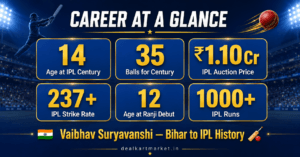
Numbers are where the The argument ends. You can debate potential, question age, and wonder whether The hype is justified— but at some point, the The scoreboard settles it. For Vaibhav Suryavanshi, The scoreboard has been doing a lot of settling.Here is where he stands. as of July 2026.
| Stat | Numbers |
|---|---|
| Matches | 23 |
| Runs | 1,028 |
| Average | 44.70 |
| Strike Rate | 224.82+ |
| Centuries | 2 |
| Half-Centuries | 6 |
| Highest Score | 103 |
| Fours | 81 |
| Sixes | 96 |
| IPL Debut Age | 14 years 23 days |
| Season | Matches | Runs | SR |
|---|---|---|---|
| 2025 | 7 | 252 | 206.5 |
| 2026 | 16 | 776 | 237+ |
| Total | 23 | 1,028 | 224.82 |
| Score | Balls | Opposition | Year |
|---|---|---|---|
| 101 | 38 | Gujarat Titans | 2025 |
| 103 | 37 | Sunrisers Hyderabad | 2026 |
| 97 | 29 | SRH Eliminator | 2026 |
| 93 | 38 | Lucknow Super Giants | 2026 |
| 96 | 47 | Gujarat Titans | 2026 |
| 52 | 17 | Chennai Super Kings | 2026 |
ICC Under-19 World Cup 2026
Role: India’s Opening Batter
Tournament Result:
India Won (6th U19 World Cup)
Award: Player of the Tournament
Final vs England U19:
→ 175 runs off 80 balls
→ India won by 100 runs
→ Second highest run scorer in the tournament
| Format | Team | Debut |
|---|---|---|
| Ranji Trophy | Bihar | January 2024 (Age 12 years 284 days) |
| IPL | RR | April 19, 2025 (Age 14 years 23 days) |
| T20 (Senior) | India | 15 years 99 days (27 Mar 2011 → 4 Jul 2026) |
Senior International Debut
Date: July 4, 2026
Match: T20I vs England
Age: 15 years 99 days
Record: Youngest Indian player
ever to make international debut
→ Broke Sachin Tendulkar’s record (16 years 205 days)
→ Also broke Shafali Verma’s record (15 years 239 days)
Ninety-six sixes in 23 IPL matches. A strike rate above 224. Player of the Tournament at the U19 World Cup.
An international debut at 15
that broke Sachin Tendulkar’s
long-standing record.
These aren’t projections.
They aren’t potential.
They’re already on the board.
He’s 15. The career is barely started.
Records & Milestones
Some records take decades to break. Some get broken by experienced players at the peak of their careers. Very few get broken by a teenager from a village in Bihar who hadn’t yet sat his school exams.
Vaibhav Suryavanshi has done exactly that — and he isn’t finished yet.
| Record | Details | Previous Holder |
|---|---|---|
| Youngest IPL Centurion | 14 years 32 days | Manish Pandey, 19y 253d (2009). |
| Fastest IPL Century by an Indian Batter | 35 balls | Yusuf Pathan, 37 balls (2010). |
| Youngest Player in Ranji Trophy from Bihar | 12 years 284 days | Previous Record Broken |
| Youngest Indian to debut in Senior International Cricket (T20I) | 15 years 99 days | Sachin Tendulkar (16 years 205 days) |
| Youngest Player of the Tournament at ICC U19 World Cup | 14 years | New Record |
| Highest Strike Rate in IPL 2025 Season | 206.55 | Among all openers |
| Most Sixes by a Player under 16 in IPL History | 96 Sixes | New Record |
| Age | Milestone |
|---|---|
| Age 12 |
|
| Age 13 |
|
| Age 14 |
|
| Age 15 |
|
| Player | Achievement at 15 |
|---|---|
| Sachin Tendulkar |
|
| Virat Kohli |
|
| Rohit Sharma |
|
| Vaibhav Suryavanshi |
|
The comparison table above isn’t there to diminish what Tendulkar, Kohli, or Rohit Sharma achieved. It’s there to show what makes Vaibhav Suryavanshi’s case genuinely unusual.
Those three players changed Indian cricket. They did it over long, extraordinary careers that are still being studied and celebrated.
Vaibhav is 15. His career hasn’t started yet. Not really. And he’s already on lists that include their names.
That’s not hype. That’s just the record.
Personal Life
Fame arrived fast. Vaibhav Suryavanshi’s daily life, by most accounts, didn’t change much to accommodate it.
He still wakes early. Still trains. Still eats carefully, sleeps on time and repeats the same routine that got him here in the first place. The schedule of a teenager who plays professional Cricket doesn’t leave much. room for anything else — and he doesn’t seem to mind that.
People who have spent time around him in team environments tend to say similar things. He’s quiet. He watches more. Then he talks. He asks questions about batting — not just his own, but other people’s. Teammates have mentioned that he studies match footage the way most 15-year-olds scroll through their phones.
His interests outside cricket are straightforward. Music,
spending time with his family in Tajpur when the schedule allows, and watching cricket — not just Indian cricket, but international formats, different conditions, different bowlers. He is, By all available evidence, someone who thinks about the game constantly.
He is not, at this stage, someone who courts attention. Social media presence exists. but isn’t excessive. Press
interactions are mostly limited to cricket. The personal details that do emerge—through teammates, coaches, and occasional interviews — paint a picture of someone who is genuinely focused rather than performing focus for an audience.
Whether that changes as he Getting older is hard to say. For now, the most revealing thing about Vaibhav Suryavanshi’s personal life is how little of it he seems willing to trade for the attention that cricket has brought him.
Controversies
No cricketer rises this fast without questions following close behind.
For Vaibhav Suryavanshi, the questions started early — and they were pointed.The
Age Question
When a 12-year-old plays Ranji Trophy cricket, the first instinct of many people in Indian cricket isn’t admiration. It’s suspicion.
Age fraud has a long and uncomfortable history in Indian domestic cricket. Players have misrepresented their ages for decades — sometimes by months, sometimes by years. The system has been exploited often enough that selectors, journalists, and former players now approach unusually young debuts with a degree of scepticism that is, frankly, earned.
When Vaibhav’s Ranji debut age was reported — 12 years and 284 days — that scepticism surfaced publicly. Questions appeared on cricket forums, in newspaper columns, and on social media.
Was he really that young?
Were the documents genuine?
Had someone adjusted the numbers to make a good
story even better?
BCCI’s Response:
The Board of Control for Cricket in India reviewed the age verification documents and confirmed his date of birth as
27 March 2011. The Aadhaar card, birth certificate, and school records were all consistent. Bihar Cricket Association also stood firmly behind their player.
The controversy didn’t disappear overnight — these things rarely do in Indian cricket — but it lost momentum as his performances continued.
By the time he scored an IPL century at 14, most people had moved on from the age debate to the more interesting question of what he might do next.
His family’s reaction to the allegations was measured. Sanjeev Suryavanshi acknowledged that such questions were predictable given Indian cricket’s history, and said the documents were available for anyone who wanted to verify them. No legal action was taken. No aggressive media campaign followed. They simply let the
cricket answer.
It did.
The Workload Debate
A separate but quieter controversy surrounded his workload. Sports medicine professionals, former cricketers, and child welfare advocates raised concerns about the physical and mental demands being placed on a 13 and 14-year-old playing professional cricket at the highest domestic level.
The concern wasn’t unfounded. Young fast bowlers have suffered serious injuries from early overloading. Batters face different but real pressures — technical adjustments, media scrutiny, and the psychological weight of expectation that arrives with early fame.
Rajasthan Royals addressed this publicly, stating that a specific player management plan was in place — limited match exposure in the first season, access to sports
psychologists, and regular communication with his family. Whether that programme was sufficient is a question only time will fully answer.
What is clear is that his physical condition, as of July 2026, shows no visible signs of burnout. He is playing more, not less, and performing better, not worse. The workload concern remains valid as a general principle. In his specific case, so far, the evidence points the other way. Controversy, in sport, often chases the people worth watching. Vaibhav Suryavanshi has had two significant ones before turning 16 — both serious enough to address, neither serious enough to define him.
The age question was answered by documents and then by performances. The workload question remains open, as it should for any teenager in professional sport.
For now, the cricket continues. So does he.
9 Unknown & Interesting Facts
About Vaibhav Suryavanshi
Everyone knows the century. Everyone knows the age. Here are nine things that didn’t make the headlines
— but probably should have.
Fact 1:
He Played His First Ranji Match While Still in Primary School When Vaibhav walked out for Bihar against Mumbai in January 2024, he was still attending primary school in Samastipur. His classmates were preparing for term exams. He was preparing to face Mumbai’s pace attack.
━━━━━━━━━━━━━━━━━━━━━━━━━━━
Fact 2:
His Father Never Played Professional Cricket — But Coached Him Anyway Sanjeev Suryavanshi played
local-level cricket but never made it to state or professional cricket.
What he lacked in professional experience, he made up for in observation. He studied. the game closely enough to give his son technical guidance that coaches later confirmed was largely correct.
━━━━━━━━━━━━━━━━━━━━━━━━━━━
Fact 3:
Tajpur Village Had No Proper Cricket Pitch When He Started The ground where Vaibhav first learned to bat, had no proper pitch, no proper nets, and no coaching infrastructure. He batted on uneven surfaces against tennis ball bowlers for years before accessing proper
facilities in Patna. Some coaches believe This actually helped. His footwork is uneven. Bounce forces a batter.
to move their feet earlier and more decisively.
━━━━━━━━━━━━━━━━━━━━━━━━━━━
Fact 4:
His IPL Century Came in Just His 3rd IPL Match
He didn’t take long to Settle in The century that broke IPL records arrived in just his third appearance for Rajasthan Royals. Most players take entire seasons to find their footing at IPL level. He found his in three games.
━━━━━━━━━━━━━━━━━━━━━━━━━━━
Fact 5:
He Studies Batting Footage More Than Most Senior Players
Teammates at Rajasthan Royals have mentioned that Vaibhav regularly requests match footage from the team’s analyst — not just his own innings, but bowlers he hasn’t faced yet. For a 14 or 15-year-old, that level of preparation is genuinely unusual. Most teenagers at that Ages are still learning. to play. He was already planning how to play.
━━━━━━━━━━━━━━━━━━━━━━━━━━━
Fact 6:
Bihar Hadn’t Produced an IPL Centurion Before Him
Bihar is not traditionally considered one of India’s cricket powerhouses. The state had produced solid domestic cricketers over the years, but never an IPL centurion — until a 14-year-old from a village most people couldn’t place on a map changed that in a single innings.
━━━━━━━━━━━━━━━━━━━━━━━━━━━
Fact 7:
He Broke a Record That Had Stood Since 1989
When Vaibhav made his Senior T20I debut for India in July 2026, he broke a record that had been held for 37 years. Sachin Tendulkar had been India’s youngest senior international debutant since 1989. Vaibhav was younger
by more than a year.
━━━━━━━━━━━━━━━━━━━━━━━━━━━
Fact 8:
His Strike Rate in IPL 2025 was higher. Than Any Opener That Season
In the 2025 IPL season, Vaibhav’s strike rate of 206.55 was the highest. among all opening batters in the tournament. To Put that in context— He was hitting the ball. harder and faster than every other opener in the IPL, including
players who had been doing it professionally for a decade.
━━━━━━━━━━━━━━━━━━━━━━━━━━━
Fact 9:
He Almost Didn’t Play the Match Where He Scored His IPL Century
According to reports from people close to the Rajasthan Royals setup, there were internal discussions about resting him for that particular match due to workload management concerns. The decision was made to play him. He responded. with the innings that made him famous.
Cricket, sometimes, makes these decisions for you. Nine facts. Each one True. Most of them more interesting than
The headline, everyone already knows.
What We Can Learn from
Vaibhav Suryavanshi’s Journey
This isn’t a self-help article. There are no five steps to
success, no motivational framework, and no guarantee that copying his routine will produce similar results. What his story does offer, Though, there are a few things. worth thinking about — honestly, not inspirationally.
Lesson 1:
Geography Is Not Destiny — But It Does Make Things Harder
Vaibhav didn’t succeed. because he was from Bihar. He succeeded despite the limitations that came with — limited infrastructure, fewer coaching resources, and a domestic cricket system that historically favoured players from bigger states.
The honest takeaway isn’t that location doesn’t
matter. It does. The The takeaway is that it isn’t the final word. He found a way through. It. That required
specific circumstances — a committed father, early recognition, and a franchise willing to take a chance on someone from an unlikely place.
Not everyone has those. circumstances. But the ones who do shouldn’t assume geography has already decided their
outcome.
Lesson 2:
Parents Matter More Than Most People Acknowledge
The standard version of a cricketer’s success The story credits the player. Occasionally, the coach. Rarely, the parents — and almost never in specific terms.
Sanjeev and Aarti Suryavanshi aren’t. footnotes in this story. They are a significant part of the reason it exists. The bus rides, the financial strain, the household management while a child spent half his life on cricket grounds — none of that is small. None of it is automatic.
If there is one practical lesson here is this: behind most exceptional young athletes, there is a family making quiet,
consistent, unglamorous choices that nobody writes articles about.
Lesson 3:
Starting Early Is Useful. Obsession Is the Actual Variable.
He started young. That helped. But plenty of Children start young. and don’t end up playing Ranji Trophy at 12.
What separated him, according to every coach who worked with He wasn’t aged. It were the hours. The
refusal to stop. The habit of asking for one more over when everyone else had already gone home.
That’s not something You can teach. It’s either there or it
isn’t. What you can do is create conditions where it has room to develop — which is what his family did, year after year, without making a production of it.
Lesson 4:
Pressure Is Information, Not a Problem
At 14, Vaibhav batted in front of packed IPL stadiums against bowlers who had played World Cups. By most accounts, he didn’t appear to find this particularly overwhelming.
That isn’t because pressure didn’t exist. It’s because somewhere along the way — on those Tajpur grounds,
in those Patna nets, in those early domestic matches against much older players — he had already learned to treat pressure as useful rather than threatening.
You find out what you need to work on when The situation is hard. That’s the information. He collected it early. and used it well.
Lesson 5:
Fame Changes the Noise Around You. It Doesn’t Have to Change You.
After the IPL century, His name was everywhere. Brands, media, social media followers, journalists turning up in Tajpur — all of it arrived within days.
His response, by available evidence, was to keep training. Same routine. Same focus. The noise got louder. The work stayed the same.
That’s easier said. than done at 14. Most adults struggle
with it. The fact that he managed it at least so far — says
something useful about what actually matters when things start going well.
Five lessons from one 15-year-old cricketer. None of them are guaranteed to work. All of them are worth considering.
The most important thing his journey demonstrates
isn’t about cricket at all. It’s about what happens when a specific kind of stubbornness meets a specific kind of support — and nobody involved decides to Stop too early.
He hasn’t stopped. Neither has his family. That, more than any record or century, is the part of the story worth remembering.
Frequently Asked Questions
14 questions. Straight answers. No padding.
Q1. How old is Vaibhav Suryavanshi in 2026?
Vaibhav Suryavanshi was born on 27 March 2011. As of
July 2026, he is 15 years old.
━━━━━━━━━━━━━━━━━━━━━━━━━━━
Q2. What is Vaibhav Suryavanshi’s batting style?
He is a left-handed opening batter. He also bowls slow left-arm orthodox when required, though batting remains his primary role.
━━━━━━━━━━━━━━━━━━━━━━━━━━━
Q3. Did Vaibhav Suryavanshi really score an IPL century
at 14?
Yes. In IPL 2025, playing for Rajasthan Royals, he scored a century off 35 balls — becoming the youngest player in IPL history to reach three figures. He was 14 years and 32 days old at the time.
━━━━━━━━━━━━━━━━━━━━━━━━━━━
Q4. Where is Vaibhav Suryavanshi from?
He was born and raised in Tajpur village, Samastipur district, Bihar. It is a small rural village with no professional cricket infrastructure — which makes his rise to national attention considerably more unusual.
━━━━━━━━━━━━━━━━━━━━━━━━━━━
Q5. Who are Vaibhav Suryavanshi’s parents?
His father is Sanjeev Suryavanshi, who played local-level cricket and became the driving force behind Vaibhav’s cricket development. His mother is Aarti Suryavanshi, who managed the household and supported his education throughout his career.
━━━━━━━━━━━━━━━━━━━━━━━━━━━
Q6. Has Vaibhav Suryavanshi played for India’s senior
cricket team?
Yes. He made his senior T20 International debut for India on July 4, 2026, against England. At 15 years and 99 days, he became the youngest Indian player to debut in senior international cricket — breaking a record that Sachin Tendulkar had held since 1989.
━━━━━━━━━━━━━━━━━━━━━━━━━━━
Q7. What is Vaibhav Suryavanshi’s net worth?
His net worth is estimated at approximately ₹5 to ₹8 crore as of 2025-26. This includes his IPL contract, brand endorsements, and tournament fees. Given his age and trajectory, that figure is expected to grow significantly in the coming years.
━━━━━━━━━━━━━━━━━━━━━━━━━━━
Q8. What is Vaibhav Suryavanshi’s IPL strike rate?
His overall IPL strike rate stands above 224 across 23 matches as of July 2026. In IPL 2025, his strike rate was 206.55 — the highest among all opening batters in that season.
━━━━━━━━━━━━━━━━━━━━━━━━━━━
Q9. Was there controversy about his age?
Yes. When his Ranji Trophy debut age was reported
as 12 years and 284 days, questions about age fraud surfaced publicly. BCCI reviewed his documents — Aadhaar card, birth certificate, and school records — and confirmed his date of birth as 27 March 2011. Bihar Cricket Association also verified his records. The controversy faded as his performances continued.
━━━━━━━━━━━━━━━━━━━━━━━━━━━
Q10. How many sixes has Vaibhav Suryavanshi hit in IPL?
As of July 2026, he has hit 96 sixes across 23 IPL matches — the most by any player under 16 in IPL history.
━━━━━━━━━━━━━━━━━━━━━━━━━━━
Q11. Did Vaibhav Suryavanshi play in the ICC Under-19
World Cup 2026?
Yes. He was one of India’s key players at the ICC Under-19 World Cup 2026. He was named Player of the Tournament after scoring 175 off 80 balls in the final against England Under-19. India won the tournament — their sixth
Under-19 World Cup title.
━━━━━━━━━━━━━━━━━━━━━━━━━━━
Q12. What record did he break that Sachin Tendulkar held?
Sachin Tendulkar had been India’s youngest senior international debutant since 1989 — debuting at 16 years and 205 days. Vaibhav broke that record on July 4, 2026, when he made his T20I debut at 15 years and 99 days. He was younger than Tendulkar’s record by more than a year.
━━━━━━━━━━━━━━━━━━━━━━━━━━━
Q13. What is Vaibhav Suryavanshi’s jersey number?
His jersey number for Rajasthan Royals is 3. An official confirmation for his India jersey number is yet to be widely reported.
━━━━━━━━━━━━━━━━━━━━━━━━━━━
Q14. Is Vaibhav Suryavanshi on social media?
Yes. He has a presence on Instagram, where his following grew rapidly after his IPL century in 2025. He keeps his social media relatively low-key — mostly cricket- related posts, team pictures, and occasional match updates. He does not, at this stage, appear to be building a personal brand through social media the way many athletes his age do.
Conclusion
This biography started in Tajpur — a village most people hadn’t heard of before being a teenager From there, it started. breaking IPL records. It ends there too. in a sense. Because That’s where the story actually began, and that’s what makes it worth telling.
Vaibhav Suryavanshi is 15. That sentence needs to be repeated occasionally, because the numbers he’s Producing makes it easy to forget.
Ranji Trophy at 12. IPL contract at 13. IPL century at 14. Senior international debut at 15. A record that belonged to Sachin Tendulkar for 37 years — gone.
None of that happened. by accident. Behind it is a father who reorganized his entire life around a boy with a bat. A mother who kept the householdsteady while that
reorganization played out over years. Twobrothers who grew up watching cricket become the family’s central conversation. And a boy who, somewhere along the way, decided that none of the obstacles in front of him were actually stopping points.
The questions that Follow him now. Are different from the
ones that followed him two years ago. Back then, people
asked whether he was really as young as reported, whether the The hype was justified. whether a 12-year-old from Bihar could actually belong in first-class cricket.
Those questions have been answered. The ones being asked now are bigger—how good Can he be? What does He looks like he’s in a test. cricket? Can he handle the weight of becoming one of India’s main batting hopes for
the next decade?
Nobody knows yet. That’s the honest answer. He is 15, with 23 IPL matches, one senior international debut, and a World Cup winner’s medal. The sample size is still small. The Talent is not in doubt. What happens next depends. on things that haven’t occurred yet — injuries, form, competition, the specific demands of Test cricket, and whether the work ethic that got him here survives the comfort that success brings.
What can be said with confidence is this: very few 15-year-olds in the history of Indian cricket has arrived with thismuch evidence behind them. And very few have come from somewhere with this little to offer them at the start.
A dusty ground in Tajpur. A father who packed a bag and got on a bus. A boy who refused to treat any of it as a reason to stop.
That’s the story. It isn’t finished yet. But what exists so far is already worth more than most careers ever produce.
Watch this space.
Related Articles
- Virat Kohli Biography
- Subhas Chandra Bose Biography
- Mahatma Gandhi Biography
- Dr. APJ Abdul Kalam Biography
- Ratan Tata Biography
- Abhijeet Dipke Biography
- Delhi – Complete Guide
- Bihar – Complete Guide
- West Bengal – Complete Guide
- Telangana – Complete Guide
References
The following sources were used to verify the information
in this biography. All links were active as of July 2026.
- BCCI Official Website – Player Records & Statistics
- Indian Premier League (IPL) Official Website
- Rajasthan Royals Official Website
- International Cricket Council (ICC) Official Website
- ESPNcricinfo – Player Profile, Match Reports & Statistics
- Cricbuzz – Player Profile & Cricket News
- Wikipedia – Vaibhav Sooryavanshi
- Official Website – Vaibhav Sooryavanshi