
Introduction:
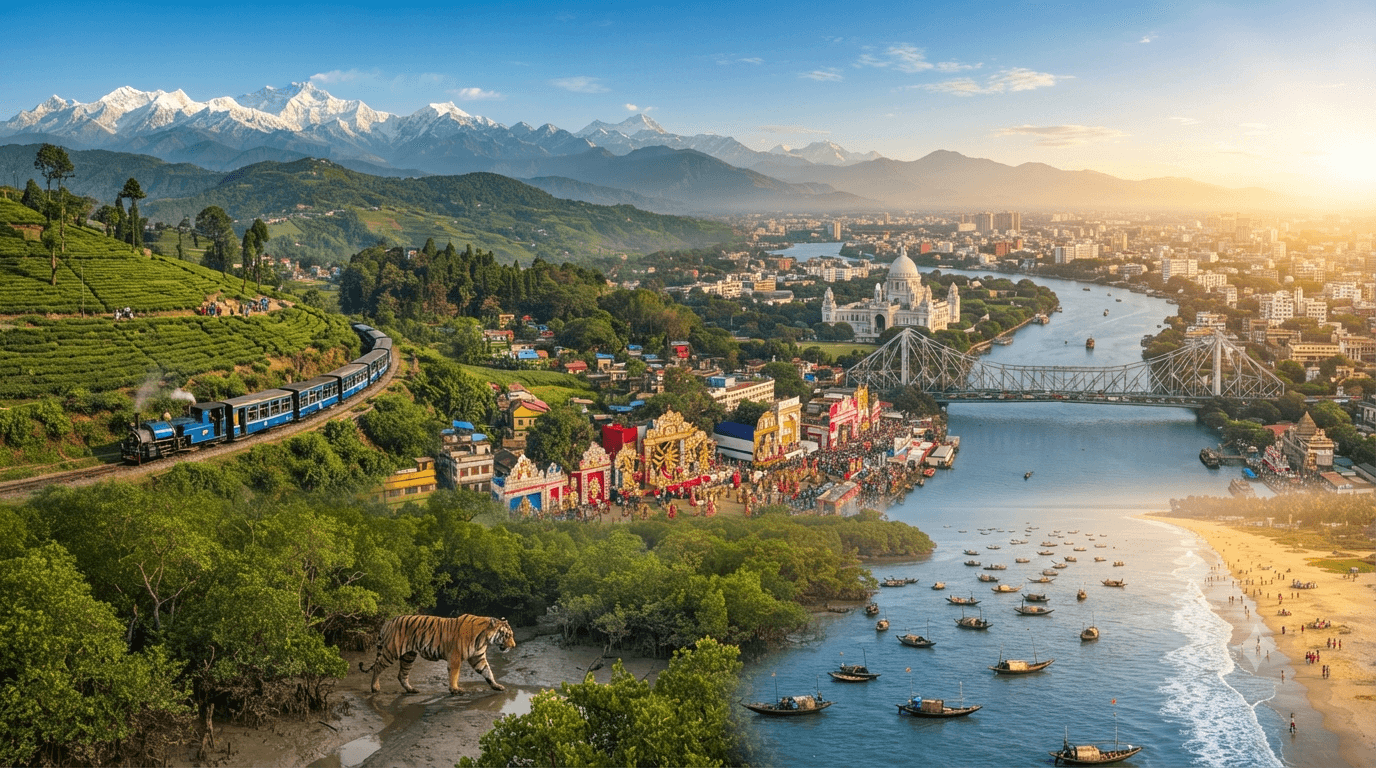
The Cultural Capital of India. West Bengal is one of India’s most historically significant and culturally vibrant states. Located in the eastern part of the country, it shares international borders with Bangladesh, Nepal, and Bhutan while connecting India’s northeastern states with the rest of the nation. The state is known for its rich heritage, intellectual traditions, magnificent architecture, colorful festivals, breathtaking landscapes, delicious cuisine, and immense contribution to India’s freedom movement and literature.
The capital city, Kolkata, is often called the “Cultural Capital of India.” It is famous for its colonial-era architecture, literary legacy, educational institutions, art galleries, museums, and iconic landmarks such as the Howrah Bridge and Victoria Memorial. West Bengal is also the birthplace of Nobel laureate Rabindranath Tagore and has produced many influential leaders, scientists, artists, and freedom fighters.
From the snow-covered Himalayan hills of Darjeeling to the dense mangrove forests of the Sundarbans, West Bengal offers extraordinary geographical diversity. Visitors can experience tea gardens, wildlife sanctuaries, beaches, rivers, heritage towns, religious sites, and vibrant cities within a single state. The Sundarbans, home to the majestic Royal Bengal Tiger, is recognized as a UNESCO World Heritage Site and remains one of the world’s largest mangrove ecosystems.
Agriculture plays a vital role in the state’s economy, with rice, jute, tea, potatoes, and various fruits being major crops. West Bengal is also an important center for commerce, information technology, manufacturing, handicrafts, and tourism. Traditional art forms such as terracotta craftsmanship, Kantha embroidery, and classical music continue to flourish alongside modern industries.
The state celebrates numerous festivals with unmatched enthusiasm, especially Durga Puja, which attracts millions of visitors from across the globe. Bengali cuisine, featuring dishes like Macher Jhol, Shorshe Ilish, Rosogolla, Mishti Doi, and Sandesh, reflects the state’s deep culinary heritage.
Whether you are a history enthusiast, nature lover, wildlife photographer, spiritual traveler, or food explorer, West Bengal promises an unforgettable experience filled with culture, tradition, and natural beauty. Its unique blend of ancient heritage and modern development makes it one of the most fascinating destinations in India.
West Bengal at a Glance
West Bengal is one of the most culturally influential and geographically diverse states in eastern India. It stretches from the snow-covered Himalayan foothills in the north to the world’s largest mangrove forest in the south, offering an extraordinary blend of mountains, plains, rivers, forests, tea gardens, heritage cities, and coastal landscapes. The state plays a vital role in India’s history, economy, literature, education, art, and tourism.
Kolkata, the capital of West Bengal, serves as the state’s political, cultural, and commercial center. Known for its colonial architecture, intellectual legacy, vibrant festivals, and artistic traditions, the city has earned global recognition as the Cultural Capital of India. West Bengal is also home to internationally renowned destinations such as Darjeeling, Sundarbans National Park, Digha, Kalimpong, Shantiniketan, Bishnupur, and Murshidabad.
The state shares its borders with Bangladesh, Nepal, Bhutan, Sikkim, Assam, Jharkhand, Bihar, Odisha, and the Bay of Bengal. This strategic location makes West Bengal an important gateway connecting mainland India with the northeastern states while also facilitating international trade through land and sea routes.
West Bengal has a strong agricultural base supported by fertile alluvial plains formed by the Ganga River system. Rice, tea, jute, potatoes, and fruits are among the state’s major agricultural products. Alongside agriculture, industries such as information technology, engineering, textiles, petrochemicals, steel, leather, tourism, and handicrafts contribute significantly to the state’s economy.
The state is internationally celebrated for its literature, music, cinema, theatre, art, and festivals. Durga Puja, recognized by UNESCO as an Intangible Cultural Heritage of Humanity, represents the cultural identity of West Bengal and attracts millions of visitors every year. Bengali cuisine, traditional handicrafts, classical dance, folk music, and warm hospitality further enhance the state’s cultural richness.
The following table provides a quick overview of the most important facts about West Bengal.
| Particular | Details |
|---|---|
| State Name | West Bengal |
| Capital | Kolkata |
| Formation Date | 26 January 1950 |
| Region | Eastern India |
| Largest City | Kolkata |
| Official Language | Bengali |
| Additional Official Languages | English, Hindi, Nepali, Urdu and others in notified areas |
| Area | 88,752 sq km |
| Population (2011 Census) | 91.3 million+ |
| Literacy Rate | 76.26% |
| Districts | 23 |
| State Animal | Fishing Cat |
| State Bird | White-throated Kingfisher |
| State Tree | Chatim (Devil Tree) |
| State Flower | Night-flowering Jasmine (Sheuli) |
| Highest Peak | Sandakphu |
| Major River | Ganga (Hooghly), Teesta, Damodar, Subarnarekha |
| UNESCO World Heritage Sites | Sundarbans National Park, Darjeeling Himalayan Railway, Santiniketan |
| Famous Festival | Durga Puja |
| Famous Food | Macher Jhol, Shorshe Ilish, Rosogolla, Mishti Doi, Sandesh |
| Major Industries | Tea, Jute, IT, Steel, Petrochemicals, Textiles, Tourism |
West Bengal on the India Map
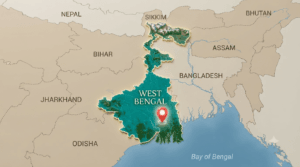
West Bengal is located in the eastern part of India and occupies a strategically important position in the country. The state serves as the primary gateway connecting mainland India with the eight northeastern states through the narrow Siliguri Corridor, often referred to as the “Chicken’s Neck.” This geographical significance has made West Bengal an important center for transportation, trade, defense, and regional connectivity.
The state shares international borders with Bangladesh to the east, Nepal to the northwest, and Bhutan to the north. Within India, West Bengal borders Sikkim in the north, Assam in the northeast, Jharkhand in the west, Bihar in the northwest, and Odisha in the southwest. Its southern boundary is formed by the Bay of Bengal, providing the state with an extensive coastline that supports ports, fisheries, tourism, and maritime trade.
One of the unique geographical features of West Bengal is its remarkable diversity. The northern region is dominated by the Himalayan mountains and the famous tea gardens of Darjeeling and Kalimpong. The central part consists of fertile alluvial plains nourished by the Ganga River system, making it one of India’s most productive agricultural regions. The western districts feature plateaus and forests that form part of the Chota Nagpur Plateau, while the southern region is home to the Sundarbans, the world’s largest mangrove forest and the habitat of the Royal Bengal Tiger.
The Hooghly River, a major distributary of the Ganga, flows through the heart of the state and has played a crucial role in shaping West Bengal’s history, economy, and urban development. Kolkata, situated on the eastern bank of the Hooghly River, developed into one of India’s most important ports during the colonial period and continues to be a major commercial hub.
West Bengal’s strategic location enhances its economic importance by facilitating trade with neighboring countries and supporting national transportation networks. Its extensive railway system, national highways, international airports, inland waterways, and seaports connect the state efficiently with the rest of India and neighboring nations.
Geography of West Bengal
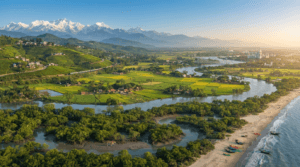
West Bengal is one of India’s most geographically diverse states, extending from the snow-clad Himalayan mountains in the north to the vast coastal plains and mangrove forests along the Bay of Bengal in the south. Covering an area of 88,752 square kilometres, the state exhibits remarkable variations in altitude, climate, soil, vegetation, and natural resources. This diversity supports a wide range of ecosystems, agricultural practices, wildlife habitats, and human settlements.
The northernmost part of West Bengal is occupied by the Eastern Himalayas, where lofty mountain ranges, deep valleys, dense forests, and rolling tea gardens create spectacular landscapes. Darjeeling, Kalimpong, and the surrounding hill regions are famous for their cool climate, panoramic Himalayan views, and world-renowned tea plantations. Sandakphu, the state’s highest peak at 3,636 metres (11,930 feet), offers breathtaking views of Mount Everest, Kanchenjunga, Lhotse, and Makalu.
South of the Himalayan region lies the Terai and Dooars belt, characterized by lush grasslands, forests, and numerous rivers descending from the mountains. This region is rich in biodiversity and serves as an important habitat for elephants, rhinoceroses, bison, leopards, and several endangered bird species. It also supports extensive tea cultivation and eco-tourism.
The central region consists of the vast Gangetic alluvial plains formed by the Ganga and its distributaries. These highly fertile plains support intensive agriculture and are among the most densely populated regions of India. Rice, jute, wheat, maize, vegetables, fruits, sugarcane, and oilseeds are cultivated extensively due to the availability of fertile soil and abundant water resources.
Western West Bengal forms part of the Chota Nagpur Plateau, where the terrain becomes rocky and undulating. Districts such as Purulia, Bankura, Jhargram, and parts of Paschim Medinipur are characterized by laterite soil, low hills, forests, and mineral resources. These regions contribute significantly to mining, forestry, and traditional handicrafts.
The southernmost region is dominated by the Ganga Delta, which gradually merges into the Sundarbans—the largest mangrove forest on Earth. This UNESCO World Heritage Site protects thousands of plant and animal species, including the iconic Royal Bengal Tiger. Numerous tidal rivers, estuaries, mudflats, and islands define this unique coastal ecosystem, making it one of the world’s most important biodiversity hotspots.
West Bengal is blessed with an extensive river network that includes the Ganga (Hooghly), Teesta, Damodar, Ajay, Mayurakshi, Rupnarayan, Subarnarekha, and Mahananda rivers. These rivers play a vital role in irrigation, transportation, hydroelectric power generation, fisheries, and sustaining agriculture across the state.
The state’s varied geography supports an exceptional range of flora and fauna, multiple climatic zones, rich natural resources, and diverse livelihoods. From mountain trekking and tea tourism to river cruises, wildlife safaris, heritage exploration, and coastal recreation, West Bengal offers countless opportunities for visitors to experience its extraordinary natural beauty.
History of West Bengal
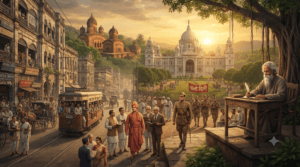
The history of West Bengal is one of the oldest and most influential in the Indian subcontinent. The region has witnessed the rise and fall of powerful kingdoms, the spread of major religions, the growth of international trade, the arrival of European colonial powers, and significant movements that shaped modern India. From the ancient civilization of Gangaridai to the Bengal Renaissance and India’s freedom struggle, West Bengal has remained at the center of political, cultural, educational, and economic developments for over two thousand years.
Archaeological discoveries indicate that human settlements existed in this region thousands of years ago. Ancient texts refer to prosperous kingdoms such as Vanga, Pundra, Gauda, Suhma, and Radha, which flourished because of fertile river valleys and thriving trade routes. These kingdoms maintained commercial links with Southeast Asia, Sri Lanka, and other parts of the Indian Ocean through maritime trade. Agriculture, river transport, handicrafts, and commerce contributed significantly to their prosperity.
During the Maurya Empire in the 4th century BCE, Bengal became an important province under Emperor Ashoka. Buddhism spread widely during this period, leading to the establishment of monasteries, educational centers, and trade networks. After the decline of the Mauryan Empire, several regional dynasties governed the area before the rise of the Gupta Empire, often regarded as India’s Golden Age. Under Gupta rule, literature, science, mathematics, astronomy, art, and architecture flourished throughout Bengal.
Between the 8th and 12th centuries CE, the Pala Dynasty emerged as one of eastern India’s most powerful empires. The Pala rulers were devoted patrons of Buddhism and established internationally renowned universities such as Nalanda, Vikramashila, and Somapura Mahavihara, attracting scholars from across Asia. Their rule encouraged education, philosophy, sculpture, and international cultural exchange, making Bengal a major center of Buddhist learning.
The Sena Dynasty succeeded the Palas during the 11th and 12th centuries. The Sena rulers promoted Hindu traditions, Sanskrit literature, temple construction, and Brahmanical institutions while preserving many cultural achievements inherited from earlier dynasties. Their reign witnessed the continued growth of agriculture, literature, and regional administration.
In the early 13th century, Bengal came under the influence of the Delhi Sultanate following military campaigns led by Bakhtiyar Khalji. Islamic culture gradually spread across the region through rulers, merchants, and Sufi saints. Over time, Bengal developed a distinctive cultural identity where Hindu, Buddhist, and Islamic traditions coexisted and influenced one another. This period also witnessed remarkable developments in architecture, literature, music, and craftsmanship.
Later, the independent Bengal Sultanate emerged as one of South Asia’s wealthiest and most powerful kingdoms. The fertile plains, thriving textile industry, shipbuilding, and overseas trade transformed Bengal into an important commercial center connecting India with Southeast Asia, the Middle East, and Europe. Fine muslin, silk, spices, rice, and handicrafts from Bengal gained international recognition and were exported across the world.
The arrival of European trading companies during the 16th and 17th centuries marked a turning point in Bengal’s history. Portuguese, Dutch, Danish, French, and British merchants established trading settlements along the rivers and coastal regions to benefit from Bengal’s thriving textile, silk, saltpetre, indigo, and spice trade. Among these powers, the British East India Company gradually expanded its commercial and political influence.
A defining moment came in 1757 with the Battle of Plassey, where the British East India Company, led by Robert Clive, defeated Nawab Siraj-ud-Daulah. This victory laid the foundation for British political control in Bengal and eventually across much of India. Following the Battle of Buxar in 1764, the Company secured the Diwani rights of Bengal, Bihar, and Odisha, giving it authority over revenue collection and administration. Bengal became the administrative and economic centre of British India, while Kolkata (then Calcutta) served as the capital of British India until 1911.
Although British rule introduced modern railways, ports, educational institutions, postal services, and administrative reforms, it also resulted in economic exploitation. Traditional industries, especially the world-famous textile sector, suffered severe decline due to colonial policies. Heavy taxation, repeated famines, and the drain of wealth significantly affected the lives of ordinary people. The Great Bengal Famine of 1770 and the devastating Bengal Famine of 1943 caused immense human suffering and remain among the darkest chapters in the region’s history.
During the 19th century, West Bengal became the birthplace of the Bengal Renaissance, one of the most significant intellectual and cultural movements in modern Indian history. This period witnessed remarkable progress in literature, education, science, social reform, art, journalism, and philosophy. Visionary reformers such as Raja Ram Mohan Roy worked tirelessly to eradicate social evils including Sati and promoted women’s education, religious reform, and modern learning. Later, eminent personalities including Ishwar Chandra Vidyasagar, Bankim Chandra Chattopadhyay, Rabindranath Tagore, Jagadish Chandra Bose, Swami Vivekananda, and many others transformed India’s cultural and intellectual landscape through their extraordinary contributions.
The people of Bengal played a leading role in India’s freedom movement. The Partition of Bengal in 1905, carried out by Lord Curzon, was strongly opposed by people across the region. Massive protests, public meetings, and the Swadeshi Movement encouraged Indians to boycott British goods and promote indigenous industries. The movement inspired nationalism throughout the country and became a milestone in India’s struggle for independence. Due to widespread resistance, the British government annulled the partition in 1911, while simultaneously shifting the capital of British India from Calcutta to Delhi.
West Bengal produced many legendary freedom fighters, revolutionaries, and national leaders who dedicated their lives to India’s independence. Netaji Subhas Chandra Bose emerged as one of the most influential leaders of the freedom struggle by organizing the Indian National Army (INA) and inspiring millions with the slogan “Give me blood, and I will give you freedom.” Revolutionary organizations such as Anushilan Samiti and Jugantar also operated extensively in Bengal, carrying out numerous movements against British rule. The courage and sacrifices of Bengal’s revolutionaries remain an enduring source of national pride.
In 1947, British India was partitioned into India and Pakistan based on religious demographics. The historic province of Bengal was divided into West Bengal, which became part of the Republic of India, and East Bengal, which became East Pakistan and later emerged as Bangladesh in 1971. The partition triggered one of the largest migrations in human history, as millions of people crossed the newly created borders seeking safety and new livelihoods. Despite the immense social and economic challenges, West Bengal gradually rebuilt its economy and strengthened its educational, industrial, and cultural institutions.
After independence, West Bengal witnessed rapid urbanization, industrial expansion, and agricultural development. The state played a significant role in India’s Green Revolution through improvements in irrigation and farming techniques. Kolkata continued to evolve as a major centre for finance, education, literature, healthcare, culture, science, and commerce. Institutions such as the Indian Statistical Institute, the Indian Museum, the Asiatic Society, and several prestigious universities reinforced the state’s reputation as a hub of intellectual excellence.
Today, West Bengal stands as a symbol of India’s rich historical legacy, cultural diversity, artistic brilliance, and democratic values. Its ancient civilizations, medieval kingdoms, colonial heritage, literary achievements, revolutionary movements, and modern economic progress together create a remarkable historical journey that continues to inspire visitors, researchers, students, and historians from around the world.
Climate of West Bengal
West Bengal experiences a predominantly tropical monsoon climate, although weather conditions vary considerably across the state because of its diverse topography. The Himalayan districts in the north enjoy a cool mountain climate, while the southern coastal region remains warm and humid throughout much of the year. This climatic diversity influences agriculture, biodiversity, tourism, water resources, and daily life across different regions.
The state generally experiences four distinct seasons:
- Summer (March to May): Temperatures rise significantly across the plains, with daytime temperatures commonly ranging between 30°C and 40°C. Northern hill stations such as Darjeeling and Kalimpong remain comparatively pleasant, making them popular summer destinations.
- Monsoon (June to September): The southwest monsoon brings heavy rainfall to most parts of the state. The Himalayan foothills and the Dooars region receive some of the highest rainfall, while the Gangetic plains also benefit from abundant precipitation that replenishes rivers, reservoirs, and agricultural fields.
- Post-Monsoon (October to November): Rainfall gradually decreases, humidity begins to fall, and the weather becomes more comfortable. This period coincides with the festive season, especially Durga Puja, when pleasant conditions attract large numbers of visitors.
- Winter (December to February): Winters are generally mild in the plains, with temperatures usually ranging from 10°C to 20°C. In contrast, the northern Himalayan region experiences much colder conditions, and higher elevations occasionally receive snowfall.
Rainfall is unevenly distributed across West Bengal. The northern districts receive very high annual precipitation due to the Himalayan terrain, whereas the western plateau region records comparatively lower rainfall. The fertile alluvial plains benefit from regular monsoon showers, supporting multiple cropping seasons and making the state one of India’s leading agricultural regions.
The most favourable time to explore West Bengal is October to March, when the weather is pleasant for sightseeing, wildlife tourism, heritage walks, beach visits, tea garden tours, and outdoor activities across most parts of the state.
Rivers of West Bengal
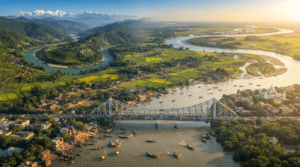
West Bengal possesses one of the most extensive river systems in India, with rivers originating from both the Himalayas and the Chota Nagpur Plateau before flowing into the Bay of Bengal. These rivers have shaped the state’s landscape, supported agriculture, encouraged trade, generated hydroelectric power, sustained fisheries, and influenced the growth of towns and cities for centuries. The fertile river valleys also make West Bengal one of the country’s most productive agricultural regions.
The Ganga enters West Bengal near the northern districts and later divides into distributaries. Its most important distributary within the state is the Hooghly River, which flows past Kolkata before emptying into the Bay of Bengal. The Hooghly has been the backbone of West Bengal’s commercial development, supporting inland navigation, ports, industries, and trade since ancient times.
The Teesta River, originating from the Eastern Himalayas, is the principal river of North Bengal. It flows through Kalimpong, Jalpaiguri, and Cooch Behar districts before entering Bangladesh. The river plays a crucial role in irrigation, drinking water supply, hydroelectric power generation, and agriculture in the northern region.
The Damodar River, once known as the “Sorrow of Bengal” because of its frequent floods, has been transformed through dams and reservoirs developed under the Damodar Valley Project. Today, it contributes significantly to irrigation, flood control, electricity generation, and industrial development in western West Bengal.
Other important rivers include the Mahananda, Ajay, Mayurakshi, Rupnarayan, Subarnarekha, Torsa, Jaldhaka, Ichamati, and Matla. Each river supports local agriculture, fisheries, transportation, biodiversity, and rural livelihoods while enriching the state’s ecological balance.
The vast network of rivers, canals, estuaries, and tidal creeks ultimately forms the Ganga-Brahmaputra Delta, one of the largest river deltas in the world. This delta supports the internationally renowned Sundarbans mangrove ecosystem and provides an ideal habitat for numerous species of fish, birds, reptiles, and the iconic Royal Bengal Tiger.
| River | Origin | Importance |
|---|---|---|
| Ganga (Hooghly) | Himalayas | Navigation, ports, irrigation, trade |
| Teesta | Eastern Himalayas | Irrigation, hydropower, agriculture |
| Damodar | Chota Nagpur Plateau | Flood control, industry, electricity |
| Mahananda | Darjeeling Hills | Agriculture and irrigation |
| Ajay | Jharkhand | Farming and water supply |
| Mayurakshi | Jharkhand | Irrigation projects |
| Rupnarayan | Western Highlands | Fisheries and navigation |
| Subarnarekha | Chota Nagpur Plateau | Agriculture and industry |
| Matla | Sundarbans | Mangrove ecosystem and fisheries |
Agriculture of West Bengal
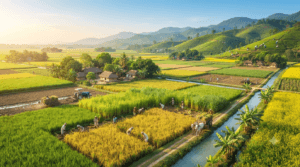
Agriculture forms the backbone of West Bengal’s rural economy and provides livelihoods to millions of people across the state. Blessed with fertile alluvial soil, abundant water resources, favourable climatic conditions, and an extensive irrigation network, West Bengal ranks among India’s leading agricultural producers. Farming not only supports food security but also supplies raw materials to industries such as tea processing, jute manufacturing, food processing, textiles, and sugar production.
Rice is the principal food crop and is cultivated across almost every district. Depending on seasonal conditions, farmers grow multiple varieties such as Aus, Aman, and Boro rice, ensuring year-round production. West Bengal is consistently one of India’s largest rice-producing states, contributing significantly to the nation’s food grain output.
The state is internationally renowned for its premium-quality Darjeeling Tea, which is cultivated in the Himalayan foothills of Darjeeling and Kalimpong. Recognized with a Geographical Indication (GI) tag, Darjeeling Tea is celebrated worldwide for its distinctive aroma, delicate flavour, and exceptional quality. The tea industry is also a major source of employment and export revenue.
West Bengal is India’s leading producer of jute, earning the title “Jute Capital of India.” Jute cultivation is concentrated along the fertile plains of the Ganga basin, where climatic conditions are ideal for producing high-quality fibre. The crop supports numerous jute mills that manufacture eco-friendly products such as bags, ropes, carpets, packaging materials, and handicrafts.
Besides rice, tea, and jute, farmers cultivate a wide range of crops including potatoes, wheat, maize, pulses, mustard, sugarcane, oilseeds, vegetables, spices, and fruits. Mangoes, litchis, pineapples, oranges, guavas, bananas, and watermelons are produced in different agro-climatic regions, supporting both domestic markets and food-processing industries.
Horticulture, floriculture, fisheries, and animal husbandry have become important components of the agricultural sector. West Bengal is one of India’s largest producers of freshwater fish, while flower cultivation has expanded rapidly around districts supplying domestic and export markets. Government initiatives promoting modern irrigation, mechanisation, high-yield seed varieties, soil conservation, and sustainable farming continue to improve agricultural productivity and farmers’ incomes.
| Crop | Major Producing Regions | Primary Uses |
|---|---|---|
| Rice | Statewide | Staple food |
| Tea | Darjeeling, Kalimpong, Jalpaiguri | Beverage and exports |
| Jute | Hooghly Basin, Nadia, Murshidabad | Fibre and manufacturing |
| Potato | Hooghly, Bardhaman, Bankura | Food processing and consumption |
| Wheat | Central and Western districts | Food grain |
| Mustard | Gangetic plains | Edible oil |
| Sugarcane | Northern and Central districts | Sugar industry |
| Fruits & Vegetables | Across the state | Fresh consumption and processing |
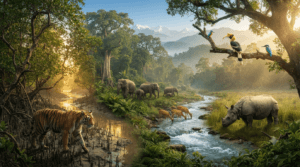
Flora and Fauna of West Bengal
West Bengal is one of India’s richest states in terms of biodiversity, with ecosystems ranging from alpine vegetation in the Himalayan mountains to tropical mangrove forests along the Bay of Bengal. The state’s varied altitude, rainfall patterns, soil types, and climatic conditions have created habitats that support thousands of plant and animal species. This remarkable ecological diversity makes West Bengal an important centre for wildlife conservation, ecological research, and nature tourism.
The northern Himalayan region is covered with temperate and subtropical forests consisting of oak, pine, fir, spruce, rhododendron, bamboo, and magnolia. During spring, the hills bloom with colourful rhododendron flowers, transforming the landscape into a spectacular natural attraction. These forests provide shelter to numerous mammals, birds, reptiles, and insects that thrive in cooler climatic conditions.
The Terai and Dooars region contains dense moist deciduous forests dominated by sal, teak, simul, sissoo, khair, and cane. Rich grasslands and riverine forests in this belt support a wide variety of wildlife and play a vital role in maintaining ecological balance. The region also serves as an important wildlife corridor connecting protected areas in India, Nepal, and Bhutan.
Southern West Bengal is internationally known for the Sundarbans Mangrove Forest, the world’s largest tidal mangrove ecosystem. Mangrove species such as Sundari, Gewa, Goran, Keora, and Dhundul are specially adapted to survive in saline water and tidal conditions. These forests protect the coastline from cyclones, tidal surges, and soil erosion while serving as vital breeding grounds for fish, crustaceans, and aquatic life.
West Bengal is home to an impressive variety of wildlife. The Royal Bengal Tiger is the state’s most iconic animal and is primarily found in the Sundarbans. Other notable mammals include the Indian elephant, Indian rhinoceros, gaur (Indian bison), leopard, fishing cat, clouded leopard, Himalayan black bear, barking deer, sambar deer, wild boar, and rhesus macaque.
The state is also a paradise for birdwatchers, with more than 800 recorded bird species. Commonly sighted birds include the White-throated Kingfisher, Himalayan Monal, hornbills, eagles, kingfishers, herons, storks, pelicans, migratory ducks, and numerous wetland birds. Wetlands and protected forests attract thousands of migratory birds during winter, making West Bengal one of India’s premier birdwatching destinations.
Its rivers, wetlands, forests, mountains, and mangrove ecosystems together sustain an extraordinary diversity of reptiles, amphibians, butterflies, freshwater fish, and marine life. Continuous conservation programmes, afforestation initiatives, wildlife monitoring, and community participation have strengthened efforts to preserve the state’s natural heritage for future generations.
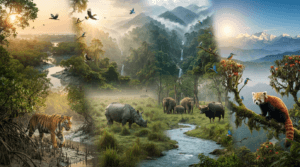
National Parks and Wildlife Sanctuaries of West Bengal
West Bengal has one of the most diverse protected area networks in India, safeguarding ecosystems that range from Himalayan forests and river valleys to tropical deciduous woodlands and the world’s largest mangrove forest. These protected areas play a crucial role in conserving endangered wildlife, maintaining ecological balance, supporting scientific research, and promoting sustainable eco-tourism. The state’s national parks and wildlife sanctuaries attract nature lovers, wildlife photographers, birdwatchers, and researchers from around the world.
The Sundarbans National Park is West Bengal’s most famous protected area and a UNESCO World Heritage Site. Located in the southern delta region, it is renowned for its vast mangrove forests and the elusive Royal Bengal Tiger. The park also supports estuarine crocodiles, fishing cats, spotted deer, water monitor lizards, river dolphins, and hundreds of bird species adapted to the tidal ecosystem.
In the Himalayan foothills, Singalila National Park is celebrated for its high-altitude forests, spectacular mountain landscapes, and rich biodiversity. The park is one of the best places in India to observe the endangered Red Panda in its natural habitat. Visitors can also encounter Himalayan black bears, barking deer, clouded leopards, pheasants, and numerous alpine bird species.
Jaldapara National Park, situated in the Dooars region, is one of India’s most important habitats for the Indian one-horned rhinoceros. The park’s extensive grasslands and riverine forests are also home to Asian elephants, gaur, hog deer, leopards, and a wide variety of birds. Elephant safaris are among the park’s most popular attractions.
Gorumara National Park is another prominent wildlife destination in North Bengal. It protects populations of Indian rhinoceroses, elephants, bison, leopards, sambar deer, and more than 200 species of birds. Observation towers located throughout the park provide excellent opportunities for wildlife viewing.
West Bengal is also home to several important wildlife sanctuaries, including Buxa, Chapramari, Mahananda, Ballavpur, Bethuadahari, Lothian Island, Haliday Island, and Sajnakhali Wildlife Sanctuary. Together, these protected areas conserve diverse habitats while protecting numerous rare and endangered species of mammals, birds, reptiles, amphibians, butterflies, and aquatic life.
| Protected Area | Location | Famous For |
|---|---|---|
| Sundarbans National Park | South 24 Parganas | Royal Bengal Tiger, mangrove forests |
| Singalila National Park | Darjeeling | Red Panda, Himalayan biodiversity |
| Jaldapara National Park | Alipurduar | Indian One-horned Rhinoceros |
| Gorumara National Park | Jalpaiguri | Rhinoceros, elephants, birdlife |
| Buxa National Park | Alipurduar | Tigers, elephants, butterflies |
| Chapramari Wildlife Sanctuary | Jalpaiguri | Elephants and birdwatching |
| Mahananda Wildlife Sanctuary | Darjeeling & Kalimpong region | Himalayan wildlife |
| Sajnakhali Wildlife Sanctuary | Sundarbans | Mangrove ecosystem and birdlife |
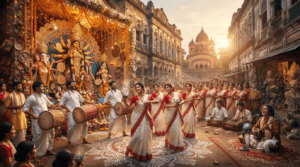
Culture and Traditions of West Bengal
West Bengal is widely regarded as the cultural heart of India, where literature, music, dance, theatre, painting, craftsmanship, and festivals have flourished for centuries. The state’s cultural identity reflects a harmonious blend of ancient traditions, regional customs, spiritual values, and modern artistic expression. Everyday life in West Bengal is deeply connected with creativity, community celebrations, and respect for knowledge, making culture an integral part of society rather than a separate aspect of life.
The Bengali language serves as the primary medium of literature and cultural expression. Over generations, the state has nurtured renowned poets, novelists, playwrights, philosophers, filmmakers, and artists whose works have earned international recognition. Literary gatherings, book fairs, poetry recitals, theatre performances, and cultural festivals remain an important part of social life across both urban and rural communities.
Music occupies a special place in West Bengal’s cultural heritage. Rabindra Sangeet, composed by Rabindranath Tagore, continues to influence generations with its poetic lyrics and timeless melodies. Other popular musical traditions include Baul folk music, Nazrul Geeti, Bhawaiya, Kirtan, and Shyama Sangeet, each representing different regions, communities, and devotional traditions within the state.
Traditional dance and folk performances preserve the cultural identity of different regions. Chhau dance, especially in Purulia district, combines martial arts, storytelling, colourful masks, and energetic movements. Folk performances such as Gambhira, Jhumur, and Alkap continue to be performed during village festivals, seasonal celebrations, and religious occasions, keeping centuries-old traditions alive.
West Bengal is equally famous for its exceptional handicrafts and traditional art forms. Bishnupur terracotta art, Kantha embroidery, Dokra metal craft, Sholapith artwork, wood carving, clay sculpture, and handloom weaving reflect the creativity and craftsmanship of local artisans. These traditional crafts are not only important cultural symbols but also provide livelihoods to thousands of artisan families across the state.
Hospitality, respect for education, artistic appreciation, and strong family values remain central to Bengali society. Cultural institutions, museums, art galleries, libraries, and educational centres continue to preserve and promote the state’s rich heritage. By successfully balancing tradition with modernity, West Bengal has maintained its position as one of India’s most influential centres of art, literature, and culture.
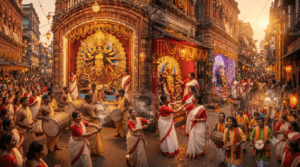
Festivals of West Bengal
Festivals in West Bengal are a vibrant expression of the state’s cultural heritage, religious harmony, and artistic excellence. Throughout the year, people from different communities celebrate traditional festivals with great enthusiasm, transforming cities, towns, and villages into colourful cultural hubs. Music, dance, art, food, processions, and community gatherings are integral parts of these celebrations, attracting millions of visitors from India and abroad.
Durga Puja is the grandest and most iconic festival of West Bengal. Celebrated during September or October, it marks the victory of Goddess Durga over the demon Mahishasura, symbolising the triumph of good over evil. Magnificent theme-based pandals, beautifully crafted idols, cultural performances, devotional rituals, and vibrant street celebrations make Durga Puja one of the world’s largest public festivals. In 2021, UNESCO inscribed Durga Puja in Kolkata on the Representative List of the Intangible Cultural Heritage of Humanity.
Another major celebration is Kali Puja, dedicated to Goddess Kali. Observed on the same night as Diwali, devotees illuminate homes and temples with lamps, offer prayers, and participate in special rituals seeking protection, prosperity, and spiritual well-being.
Poila Boishakh, the Bengali New Year, is celebrated in April with traditional attire, cultural programmes, music, fairs, and festive meals. Businesses begin new financial records with the customary Haal Khata ceremony, while families exchange greetings and celebrate the beginning of a prosperous new year.
The state also celebrates Saraswati Puja, particularly in schools, colleges, and educational institutions, where students worship the Goddess of Knowledge and Learning. Dol Jatra, the Bengali version of Holi, is observed with colours, devotional songs, and cultural festivities, especially at Shantiniketan, where it is celebrated as Basanta Utsav.
Other important festivals include Jagaddhatri Puja, Rath Yatra, Eid-ul-Fitr, Eid-ul-Adha, Christmas, Buddha Purnima, Guru Nanak Jayanti, Muharram, and Chhath Puja, reflecting the state’s rich religious diversity and communal harmony.
In addition to religious festivals, West Bengal hosts renowned cultural events such as the Kolkata International Film Festival, Kolkata Book Fair, Poush Mela, Gangasagar Mela, and various folk fairs that celebrate literature, cinema, handicrafts, music, and local traditions. These events further strengthen the state’s identity as one of India’s foremost centres of culture and creativity.
| Festival | Celebrated In | Significance |
|---|---|---|
| Durga Puja | Statewide | Worship of Goddess Durga |
| Kali Puja | Statewide | Devotion to Goddess Kali |
| Poila Boishakh | Statewide | Bengali New Year |
| Saraswati Puja | Schools & Homes | Goddess of Learning |
| Dol Jatra (Basanta Utsav) | Shantiniketan & Statewide | Spring festival and colours |
| Jagaddhatri Puja | Chandannagar & Krishnanagar | Worship of Goddess Jagaddhatri |
| Gangasagar Mela | Sagar Island | Pilgrimage at the Ganga–Bay of Bengal confluence |
| Kolkata Book Fair | Kolkata | Literature and publishing festival |

Famous Food of West Bengal
West Bengal is celebrated for one of India’s most diverse and refined culinary traditions. Bengali cuisine is known for its balanced use of aromatic spices, mustard oil, fresh seasonal ingredients, and subtle flavours that highlight the natural taste of each dish. The state’s food culture varies across regions, with the Himalayan districts, river plains, coastal areas, and urban centres each contributing unique recipes and cooking styles.
Fish is an integral part of Bengali cuisine due to the state’s extensive river network and coastal geography. Macher Jhol, a light fish curry prepared with seasonal vegetables and traditional spices, is one of the most popular everyday dishes. Shorshe Ilish, made with Hilsa fish cooked in a rich mustard sauce, is regarded as one of West Bengal’s signature delicacies and is especially enjoyed during the monsoon season.
Rice is the staple food and is commonly served with lentils, vegetable preparations, fish, meat, and chutneys. Traditional meals often include dishes such as Aloo Posto, Cholar Dal, Luchi, Kosha Mangsho, Mochar Ghonto, Shukto, and Begun Bhaja, reflecting the diversity of Bengali home-style cooking. Many recipes combine sweet, bitter, sour, and mildly spicy flavours to create a well-balanced dining experience.
West Bengal is equally famous for its world-renowned sweets. Rosogolla is perhaps the state’s most iconic dessert, prepared from soft chhena (cottage cheese) balls cooked in light sugar syrup. Other celebrated sweets include Sandesh, Mishti Doi, Pantua, Cham Cham, Kheer Kadam, Langcha, Sitabhog, and Mihidana, each representing the culinary heritage of different districts.
Street food is an essential part of West Bengal’s food culture, particularly in Kolkata. Popular snacks include Kathi Roll, Jhal Muri, Ghugni, Telebhaja, Phuchka, Mughlai Paratha, and Kolkata-style Egg Roll. These affordable and flavourful dishes are widely enjoyed by residents and visitors alike throughout the day.
Tea also holds a special place in the state’s culinary identity. The internationally acclaimed Darjeeling Tea, protected by a Geographical Indication (GI) tag, is prized for its distinctive aroma, delicate flavour, and premium quality. Whether enjoyed in traditional households, roadside tea stalls, or elegant cafés, tea remains an inseparable part of everyday life in West Bengal.
| Dish | Category | Specialty |
|---|---|---|
| Macher Jhol | Main Course | Traditional Bengali fish curry |
| Shorshe Ilish | Seafood | Hilsa cooked in mustard gravy |
| Kosha Mangsho | Main Course | Slow-cooked spicy mutton curry |
| Luchi with Cholar Dal | Breakfast | Deep-fried bread with Bengal gram curry |
| Shukto | Vegetarian | Traditional mixed vegetable dish |
| Rosogolla | Sweet | Cottage cheese dessert in sugar syrup |
| Sandesh | Sweet | Chhena-based delicacy |
| Mishti Doi | Dessert | Sweet fermented yogurt |
| Phuchka | Street Food | Crisp shells filled with tangy spiced water |
| Kathi Roll | Street Food | Stuffed flatbread roll |
Government and Administration
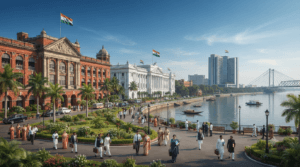
West Bengal follows a parliamentary system of governance based on the Constitution of India. The state government functions through three independent pillars—the Executive, the Legislature, and the Judiciary—which work together to ensure democratic administration, law enforcement, public welfare, and socio-economic development. The capital city, Kolkata, serves as the administrative headquarters, where the principal offices of the state government and major constitutional institutions are located.
The Governor is the constitutional head of the state and is appointed by the President of India. The Governor performs constitutional duties such as appointing the Chief Minister, summoning the Legislative Assembly, approving state legislation, and ensuring that the government functions in accordance with the Constitution.
The Chief Minister is the head of the elected government and exercises executive authority with the support of the Council of Ministers. The government is responsible for policy formulation and implementation in areas such as education, healthcare, agriculture, industry, transport, rural development, social welfare, tourism, and infrastructure.
West Bengal has a unicameral legislature, known as the West Bengal Legislative Assembly (Vidhan Sabha). Members of the Legislative Assembly (MLAs) are elected by the people through regular democratic elections. The Assembly debates and passes laws, approves the state budget, and holds the government accountable through discussions and legislative procedures.
The Calcutta High Court, established in 1862, is one of the oldest High Courts in India. It has jurisdiction over the state of West Bengal and the Union Territory of the Andaman and Nicobar Islands. The High Court safeguards constitutional rights, interprets laws, and supervises the functioning of subordinate courts across the state.
For administrative convenience, West Bengal is divided into 23 districts, each headed by a District Magistrate (DM) or District Collector, who oversees revenue administration, disaster management, law and order, and implementation of government programmes. At the grassroots level, local governance is carried out through Panchayati Raj Institutions in rural areas and Municipal Corporations, Municipalities, and Nagar Panchayats in urban areas. These local bodies are responsible for civic services, sanitation, drinking water supply, local infrastructure, waste management, and community development.
| Administrative Feature | Details |
|---|---|
| Capital | Kolkata |
| Government System | Parliamentary Democracy |
| Constitutional Head | Governor |
| Executive Head | Chief Minister |
| Legislature | Unicameral (Legislative Assembly) |
| High Court | Calcutta High Court |
| Number of Districts | 23 |
| Rural Local Government | Panchayati Raj Institutions |
| Urban Local Government | Municipal Corporations, Municipalities, Nagar Panchayats |
Population and Demographics
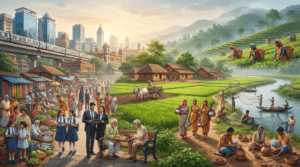
West Bengal is the fourth most populous state in India, with a population of more than 91 million according to the 2011 Census. Its fertile plains, historic trade centres, industrial cities, and educational institutions have attracted people from different parts of the country for generations, creating a diverse and multicultural society. The population is distributed across bustling metropolitan areas, medium-sized towns, and thousands of villages, each contributing to the state’s social and economic development.
The state has a high population density, particularly in the Gangetic plains and the Kolkata metropolitan region. Urban centres such as Kolkata, Howrah, Asansol, Durgapur, Siliguri, and Kharagpur have experienced steady growth due to industrialisation, commerce, education, healthcare, and employment opportunities. At the same time, a significant share of the population continues to reside in rural areas, where agriculture, fisheries, horticulture, and small-scale industries remain the primary sources of livelihood.
Bengali is the most widely spoken language and serves as the official language of the state. In addition to Bengali, several other languages are spoken by different communities, including Hindi, English, Nepali, Urdu, Santali, Kurmali, Rajbanshi, and various tribal languages. This linguistic diversity reflects West Bengal’s long history of migration, trade, and cultural interaction.
West Bengal is home to people belonging to different religions, ethnic groups, and indigenous communities who have coexisted peacefully for centuries. The state celebrates this diversity through its festivals, traditions, cuisine, literature, music, and cultural events. Communities living in the Himalayan districts, the Dooars region, the western plateau, the Gangetic plains, and the coastal belt each contribute unique customs and cultural practices to the state’s identity.
The literacy rate of West Bengal stands at 76.26% according to the 2011 Census, supported by a wide network of schools, colleges, universities, and research institutions. Continued investments in education, healthcare, sanitation, women’s empowerment, and digital services have contributed to improvements in social development indicators over the years.
| Demographic Indicator | Details |
|---|---|
| Population (2011 Census) | 91.3 million+ |
| Population Rank in India | 4th |
| Literacy Rate | 76.26% |
| Official Language | Bengali |
| Other Widely Spoken Languages | Hindi, English, Nepali, Urdu, Santali, Rajbanshi, Kurmali |
| Largest City | Kolkata |
| Major Urban Centres | Kolkata, Howrah, Asansol, Durgapur, Siliguri, Kharagpur |
| Predominant Livelihoods | Agriculture, Industry, Trade, Services, Fisheries |

Economy and Industries
West Bengal has one of the largest and most diversified economies in eastern India. Its strategic location, fertile agricultural land, abundant natural resources, major ports, industrial base, and extensive transportation network have made the state an important centre for trade, manufacturing, agriculture, and services. The economy is supported by a balanced contribution from the primary (agriculture), secondary (manufacturing), and tertiary (services) sectors.
Agriculture remains a cornerstone of the state’s economy, providing employment to a significant portion of the population. West Bengal is one of India’s leading producers of rice, potatoes, and jute, while also cultivating tea, maize, vegetables, fruits, oilseeds, and pulses. The fertile Gangetic plains, adequate rainfall, and extensive irrigation facilities contribute to high agricultural productivity. Fisheries and aquaculture also play a vital role, making the state one of the country’s largest producers of inland fish.
The industrial sector has a long and distinguished history dating back to the colonial era. The Kolkata–Howrah industrial belt continues to be a major manufacturing hub, producing engineering goods, automobiles, railway equipment, electrical machinery, chemicals, textiles, leather products, pharmaceuticals, and food products. Industrial centres such as Durgapur, Asansol, Haldia, Kharagpur, and Dankuni contribute significantly to the state’s manufacturing output.
West Bengal is internationally renowned for Darjeeling Tea, one of the world’s finest teas, and Bengal’s jute industry, which has historically earned the state the title of India’s “Jute Capital.” Tea plantations in Darjeeling and the Dooars region, along with jute mills located along the Hooghly River, continue to support exports and employment.
The service sector has emerged as a major driver of economic growth. Kolkata has developed into an important centre for banking, information technology (IT), financial services, education, healthcare, tourism, retail, and media. Modern IT parks, business districts, and start-up ecosystems have expanded rapidly, attracting domestic and international investment.
Trade and logistics are strengthened by the Kolkata Port and Haldia Dock Complex, which facilitate domestic and international commerce. An extensive network of highways, railways, airports, and inland waterways further enhances connectivity, enabling the efficient movement of goods across eastern and northeastern India.
| Sector | Major Products / Activities |
|---|---|
| Agriculture | Rice, Potato, Jute, Tea, Vegetables, Fruits |
| Fisheries | Inland Fish Production, Aquaculture |
| Manufacturing | Engineering, Automobiles, Chemicals, Pharmaceuticals |
| Textile Industry | Jute, Cotton, Silk, Handloom |
| Tea Industry | Darjeeling Tea, Dooars Tea |
| Information Technology | Software, IT Services, Business Process Services |
| Ports & Trade | Kolkata Port, Haldia Dock Complex |
| Tourism | Heritage, Wildlife, Hills, Beaches, Pilgrimage |
Top Tourist Places in West Bengal
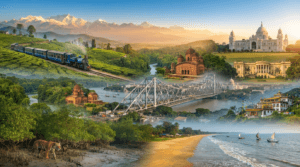
West Bengal is one of India’s most diverse travel destinations, offering majestic Himalayan landscapes, UNESCO World Heritage Sites, historic monuments, spiritual centres, wildlife reserves, tea gardens, mangrove forests, and serene beaches. From the snow-covered hills of Darjeeling to the tranquil waters of the Sundarbans and the cultural landmarks of Kolkata, the state provides unforgettable experiences for every type of traveller. Its rich heritage, natural beauty, and vibrant traditions make West Bengal a year-round tourist destination.
Major Tourist Attractions in West Bengal
| Tourist Place | Location | Major Attractions |
|---|---|---|
| Darjeeling | Darjeeling District | Himalayan views, Toy Train, Tea Gardens, Tiger Hill |
| Kolkata | Kolkata | Victoria Memorial, Howrah Bridge, Indian Museum, Dakshineswar Temple |
| Sundarbans National Park | South 24 Parganas | Royal Bengal Tiger, Mangrove Forest, Boat Safari |
| Kalimpong | Kalimpong District | Monasteries, Orchids, Scenic Hills |
| Digha | Purba Medinipur | Beaches, Marine Aquarium, Sunrise & Sunset |
| Shantiniketan | Birbhum District | Visva-Bharati University, Rabindra Bhavan, Cultural Heritage |
| Bishnupur | Bankura District | Terracotta Temples, Baluchari Sarees |
| Murshidabad | Murshidabad District | Hazarduari Palace, Katra Mosque, Nawabi Heritage |
| Dooars | Alipurduar & Jalpaiguri | Forests, Tea Estates, Wildlife Sanctuaries |
| Gangasagar | South 24 Parganas | Pilgrimage, Kapil Muni Temple, Gangasagar Mela |
Darjeeling
Often called the “Queen of the Hills,” Darjeeling is one of India’s most famous hill stations. Surrounded by lush tea gardens and the eastern Himalayas, it is renowned for its breathtaking sunrise at Tiger Hill, the Darjeeling Himalayan Railway (Toy Train), Buddhist monasteries, colonial architecture, and world-famous Darjeeling Tea. Adventure activities such as trekking and mountain climbing also attract visitors throughout the year.
Kolkata
The capital city, Kolkata, is the cultural and intellectual heart of West Bengal. Visitors can explore iconic landmarks such as the Victoria Memorial, Howrah Bridge, Indian Museum, Marble Palace, St. Paul’s Cathedral, Science City, Dakshineswar Kali Temple, and Belur Math. The city’s colonial architecture, literary heritage, vibrant festivals, and delicious street food make it one of India’s most fascinating metropolitan destinations.
Sundarbans National Park
A UNESCO World Heritage Site, the Sundarbans is the world’s largest mangrove forest and one of the most unique ecosystems on Earth. It is home to the majestic Royal Bengal Tiger, estuarine crocodiles, spotted deer, fishing cats, Gangetic dolphins, and hundreds of bird species. Boat safaris through the winding rivers and creeks offer visitors an unforgettable wildlife experience.
Shantiniketan
Founded by Nobel Laureate Rabindranath Tagore, Shantiniketan is internationally known for Visva-Bharati University and its emphasis on art, literature, music, and culture. The town attracts visitors with its peaceful atmosphere, museums, seasonal fairs, and cultural festivals, especially the colourful Basanta Utsav.
Other Popular Destinations
West Bengal also offers many other remarkable destinations, including Kalimpong with its monasteries and flower nurseries, Digha for its scenic beaches, Bishnupur for its terracotta temples and traditional crafts, Murshidabad for its Nawabi monuments, Dooars for wildlife tourism and tea gardens, and Gangasagar, one of India’s most important pilgrimage centres.
Together, these destinations showcase the extraordinary diversity of West Bengal, making it a perfect destination for nature lovers, history enthusiasts, spiritual seekers, wildlife photographers, and cultural explorers.
Religious Places of West Bengal
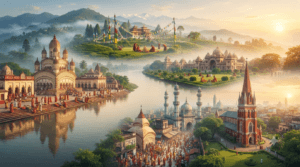
West Bengal is home to some of India’s most revered religious destinations, reflecting centuries of spiritual traditions, cultural harmony, and architectural excellence. The state has long been a meeting place of Hinduism, Buddhism, Islam, Christianity, Sikhism, and Jainism, making it one of the country’s most diverse spiritual landscapes. Magnificent temples, monasteries, mosques, churches, and pilgrimage centres attract millions of devotees and tourists every year.
Among the most famous pilgrimage sites is the Dakshineswar Kali Temple in Kolkata, dedicated to Goddess Kali. Built in 1855 by Rani Rashmoni, the temple is closely associated with the renowned saint Sri Ramakrishna Paramahamsa. Situated on the eastern bank of the Hooghly River, it is one of the most visited Hindu temples in eastern India.
Located across the river from Dakshineswar is Belur Math, the headquarters of the Ramakrishna Math and Ramakrishna Mission. Founded by Swami Vivekananda in 1897, Belur Math is admired for its unique architecture, which incorporates elements of Hindu, Islamic, Christian, and Buddhist styles, symbolising the unity of all religions.
The Kalighat Kali Temple, one of the 51 Shakti Peethas, is another major centre of devotion in Kolkata. Thousands of pilgrims visit the temple daily to seek the blessings of Goddess Kali, especially during Kali Puja and other religious festivals.
In the northern Himalayan region, the peaceful monasteries of Darjeeling and Kalimpong, such as Ghoom Monastery, Yiga Choeling Monastery, and Zang Dhok Palri Phodang Monastery, preserve Tibetan Buddhist traditions and offer serene spiritual experiences amid picturesque mountain landscapes.
West Bengal also has several important Islamic heritage sites, including the historic Nakhoda Mosque in Kolkata and the Katra Mosque in Murshidabad, which showcase remarkable Indo-Islamic architecture. Christian heritage is represented by beautiful churches such as St. Paul’s Cathedral and St. John’s Church in Kolkata, both known for their Gothic architecture and historical significance.
Another major pilgrimage destination is Gangasagar, where the Ganga meets the Bay of Bengal. Every year, millions of pilgrims gather during the Gangasagar Mela to take a holy dip and offer prayers at the Kapil Muni Temple, making it one of India’s largest annual religious gatherings.
| Religious Site | Location | Significance |
|---|---|---|
| Dakshineswar Kali Temple | Kolkata | Famous Kali temple associated with Sri Ramakrishna |
| Belur Math | Howrah | Headquarters of Ramakrishna Mission |
| Kalighat Kali Temple | Kolkata | One of the 51 Shakti Peethas |
| Gangasagar (Kapil Muni Temple) | Sagar Island | Major Hindu pilgrimage site |
| Ghoom Monastery | Darjeeling | Important Tibetan Buddhist monastery |
| Zang Dhok Palri Phodang Monastery | Kalimpong | Renowned Buddhist monastery |
| Nakhoda Mosque | Kolkata | One of eastern India’s largest mosques |
| Katra Mosque | Murshidabad | Historic Mughal-era mosque |
| St. Paul’s Cathedral | Kolkata | Historic Anglican cathedral |
| St. John’s Church | Kolkata | One of Kolkata’s oldest churches |
Architecture and Historical Monuments
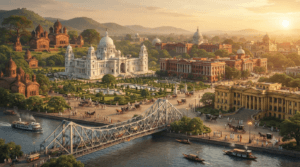
West Bengal possesses one of India’s richest architectural legacies, reflecting the influence of ancient kingdoms, the Bengal Sultanate, the Mughal Empire, European colonial powers, and modern Indian architecture. From magnificent temples and grand palaces to colonial landmarks and historic educational institutions, the state’s monuments showcase centuries of artistic excellence, engineering skill, and cultural evolution. These architectural treasures attract historians, architects, pilgrims, and tourists from around the world.
The capital city, Kolkata, is renowned for its colonial-era architecture. The iconic Victoria Memorial, built from white Makrana marble, stands as one of India’s finest examples of Indo-Saracenic architecture. Today, it functions as a museum displaying paintings, sculptures, historical documents, and artefacts related to British India. Nearby landmarks such as the Writers’ Building, Raj Bhavan, General Post Office (GPO), Town Hall, and the Indian Museum further highlight Kolkata’s colonial heritage.
One of the city’s most recognisable engineering landmarks is the Howrah Bridge (Rabindra Setu), a massive cantilever bridge spanning the Hooghly River. Opened in 1943, it remains one of the busiest cantilever bridges in the world and has become an enduring symbol of Kolkata. The modern Vidyasagar Setu, a cable-stayed bridge, complements the city’s historic riverfront skyline.
The temple town of Bishnupur in Bankura district is internationally famous for its terracotta temples, constructed by the Malla rulers between the 17th and 18th centuries. Temples such as the Rasmancha, Jor Bangla Temple, Shyam Rai Temple, and Madan Mohan Temple are admired for their intricate terracotta panels depicting scenes from Hindu epics, daily life, music, and dance. These monuments represent the finest examples of Bengal temple architecture.
The historic city of Murshidabad, once the capital of Bengal during the Nawabi period, preserves several remarkable monuments. The magnificent Hazarduari Palace, known for its thousand doors, now serves as a museum displaying royal artefacts, paintings, weapons, manuscripts, and furniture. Other notable monuments include the Katra Mosque, Nizamat Imambara, Kathgola Palace, and Nashipur Rajbari, each reflecting the grandeur of Bengal’s Nawabi era.
West Bengal also preserves important religious and educational architecture. Belur Math, Dakshineswar Kali Temple, Kalighat Kali Temple, St. Paul’s Cathedral, and Visva-Bharati University at Shantiniketan combine architectural beauty with immense historical, cultural, and spiritual significance. Together, these monuments represent the diverse artistic traditions that have shaped the identity of West Bengal over many centuries.
| Monument | Location | Architectural / Historical Significance |
|---|---|---|
| Victoria Memorial | Kolkata | Indo-Saracenic marble monument and museum |
| Howrah Bridge (Rabindra Setu) | Kolkata–Howrah | Iconic cantilever bridge across the Hooghly River |
| Indian Museum | Kolkata | Oldest and largest museum in India |
| Writers’ Building | Kolkata | Historic colonial administrative building |
| Bishnupur Terracotta Temples | Bankura | Finest examples of Bengal temple architecture |
| Hazarduari Palace | Murshidabad | Former Nawabi palace and museum |
| Katra Mosque | Murshidabad | Historic Mughal-era mosque |
| Belur Math | Howrah | Headquarters of the Ramakrishna Mission |
| Dakshineswar Kali Temple | Kolkata | Historic Hindu temple dedicated to Goddess Kali |
| Visva-Bharati University | Shantiniketan | Historic educational and cultural institution founded by Rabindranath Tagore |
UNESCO World Heritage Sites
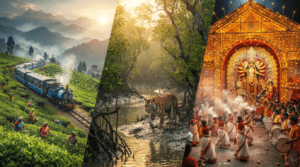
West Bengal is home to several UNESCO-recognised heritage treasures that highlight its exceptional natural beauty, engineering achievements, and cultural significance. These sites attract researchers, historians, architects, nature enthusiasts, and tourists from around the world. In addition to officially designated World Heritage Sites, the state also preserves traditions that have received international recognition for their cultural importance.
| UNESCO Site | Year of Inscription | Category | Significance |
|---|---|---|---|
| Darjeeling Himalayan Railway | 1999 | Cultural | Mountain railway noted for its engineering excellence and heritage value |
| Sundarbans National Park | 1987 | Natural | World’s largest mangrove forest and habitat of the Royal Bengal Tiger |
The Darjeeling Himalayan Railway (DHR), popularly known as the Toy Train, became West Bengal’s first UNESCO World Heritage Site in 1999. Built between 1879 and 1881, this narrow-gauge mountain railway connects New Jalpaiguri with Darjeeling, climbing through picturesque hills, tea gardens, forests, and charming mountain towns. Its innovative engineering, including loops and zigzags that help trains negotiate steep gradients, makes it one of the world’s most remarkable mountain railways. The railway continues to operate as both a heritage transport system and a major tourist attraction.
Sundarbans National Park was inscribed on the UNESCO World Heritage List in 1987 for its outstanding natural value. Located in the Ganga–Brahmaputra delta, it forms part of the world’s largest mangrove ecosystem. The park is internationally recognised for supporting the iconic Royal Bengal Tiger along with estuarine crocodiles, fishing cats, spotted deer, Gangetic dolphins, olive ridley turtles, and hundreds of species of birds, reptiles, and aquatic life. Its complex network of tidal rivers, mudflats, and mangrove forests plays a vital role in biodiversity conservation and coastal protection.
Beyond these World Heritage Sites, West Bengal has also received international recognition for its living cultural traditions. In 2021, Durga Puja in Kolkata was inscribed on UNESCO’s Representative List of the Intangible Cultural Heritage of Humanity. The recognition celebrates the festival’s unique blend of artistry, craftsmanship, music, community participation, and cultural expression, making it one of the world’s most celebrated public festivals.
These UNESCO recognitions highlight West Bengal’s remarkable contribution to global heritage. They preserve not only outstanding monuments and ecosystems but also living traditions that continue to inspire people across generations.
| Recognition | Year | Type | Importance |
|---|---|---|---|
| Darjeeling Himalayan Railway | 1999 | World Heritage Site (Cultural) | Historic mountain railway and engineering marvel |
| Sundarbans National Park | 1987 | World Heritage Site (Natural) | Globally significant mangrove ecosystem |
| Durga Puja in Kolkata | 2021 | Intangible Cultural Heritage | International recognition of Bengal’s cultural tradition |
Education and Universities
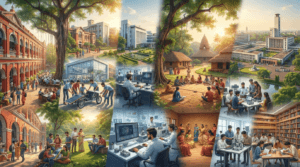
West Bengal has long been regarded as one of India’s foremost centres of education, intellectual thought, scientific research, and literary excellence. The state has played a pivotal role in shaping modern education in India through its historic universities, renowned schools, research institutions, and distinguished scholars. From the Bengal Renaissance to the present day, West Bengal has nurtured generations of writers, scientists, economists, philosophers, artists, and national leaders whose contributions have earned global recognition.
The state has a well-developed educational system comprising primary schools, secondary schools, higher secondary institutions, colleges, universities, technical institutes, medical colleges, law schools, and research centres. Both government and private institutions contribute significantly to improving literacy, skill development, innovation, and higher education across urban and rural areas.
One of the oldest universities in India, the University of Calcutta, established in 1857, has produced numerous Nobel Laureates, Bharat Ratna recipients, scientists, jurists, and public leaders. The university has made remarkable contributions to fields such as science, humanities, commerce, law, medicine, and social sciences.
Another globally renowned institution is Visva-Bharati University at Shantiniketan, founded by Rabindranath Tagore in 1921. Built on the philosophy of learning in harmony with nature, the university promotes education, culture, arts, literature, music, and international understanding. It continues to attract students and scholars from across the world.
West Bengal is also home to some of India’s premier institutes of higher learning, including the Indian Institute of Technology (IIT) Kharagpur, India’s first IIT, established in 1951. Other prestigious institutions include the Indian Statistical Institute (ISI), Kolkata, Jadavpur University, Presidency University, Indian Institute of Management (IIM) Calcutta, National Institute of Technology (NIT) Durgapur, and West Bengal National University of Juridical Sciences (WBNUJS). These institutions are internationally respected for excellence in engineering, management, law, statistics, economics, technology, and scientific research.
In addition to higher education, West Bengal has numerous medical colleges, teacher training institutes, agricultural universities, and specialised research organisations that contribute to healthcare, agriculture, technology, environmental science, and public policy. Continuous investment in digital education, vocational training, innovation, and skill development has further strengthened the state’s position as one of India’s leading educational hubs.
| Institution | Location | Established | Specialisation |
|---|---|---|---|
| University of Calcutta | Kolkata | 1857 | Higher Education & Research |
| Visva-Bharati University | Shantiniketan | 1921 | Arts, Humanities, Culture |
| IIT Kharagpur | Kharagpur | 1951 | Engineering & Technology |
| IIM Calcutta | Kolkata | 1961 | Management Studies |
| Jadavpur University | Kolkata | 1955 | Engineering, Arts & Science |
| Presidency University | Kolkata | 1817 (as Hindu College) | Liberal Arts & Sciences |
| Indian Statistical Institute (ISI) | Kolkata | 1931 | Statistics & Research |
| NIT Durgapur | Durgapur | 1960 | Engineering & Technology |
| WB National University of Juridical Sciences | Kolkata | 1999 | Legal Education |
Transport and Connectivity
West Bengal has one of the most comprehensive transportation networks in eastern India, connecting major cities, industrial centres, ports, tourist destinations, and neighbouring states. Owing to its strategic location as the gateway to Northeast India and its international borders with Bangladesh, Nepal, and Bhutan, the state serves as a vital hub for road, rail, air, waterways, and maritime trade. Its well-developed infrastructure supports economic growth, tourism, commerce, and regional connectivity.
The road network in West Bengal consists of National Highways, State Highways, district roads, and rural roads, linking urban and rural areas efficiently. Important national highways such as NH-12, NH-16, NH-19, NH-27, and NH-31 connect the state with neighbouring regions and major economic corridors. The Kolkata Metropolitan Area is supported by an extensive network of flyovers, expressways, and ring roads that help manage heavy traffic.
West Bengal possesses one of India’s busiest railway networks under the Eastern Railway, South Eastern Railway, and Northeast Frontier Railway zones. Howrah Junction, Sealdah, and Kolkata Railway Station rank among the country’s busiest railway terminals, providing direct connectivity to almost every major city in India. The historic Darjeeling Himalayan Railway, a UNESCO World Heritage Site, continues to operate as both a heritage railway and a popular tourist attraction.
Air connectivity is provided by Netaji Subhas Chandra Bose International Airport in Kolkata, one of eastern India’s busiest airports, offering domestic and international flights. Other important airports include Bagdogra Airport near Siliguri, which serves North Bengal and the Himalayan region, as well as airports at Andal (Kazi Nazrul Islam Airport) and Cooch Behar, enhancing regional air connectivity.
The state also has a well-developed metro rail system in Kolkata, which was India’s first metro railway, inaugurated in 1984. Today, the Kolkata Metro continues to expand with multiple operational and under-construction corridors, providing fast, reliable, and environmentally friendly urban transportation.
Water transport plays an important role due to the Hooghly River and the state’s extensive river network. The Syama Prasad Mookerjee Port, Kolkata (formerly Kolkata Port Trust) and the Haldia Dock Complex are major gateways for domestic and international trade. Inland waterways, passenger ferries, and cargo vessels operate along the Hooghly River, connecting Kolkata with neighbouring districts and supporting commerce.
| Mode of Transport | Major Facilities |
|---|---|
| Roads | NH-12, NH-16, NH-19, NH-27, NH-31, State Highways |
| Railways | Howrah Junction, Sealdah, Kolkata Station, DHR Toy Train |
| Metro Rail | Kolkata Metro |
| International Airport | Netaji Subhas Chandra Bose International Airport |
| Other Airports | Bagdogra, Kazi Nazrul Islam Airport (Andal), Cooch Behar |
| Ports | Syama Prasad Mookerjee Port (Kolkata), Haldia Dock Complex |
| Inland Waterways | Hooghly River Ferries and Cargo Services |
Shopping and GI Tagged Products
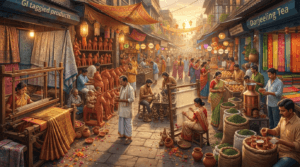
West Bengal is one of India’s finest destinations for shopping, offering a remarkable blend of traditional handicrafts, handloom textiles, artistic creations, tea, spices, jewellery, and modern retail experiences. Every region of the state has its own distinctive craft traditions that reflect centuries of cultural heritage and skilled craftsmanship. From bustling markets in Kolkata to artisan villages across rural districts, visitors can discover authentic products that represent the rich artistic identity of Bengal.
Kolkata serves as the state’s principal shopping hub. Popular markets such as New Market, Gariahat Market, College Street, Dakshinapan Shopping Centre, and Burrabazar offer everything from books and garments to jewellery, handicrafts, home décor, electronics, and traditional Bengali products. Modern shopping malls complement these historic markets, providing national and international retail brands.
West Bengal is internationally recognised for its exquisite handloom and handicraft traditions. Baluchari Sarees from Bishnupur are famous for their intricate mythological motifs woven into silk fabric, while Jamdani Sarees showcase delicate floral and geometric patterns created through traditional weaving techniques. Kantha embroidery, known for its detailed hand-stitched designs, is widely admired for its elegance and craftsmanship.
The state is also renowned for Darjeeling Tea, one of the world’s most prestigious teas and the first Indian product to receive a Geographical Indication (GI) tag. Other notable GI-tagged products include Baluchari Saree, Santiniketan Leather Goods, Bengal Dokra, Madur Kathi mats, Nakshi Kantha, Gobindobhog Rice, Joynagar Moa, Krishnanagar Clay Dolls, and Bardhaman Sitabhog & Mihidana. These products preserve traditional knowledge while supporting thousands of artisans and local producers.
Shopping in West Bengal is not only an opportunity to purchase beautiful products but also a way to experience the state’s cultural heritage. Many artisan clusters welcome visitors to observe weaving, pottery, leatherwork, embroidery, metal casting, and clay modelling, offering insight into centuries-old craft traditions that continue to thrive today.
| Product | Category | Famous Region |
|---|---|---|
| Darjeeling Tea | Beverage | Darjeeling |
| Baluchari Saree | Handloom | Bishnupur (Bankura) |
| Jamdani Saree | Handloom | Nadia |
| Santiniketan Leather Goods | Leather Craft | Santiniketan |
| Nakshi Kantha | Embroidery | Birbhum & Nadia |
| Bengal Dokra | Metal Craft | Bankura & Purulia |
| Madur Kathi | Handicraft | Paschim Medinipur |
| Gobindobhog Rice | Agriculture | Bardhaman & Hooghly |
| Joynagar Moa | Sweet | South 24 Parganas |
| Krishnanagar Clay Dolls | Handicraft | Nadia |
| Sitabhog & Mihidana | Sweet | Bardhaman |
Sports in West Bengal
Sports play an important role in the cultural and social life of West Bengal. The state has produced some of India’s finest athletes, cricketers, footballers, chess players, and mountaineers while making significant contributions to the country’s sporting history. Football and cricket enjoy immense popularity, with passionate fans, historic clubs, and world-class sporting venues making West Bengal one of India’s leading sports destinations.
Football is widely regarded as the most beloved sport in the state. Kolkata is often referred to as the “Football Capital of India” due to its rich footballing tradition and enthusiastic supporters. Legendary clubs such as Mohun Bagan Super Giant, East Bengal FC, and Mohammedan Sporting Club have shaped Indian football for more than a century, winning numerous national championships and nurturing generations of talented players. The famous Kolkata Derby between Mohun Bagan and East Bengal is one of Asia’s oldest and most celebrated football rivalries.
Cricket also enjoys enormous popularity across West Bengal. The historic Eden Gardens in Kolkata, one of the largest and most iconic cricket stadiums in the world, has hosted numerous international Test matches, One Day Internationals, T20 Internationals, World Cup matches, and Indian Premier League (IPL) games. The state has produced internationally acclaimed cricketers, including former Indian captain Sourav Ganguly, who played a transformative role in modern Indian cricket.
West Bengal has also contributed significantly to athletics, table tennis, badminton, shooting, mountaineering, and chess. The Himalayan region of Darjeeling has a proud tradition of producing skilled mountaineers and adventure sports enthusiasts, while educational institutions and sports academies across the state continue to encourage young athletes through professional coaching and competitions.
The state regularly hosts major national and international sporting events in disciplines such as football, cricket, hockey, athletics, and indoor sports. Modern stadiums, training centres, and sports infrastructure support talent development and provide opportunities for athletes to compete at the highest levels.
| Sport / Venue | Details |
|---|---|
| Football | Most popular sport in the state |
| Cricket | Widely followed across urban and rural areas |
| Mohun Bagan Super Giant | Historic football club founded in 1889 |
| East Bengal FC | One of India’s most successful football clubs |
| Mohammedan Sporting Club | Historic football club with a rich legacy |
| Eden Gardens | International cricket stadium in Kolkata |
| Vivekananda Yuba Bharati Krirangan (Salt Lake Stadium) | One of the world’s largest football stadiums |
| Notable Sportsperson | Sourav Ganguly, Leander Paes, Pankaj Advani (represented Bengal during his career), Jyotirmoyee Sikdar |
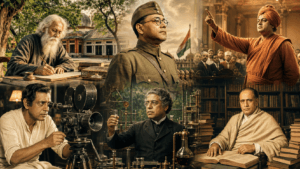
Famous Personalities of West Bengal
West Bengal has been the birthplace and workplace of many of India’s greatest thinkers, freedom fighters, scientists, artists, writers, musicians, filmmakers, sportspersons, and social reformers. Their extraordinary contributions have shaped India’s cultural, intellectual, political, and scientific development while earning worldwide recognition. The legacy of these personalities continues to inspire generations across the globe.
Among the most celebrated figures is Rabindranath Tagore, the Nobel Prize-winning poet, philosopher, composer, and founder of Visva-Bharati University at Shantiniketan. He became the first Asian to receive the Nobel Prize in Literature in 1913 for Gitanjali. Tagore also composed India’s national anthem, “Jana Gana Mana,” and made lasting contributions to literature, education, music, and art.
Another iconic leader is Netaji Subhas Chandra Bose, one of India’s greatest freedom fighters. Born in Cuttack and educated in Kolkata, he emerged as a fearless nationalist who led the Indian National Army (INA) during India’s struggle for independence. His inspiring slogan, “Give me blood, and I will give you freedom,” remains one of the most memorable calls for national liberation.
Swami Vivekananda, born in Kolkata, introduced India’s spiritual philosophy to the world through his historic address at the Parliament of the World’s Religions in Chicago in 1893. His teachings on universal brotherhood, education, self-confidence, and service to humanity continue to influence millions worldwide.
West Bengal has also produced distinguished scientists such as Sir Jagadish Chandra Bose, a pioneer in plant physiology and wireless communication, and Satyendra Nath Bose, whose groundbreaking work in quantum mechanics led to the concept of the Boson, named in his honour. Economist Amartya Sen, a Nobel Laureate, made globally recognised contributions to welfare economics, social justice, and human development.
The state’s cultural landscape has been enriched by legendary filmmaker Satyajit Ray, whose internationally acclaimed films transformed Indian cinema. Musician Pandit Ravi Shankar popularised Indian classical music across the world through his mastery of the sitar. In sports, former Indian cricket captain Sourav Ganguly became one of India’s most influential cricketers, while tennis champion Leander Paes achieved remarkable success in international tennis.
These eminent personalities reflect the remarkable intellectual, artistic, scientific, and patriotic spirit of West Bengal. Their achievements continue to strengthen the state’s reputation as one of India’s foremost centres of knowledge, creativity, and national leadership.
| Personality | Field | Major Contribution |
|---|---|---|
| Rabindranath Tagore | Literature | Nobel Prize in Literature, poet, educator |
| Netaji Subhas Chandra Bose | Freedom Movement | Leader of the Indian National Army |
| Swami Vivekananda | Spiritual Leader | Introduced Vedanta to the world |
| Jagadish Chandra Bose | Science | Pioneer in plant science and wireless communication |
| Satyendra Nath Bose | Physics | Pioneer of quantum mechanics; Boson named after him |
| Amartya Sen | Economics | Nobel Prize in Economic Sciences |
| Satyajit Ray | Cinema | Internationally acclaimed filmmaker |
| Pandit Ravi Shankar | Music | Legendary sitar maestro |
| Sourav Ganguly | Cricket | Former Indian cricket captain |
| Leander Paes | Tennis | Grand Slam-winning tennis champion |
Best Time to Visit West Bengal
West Bengal is a year-round travel destination, with each season offering unique experiences across its diverse landscapes. From the snow-capped Himalayan hills of Darjeeling to the mangrove forests of the Sundarbans and the coastal beaches of Digha, the state’s varied geography creates different climatic conditions throughout the year. The ideal time to visit depends on the destination and the type of experience travellers seek.
The winter season (October to February) is widely regarded as the best time to visit West Bengal. The weather remains cool, pleasant, and comfortable, making it ideal for sightseeing, wildlife safaris, hill station vacations, heritage tours, and religious pilgrimages. During this period, visitors can comfortably explore Kolkata, Darjeeling, Kalimpong, Bishnupur, Murshidabad, Shantiniketan, and the Sundarbans. Winter is also the season of vibrant festivals, including Durga Puja, Kali Puja, Gangasagar Mela, and the Kolkata International Book Fair, adding cultural richness to the travel experience.
The summer season (March to June) brings warmer temperatures across the plains, while the Himalayan regions of Darjeeling, Kalimpong, and the Dooars remain relatively cool and pleasant. These hill destinations become popular summer retreats for families, honeymooners, and nature lovers seeking relief from the heat. Tea gardens, mountain viewpoints, monasteries, and trekking routes are particularly attractive during this time.
The monsoon season (June to September) transforms West Bengal into a lush green landscape. Heavy rainfall rejuvenates forests, rivers, tea estates, and agricultural fields, creating spectacular scenery, especially in the Dooars, Darjeeling, and rural areas. Although frequent rainfall may occasionally affect travel plans, the season offers excellent opportunities for nature photography and experiencing the state’s rich biodiversity.
Wildlife enthusiasts generally prefer visiting the Sundarbans National Park during winter, when weather conditions are favourable for boat safaris and wildlife observation. Similarly, the clear winter skies provide excellent views of the Himalayan peaks from Tiger Hill near Darjeeling, making it one of the most sought-after sunrise destinations in India.
Regardless of the season, West Bengal offers visitors an extraordinary combination of natural beauty, cultural heritage, spiritual experiences, delicious cuisine, and warm hospitality, ensuring memorable journeys throughout the year.
| Season | Months | Weather | Best For |
|---|---|---|---|
| Winter | October – February | Cool and Pleasant | Sightseeing, Festivals, Wildlife, Heritage Tours |
| Summer | March – June | Warm in Plains, Pleasant in Hills | Hill Stations, Tea Gardens, Family Vacations |
| Monsoon | June – September | Moderate to Heavy Rainfall | Nature Photography, Green Landscapes, Tea Estates |
How to Reach West Bengal
West Bengal is one of the best-connected states in India, offering excellent connectivity by air, rail, road, and waterways. Its strategic location in eastern India, along with its international borders with Bangladesh, Nepal, and Bhutan, makes it an important transportation gateway for both domestic and international travellers. Whether visiting the bustling metropolis of Kolkata, the Himalayan hill stations of Darjeeling and Kalimpong, the mangrove forests of the Sundarbans, or the coastal beaches of Digha, travellers can reach every major destination conveniently through the state’s well-developed transport infrastructure.
By Air
West Bengal has several airports that provide domestic and international connectivity. Netaji Subhas Chandra Bose International Airport in Kolkata is the state’s primary international gateway, offering regular flights to major Indian cities as well as international destinations across Asia and the Middle East. Bagdogra Airport, located near Siliguri, serves as the main airport for North Bengal and provides easy access to Darjeeling, Kalimpong, Gangtok (Sikkim), and the Dooars region. Other airports, including Kazi Nazrul Islam Airport (Andal) and Cooch Behar Airport, support regional air connectivity.
By Rail
West Bengal has one of the most extensive railway networks in India. Major railway stations such as Howrah Junction, Sealdah, Kolkata Railway Station, Shalimar, New Jalpaiguri (NJP), Asansol Junction, and Durgapur are connected to almost every major city in the country. The state is served by the Eastern Railway, South Eastern Railway, and Northeast Frontier Railway zones. Travellers visiting Darjeeling can also experience the famous Darjeeling Himalayan Railway (Toy Train), a UNESCO World Heritage Site.
By Road
A well-maintained network of National Highways, State Highways, and expressways connects West Bengal with neighbouring states such as Bihar, Jharkhand, Odisha, Sikkim, and Assam. Important highways including NH-12, NH-16, NH-19, NH-27, and NH-31 provide smooth road connectivity. Government and private buses, luxury coaches, taxis, and self-drive vehicles are widely available for travel within the state.
By Waterways
West Bengal also benefits from an extensive inland water transport system. Passenger ferries and cargo vessels operate along the Hooghly River, connecting Kolkata with nearby towns and districts. The Syama Prasad Mookerjee Port (Kolkata) and Haldia Dock Complex serve as major maritime gateways for trade and shipping. Ferry services are particularly useful for reaching destinations along the river and parts of the Sundarbans.
With its modern transportation infrastructure and multiple travel options, West Bengal offers convenient and comfortable access for tourists, business travellers, pilgrims, and nature enthusiasts throughout the year.
| Mode of Transport | Major Entry Points | Connectivity |
|---|---|---|
| Air | Netaji Subhas Chandra Bose International Airport, Bagdogra Airport, Kazi Nazrul Islam Airport | Domestic & International |
| Rail | Howrah, Sealdah, Kolkata, New Jalpaiguri, Asansol, Durgapur | Pan-India Rail Network |
| Road | NH-12, NH-16, NH-19, NH-27, NH-31 | Excellent Interstate Connectivity |
| Waterways | Hooghly River Ferries, Syama Prasad Mookerjee Port, Haldia Dock Complex | Inland & Maritime Transport |
Travel Tips for West Bengal
Travelling across West Bengal is a rewarding experience, as the state offers an extraordinary combination of Himalayan landscapes, vibrant cities, historic monuments, sacred pilgrimage sites, wildlife reserves, tea gardens, mangrove forests, and beautiful beaches. A well-planned itinerary helps visitors enjoy the state’s diverse attractions comfortably while respecting local customs, protecting the environment, and ensuring a safe journey.
The best time to explore most parts of West Bengal is between October and February, when the weather remains cool and pleasant. Travellers visiting Darjeeling, Kalimpong, or the Dooars should carry warm clothing during winter, as temperatures can drop significantly in the hill regions. Those travelling during the monsoon season should be prepared for heavy rainfall, especially in North Bengal and the Sundarbans, by carrying rainwear and checking weather forecasts before planning outdoor activities.
When visiting religious places such as Dakshineswar Kali Temple, Kalighat Temple, Belur Math, and Gangasagar, visitors should wear modest clothing, follow local customs, maintain silence where required, and respect temple rules. Photography may be restricted in certain religious sites, museums, and government buildings, so it is advisable to verify local regulations before taking photographs.
Nature lovers planning a trip to the Sundarbans National Park should always choose authorised boat safaris and licensed guides. Visitors should avoid disturbing wildlife, refrain from feeding animals, and follow all instructions issued by forest authorities to ensure both personal safety and environmental conservation.
West Bengal’s cuisine is one of the highlights of any visit. Travellers should not miss authentic Bengali dishes such as Macher Jhol, Shorshe Ilish, Kosha Mangsho, Luchi, Mishti Doi, Sandesh, and Rosogolla. Drinking bottled or purified water, especially while travelling to remote areas, is recommended for a comfortable journey.
Public transportation, including Kolkata Metro, buses, suburban trains, app-based taxis, and ferries, provides convenient and affordable travel within the state. Digital payment methods are widely accepted in urban centres, although carrying some cash is useful when visiting rural areas, local markets, or remote tourist destinations.
By respecting local traditions, protecting natural heritage, and planning according to the season, travellers can enjoy a safe, enriching, and memorable journey through one of India’s most culturally vibrant and geographically diverse states.
| Travel Aspect | Recommendation |
|---|---|
| Best Season | October to February |
| Clothing | Light cottons in summer; warm clothes for North Bengal in winter |
| Monsoon Travel | Carry rain gear and monitor weather updates |
| Religious Sites | Dress modestly and follow local customs |
| Wildlife Tourism | Use authorised safaris and licensed guides |
| Food & Water | Try local cuisine; drink bottled or purified water |
| Local Transport | Metro, buses, trains, ferries, taxis, app-based cabs |
| Payments | Digital payments widely accepted; keep cash for rural areas |
| Responsible Tourism | Avoid littering and respect local culture and wildlife |
Interesting Facts About West Bengal
West Bengal is one of India’s most culturally, historically, and geographically diverse states. From the majestic Himalayas in the north to the Bay of Bengal in the south, the state is home to remarkable natural landscapes, world-famous heritage sites, renowned educational institutions, artistic traditions, and literary achievements. Its unique blend of history, culture, and modern development makes West Bengal one of the most fascinating destinations in the country.
West Bengal is home to Kolkata, India’s first capital during the British colonial period from 1772 to 1911. The city continues to preserve magnificent colonial architecture, historic institutions, museums, libraries, theatres, and monuments that reflect its rich heritage. Kolkata is also known as the “Cultural Capital of India” because of its outstanding contributions to literature, art, music, cinema, theatre, and intellectual movements.
The state is internationally recognised for the Sundarbans, the world’s largest mangrove forest and the natural habitat of the majestic Royal Bengal Tiger. Another globally significant attraction is the Darjeeling Himalayan Railway (Toy Train), India’s first mountain railway and a UNESCO World Heritage Site that continues to attract visitors from around the world.
West Bengal has played a vital role in India’s intellectual and cultural development. It produced Rabindranath Tagore, the first Asian Nobel Prize laureate in Literature, and several other Nobel laureates, including Amartya Sen, Mother Teresa (who carried out her humanitarian work in Kolkata), and Abhijit Vinayak Banerjee. The state has also been home to legendary personalities such as Netaji Subhas Chandra Bose, Swami Vivekananda, Jagadish Chandra Bose, and Satyajit Ray.
The state celebrates one of the world’s largest cultural festivals—Durga Puja—which has been recognised by UNESCO as an Intangible Cultural Heritage of Humanity. Every year, millions of devotees and tourists visit beautifully decorated pandals across Kolkata and other parts of the state to witness this grand celebration.
West Bengal is also famous for producing the world’s finest Darjeeling Tea, the first Indian product to receive a Geographical Indication (GI) tag. The state’s cuisine, handloom traditions, literature, music, and artistic heritage continue to influence Indian culture and attract visitors from across the globe.
| Fact | Description |
|---|---|
| Former Capital | Kolkata served as the capital of British India (1772–1911) |
| Cultural Identity | Kolkata is known as the Cultural Capital of India |
| Largest Mangrove Forest | Sundarbans is the world’s largest mangrove ecosystem |
| Famous Wildlife | Natural habitat of the Royal Bengal Tiger |
| UNESCO Heritage | Darjeeling Himalayan Railway and Sundarbans National Park |
| Intangible UNESCO Heritage | Durga Puja festival |
| First Indian GI Product | Darjeeling Tea |
| Nobel Laureates | Rabindranath Tagore, Amartya Sen, Abhijit Banerjee, Mother Teresa (worked in Kolkata) |
| Famous Sweet | Rosogolla is one of the state’s iconic desserts |
| Major River | The Hooghly River flows through Kolkata |
Frequently Asked Questions (FAQs) About West Bengal
To help travellers, students, researchers, and competitive examination aspirants, here are answers to some of the most frequently asked questions about West Bengal. These cover important facts related to the state’s geography, administration, culture, tourism, economy, and heritage.
1. Where is West Bengal located?
West Bengal is located in the eastern part of India. It shares international borders with Bangladesh, Nepal, and Bhutan, and state borders with Sikkim, Assam, Bihar, Jharkhand, and Odisha. The state also has a coastline along the Bay of Bengal.
2. What is the capital of West Bengal?
Kolkata is the capital and the largest city of West Bengal. It is known as the Cultural Capital of India and serves as the state’s administrative, commercial, educational, and cultural centre.
3. Which language is mainly spoken in West Bengal?
Bengali (Bangla) is the primary and most widely spoken language. Other commonly spoken languages include Hindi, English, Urdu, Nepali, Santali, and several regional languages.
4. What is the best time to visit West Bengal?
The ideal time to visit is October to February, when the weather is pleasant and suitable for sightseeing, wildlife tourism, religious pilgrimages, and exploring hill stations and heritage sites.
5. What are the most famous tourist attractions in West Bengal?
Popular attractions include Kolkata, Darjeeling, Sundarbans National Park, Kalimpong, Digha, Bishnupur, Murshidabad, Shantiniketan, Dooars, and Gangasagar.
6. What is West Bengal famous for?
West Bengal is famous for its Durga Puja, Royal Bengal Tiger, Darjeeling Tea, Rosogolla, Bengali literature, handloom textiles, historic monuments, colonial architecture, and rich artistic and cultural heritage.
7. Which are the UNESCO World Heritage Sites in West Bengal?
The UNESCO World Heritage Sites include the Darjeeling Himalayan Railway and Sundarbans National Park. Additionally, Durga Puja has been recognised as a UNESCO Intangible Cultural Heritage of Humanity.
8. What are the major industries of West Bengal?
Major industries include tea production, jute, agriculture, information technology (IT), steel, engineering, petrochemicals, textiles, leather, food processing, and port-based trade.
9. Which is the most famous festival in West Bengal?
Durga Puja is the state’s largest and most celebrated festival, attracting millions of devotees and tourists from India and around the world every year.
10. Why is West Bengal important in Indian history?
West Bengal has played a pivotal role in India’s freedom movement, social reforms, literature, science, education, and cultural renaissance. It is associated with great personalities such as Rabindranath Tagore, Netaji Subhas Chandra Bose, Swami Vivekananda, Jagadish Chandra Bose, and Satyajit Ray, whose contributions have had a lasting impact on India and the world.
Conclusion
West Bengal is a state where history, culture, nature, spirituality, and modern development come together to create a truly unique destination. From the snow-covered Himalayan hills of Darjeeling and the lush tea gardens of North Bengal to the magnificent Sundarbans, the historic city of Kolkata, and the serene beaches along the Bay of Bengal, every region offers unforgettable experiences for visitors.
The state’s rich cultural heritage is reflected in its literature, music, art, festivals, cuisine, and centuries-old traditions. Grand celebrations such as Durga Puja, the timeless works of Rabindranath Tagore, the inspiring legacy of Netaji Subhas Chandra Bose, and the spiritual teachings of Swami Vivekananda have made West Bengal one of India’s foremost centres of intellectual and cultural excellence. Its renowned universities, scientific achievements, handloom traditions, and world-famous Darjeeling Tea further strengthen its global reputation.
West Bengal also plays a significant role in India’s economy through agriculture, tea production, manufacturing, information technology, ports, tourism, and trade. Modern infrastructure, excellent transport connectivity, and a welcoming atmosphere make it an attractive destination for tourists, students, entrepreneurs, and investors alike.
Whether you are interested in exploring UNESCO World Heritage Sites, experiencing vibrant festivals, discovering wildlife, enjoying scenic mountain landscapes, tasting authentic Bengali cuisine, or learning about India’s freedom movement and cultural renaissance, West Bengal offers something for every traveller.
With its remarkable blend of natural beauty, historical significance, artistic brilliance, and warm hospitality, West Bengal continues to captivate visitors from around the world. A journey through this extraordinary state is not only a memorable travel experience but also an opportunity to appreciate one of India’s richest cultural and historical treasures.
Related articles
- Nagaland
- Mizoram
- Subhas Chandra Bose
- Meghalaya
- Manipur
- Sikkim
- Jharkhand
- Assam
- Arunachal Pradesh
- Mahatma Gandhi
- Chhattisgarh
- Odisha
- Bihar
- Uttar Pradesh
- Uttarakhand
- Haryana
- Punjab
- Himachal Pradesh
- Madhya Pradesh
- Rajasthan
- Gujarat
- Goa
- Maharashtra
- Kerala
- Tamil Nadu
- Karnataka
- Andhra Pradesh
- Telangana
- Dr. A.P.J. Abdul Kalam
- Ratan Tata
References
- Government of West Bengal – Department of Tourism
- Government of West Bengal Official Portal (Egiye Bangla)
- Department of Industry, Commerce & Enterprises, Government of West Bengal
- Ministry of Tourism, Government of India
- UNESCO World Heritage Centre
- Archaeological Survey of India (ASI)
- Ministry of Culture, Government of India
- Ministry of Environment, Forest and Climate Change (MoEFCC)
- Forest Survey of India (FSI)
- Census of India
- India Meteorological Department (IMD)
- Reserve Bank of India (RBI)
- Ministry of Statistics and Programme Implementation (MoSPI)
- West Bengal Forest Department
- Wildlife Institute of India (WII)