
Introduction:
Mizoram – The Land of Rolling Hills, Bamboo Forests and Vibrant Tribal Heritage
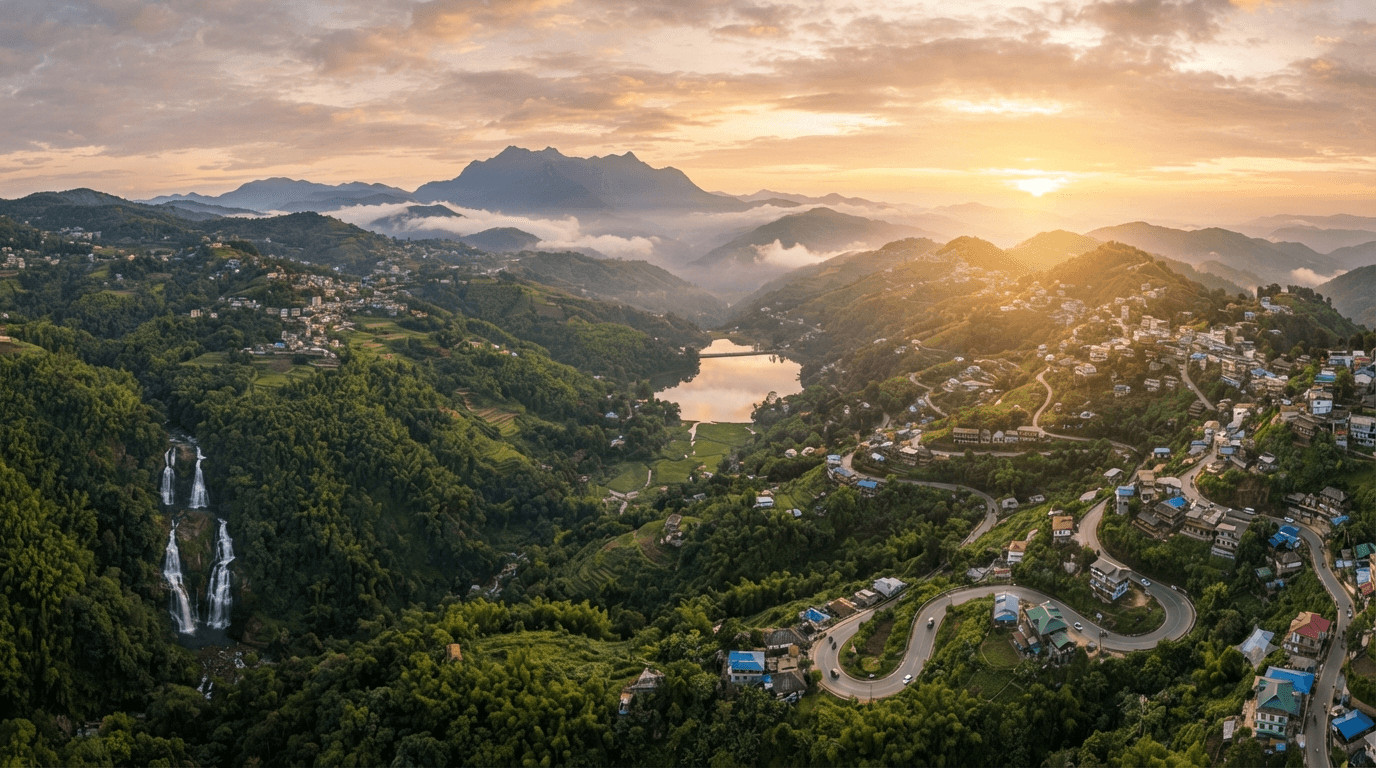
Mizoram is one of the most picturesque and environmentally rich states in Northeast India. Nestled amidst endless rolling hills and dense forests, the state is renowned for its breathtaking landscapes, vibrant tribal heritage, rich biodiversity, and peaceful way of life. Located in the southernmost part of Northeast India, Mizoram shares international borders with Bangladesh to the west and Myanmar to the east and south, making it one of India’s strategically important border states. The state’s unique geographical location, pleasant climate, and unspoiled natural beauty make it an ideal destination for eco-tourism, adventure tourism, and cultural exploration.
The name “Mizoram” is derived from three Mizo words—“Mi” meaning people, “Zo” meaning hill or highland, and “Ram” meaning land. Together, the name translates to “Land of the Hill People.” This perfectly reflects the state’s mountainous terrain and the deep cultural connection of its indigenous communities with nature.
Mizoram became the 23rd state of India on 20 February 1987 after being granted full statehood. Before attaining statehood, it functioned as a Union Territory following the signing of the historic Mizoram Peace Accord, which paved the way for long-term peace, political stability, and socio-economic development. Today, Mizoram is widely recognized as one of India’s most peaceful, literate, and well-organized states.
The capital city, Aizawl, stands majestically on a series of steep hill ridges at an elevation of over 1,000 meters above sea level. Apart from being the administrative headquarters, Aizawl is the state’s largest city and serves as its cultural, educational, commercial, and economic center. Its beautiful hilltop setting, clean surroundings, vibrant local markets, historic churches, and panoramic viewpoints attract visitors throughout the year.
The majority of Mizoram’s population belongs to various indigenous tribal communities collectively known as the Mizo people. Over the centuries, these communities have preserved their distinct customs, languages, music, dances, festivals, and traditional values. One of the most admired principles of Mizo society is Tlawmngaihna, a unique cultural philosophy that encourages selfless service, discipline, honesty, compassion, humility, and community welfare. This value system continues to shape everyday life and contributes significantly to the state’s peaceful social environment.
Nature is one of Mizoram’s greatest treasures. More than three-fourths of the state’s geographical area is covered by lush forests, making it one of India’s greenest states. The landscape is characterized by parallel mountain ranges, deep valleys, sparkling rivers, waterfalls, bamboo groves, and evergreen forests. These ecosystems provide habitat for numerous rare mammals, birds, reptiles, butterflies, orchids, medicinal plants, and bamboo species. Protected areas such as Phawngpui National Park, Murlen National Park, and Dampa Tiger Reserve play a crucial role in conserving this extraordinary biodiversity.
Agriculture continues to be the backbone of Mizoram’s rural economy. For generations, local communities practiced Jhum cultivation, a traditional form of shifting agriculture that remains an important part of tribal life. Alongside traditional farming, modern horticulture has expanded rapidly, with crops such as oranges, pineapples, bananas, ginger, turmeric, passion fruit, and spices contributing significantly to the state’s agricultural output. Bamboo-based industries, handloom weaving, handicrafts, food processing, and tourism further strengthen the economy and create employment opportunities.
Education has played a transformative role in Mizoram’s development. The state consistently records one of the highest literacy rates in India, reflecting its strong commitment to quality education and social progress. English and Mizo are widely used in schools, colleges, government administration, and everyday communication, enabling students and professionals to connect with opportunities across the country.
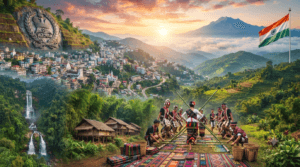
Tourism in Mizoram is steadily gaining recognition for its untouched natural beauty and authentic cultural experiences. Visitors can explore scenic hill stations, tranquil lakes, majestic waterfalls, dense forests, wildlife sanctuaries, trekking trails, caves, and traditional Mizo villages. Festivals such as Chapchar Kut, Mim Kut, and Pawl Kut showcase colorful dances, music, costumes, cuisine, and community celebrations, offering tourists a deeper understanding of Mizo traditions and hospitality.
Why Mizoram is Special
- One of the greenest and most forest-covered states in India.
- Known as the “Land of the Hill People.”
- Shares international borders with Bangladesh and Myanmar.
- Home to diverse Mizo tribal communities with vibrant cultural traditions.
- Among the highest literacy rate states in India.
- Famous for bamboo forests, orchids, waterfalls, and mountain landscapes.
- Rich biodiversity protected through national parks and wildlife reserves.
- Celebrated for the unique social philosophy of Tlawmngaihna.
- A rapidly growing destination for eco-tourism, trekking, and nature photography.
- Renowned for handloom weaving, bamboo handicrafts, and sustainable living.
- Offers a peaceful atmosphere with clean cities and welcoming communities.
- Represents an excellent blend of natural beauty, cultural heritage, and modern development.
Mizoram is a remarkable example of how natural wealth, cultural diversity, community values, and sustainable development can coexist in harmony. From mist-covered mountains and dense bamboo forests to vibrant tribal festivals and peaceful towns, every part of the state reflects a unique identity. Whether visitors seek adventure, wildlife, history, spirituality, or cultural immersion, Mizoram offers an unforgettable journey through one of India’s most beautiful and least-explored destinations.
Mizoram at a Glance (Quick Facts)
Understanding the basic profile of Mizoram provides a strong foundation before exploring its history, geography, economy, culture, biodiversity, tourism, and other important aspects. Despite being one of India’s smallest and least populous states, Mizoram has achieved remarkable progress in literacy, healthcare, environmental conservation, and social development. The state is widely recognized for its disciplined society, clean surroundings, rich tribal traditions, and breathtaking natural landscapes.
Situated in the southern part of Northeast India, Mizoram occupies a strategically important location due to its international boundaries with Bangladesh and Myanmar. Its mountainous terrain, extensive forest cover, pleasant climate, and rich biodiversity make it one of India’s most ecologically significant states. The state also serves as an important gateway for India’s Act East Policy, promoting trade and connectivity with Southeast Asian countries.
The following table presents essential facts and statistics about Mizoram that help readers quickly understand the state’s identity, administrative structure, geographical features, economy, and cultural significance.
Quick Facts of Mizoram
| Particular | Details |
|---|---|
| State Name | Mizoram |
| Capital | Aizawl |
| Largest City | Aizawl |
| Statehood | 20 February 1987 |
| State Number | 23rd State of India |
| Region | Northeast India |
| Total Area | 21,081 sq km |
| Population (2011 Census) | Approximately 10.97 lakh |
| Official Languages | Mizo, English |
| Literacy Rate | About 91.33% |
| Number of Districts | 11 |
| Legislative Assembly Seats | 40 |
| Lok Sabha Seats | 1 |
| Rajya Sabha Seats | 1 |
| International Borders | Bangladesh and Myanmar |
| Neighboring Indian States | Assam, Manipur and Tripura |
| Highest Peak | Phawngpui (Blue Mountain) |
| Elevation of Highest Peak | About 2,157 metres |
| Longest River | Chhimtuipui (Kolodyne) River |
| Major Climate | Tropical Monsoon |
| State Animal | Serow |
| State Bird | Mrs. Hume’s Pheasant |
| State Tree | Ironwood (Mesua ferrea) |
| State Flower | Red Vanda Orchid |
Major TribesMizo, Lai, Mara, Hmar, Ralte and othersMajor ReligionChristianityMain OccupationAgriculture and HorticultureMajor CropsRice, Ginger, Turmeric, Maize, Pineapple, Orange and BananaImportant IndustriesBamboo, Handloom, Handicrafts, Food Processing and TourismVehicle Registration CodeMZTime ZoneIndian Standard Time (UTC +5:30)
Key Highlights of Mizoram
- One of the most peaceful states in India.
- Among the highest literacy rate states in the country.
- More than three-fourths of the state is covered by forests.
- Home to rich tribal heritage and unique cultural traditions.
- Shares international borders with Bangladesh and Myanmar.
- Known for sustainable lifestyles and community participation.
- Rich in bamboo resources and bamboo-based industries.
- Famous for eco-tourism, wildlife tourism, and adventure tourism.
- Produces high-quality horticultural crops and spices.
- Well known for colorful tribal festivals and traditional dances.
- Maintains excellent environmental conservation practices.
- Offers breathtaking mountain landscapes throughout the state.
These quick facts provide a concise overview of Mizoram’s identity and development. In the following sections, we will explore the state’s historical evolution, geographical diversity, administrative structure, natural resources, economy, cultural heritage, tourism potential, and many other fascinating aspects in greater detail.
Mizoram on the India Map
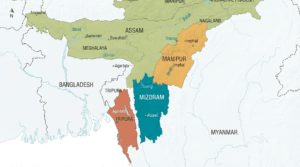
Mizoram is located in the northeastern part of India and is one of the country’s eight Northeastern states. The state covers an area of approximately 21,081 square kilometres and is characterized by rugged hills, deep valleys, dense forests, and winding rivers.
Mizoram shares international borders with Myanmar to the east and south and Bangladesh to the west, giving it strategic importance for cross-border trade and cultural exchange. Within India, it is bordered by the states of Assam to the north, Manipur to the northeast, and Tripura to the northwest.
The Tropic of Cancer passes through the state, contributing to its pleasant subtropical climate and rich biodiversity. Mizoram’s mountainous terrain forms part of the Purvanchal (Eastern Hills), an extension of the Himalayan mountain system.
The capital city, Aizawl, is situated in the northern part of the state at an elevation of about 1,132 metres (3,714 feet) above sea level. Built along steep hill ridges, Aizawl serves as the administrative, cultural, and commercial hub of Mizoram.
Mizoram’s location makes it an important gateway under India’s Act East Policy, strengthening economic and cultural connections with Southeast Asian countries. Its scenic landscapes, peaceful environment, and strategic position make it one of the most unique states in Northeast India.
Location Highlights
| Feature | Details |
|---|---|
| Region | Northeast India |
| Total Area | 21,081 sq km |
| Capital | Aizawl |
| International Borders | Bangladesh and Myanmar |
| Indian Neighbouring States | Assam, Manipur, Tripura |
| Latitude | Approximately 21°56′N to 24°31′N |
| Longitude | Approximately 92°16′E to 93°26′E |
| Physiographic Region | Purvanchal (Eastern Hills) |
History of Mizoram
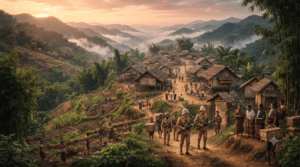
The history of Mizoram is a remarkable journey of migration, tribal unity, cultural evolution, colonial administration, political transformation, and peaceful democratic development. Unlike many other Indian states with ancient kingdoms and empires, Mizoram’s history is deeply rooted in the traditions of its indigenous tribal communities. Over centuries, these communities established strong social institutions, preserved their cultural identity, and adapted to changing political circumstances while maintaining their distinct way of life.
Today, Mizoram stands as one of India’s most peaceful and progressive states, but its path to statehood involved migration, British colonial rule, social reforms, political movements, and one of the most successful peace agreements in modern Indian history.
Early Settlement and Tribal Migration
The earliest inhabitants of Mizoram were tribal communities belonging to the Tibeto-Burman ethnic group. Historical records, oral traditions, and linguistic studies indicate that the ancestors of the Mizo people gradually migrated from regions believed to be in present-day southern China before moving through Myanmar and eventually settling in the hilly regions that now form Mizoram.
The migration took place over several centuries rather than during a single period. As different clans entered the region, they established villages on hilltops for security, easier defense, and better visibility of surrounding areas. These settlements gradually evolved into organized tribal communities governed by hereditary village chiefs.
Major tribal groups that settled in the region included:
- Lusei
- Hmar
- Lai
- Mara
- Ralte
- Paite
- Pawi
- Thadou
- Gangte
- Other Mizo sub-tribes
Although each tribe maintained its own customs and dialects, they shared many cultural traditions, social practices, and community values that eventually contributed to the formation of a common Mizo identity.
Traditional Village Administration
Before the arrival of the British, Mizoram consisted of numerous independent villages ruled by hereditary chiefs. Every village functioned as a self-governing administrative unit with clearly defined social and customary laws.
The village chief was responsible for:
- Maintaining law and order.
- Resolving disputes among villagers.
- Allocating agricultural land.
- Organizing hunting expeditions.
- Leading the community during conflicts.
- Protecting the village from external attacks.
- Conducting important social ceremonies.
Community cooperation played an essential role in everyday life. Villagers worked collectively in agriculture, house construction, road maintenance, and festivals. This spirit of cooperation later became closely associated with the Mizo cultural philosophy of Tlawmngaihna, which emphasizes selfless service, discipline, respect, humility, and collective responsibility.
Lifestyle Before British Rule
Life in pre-colonial Mizoram revolved around nature and community living. Agriculture was the primary occupation, with Jhum (shifting cultivation) forming the foundation of the local economy. Families cultivated rice, maize, vegetables, pulses, and other crops on hill slopes using traditional farming methods.
Daily life was closely connected to forests, rivers, wildlife, and seasonal agricultural cycles. Hunting, fishing, weaving, bamboo craftsmanship, and livestock rearing supplemented household livelihoods. Festivals celebrated successful harvests, while traditional songs, dances, folklore, and oral storytelling preserved the history and values of each community.
Religion during this period was primarily based on indigenous beliefs that emphasized the worship of nature, ancestral spirits, and supernatural forces. Rituals and ceremonies were conducted by village priests to seek protection, good harvests, and community well-being.
The combination of strong village governance, close community bonds, and deep respect for nature laid the social and cultural foundation upon which modern Mizoram later developed.
Geographical Location and Boundaries of Mizoram
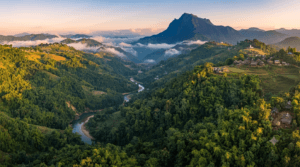
Mizoram occupies a unique geographical position in the southern part of Northeast India. Known for its picturesque mountain landscapes, dense forests, deep valleys, and winding rivers, the state is one of the most ecologically rich regions of the country. Its strategic location along India’s international frontier makes it significant not only from an environmental perspective but also for trade, connectivity, border security, and international cooperation with neighboring countries.
The state’s rugged terrain consists almost entirely of parallel hill ranges running from north to south. These hills are separated by narrow valleys through which numerous rivers and streams flow. Unlike the vast plains found in many Indian states, Mizoram’s geography is dominated by elevations ranging from approximately 400 metres to over 2,100 metres above sea level. This mountainous landscape has shaped the state’s climate, biodiversity, agriculture, transportation, settlement patterns, and cultural development.
Mizoram covers a geographical area of 21,081 square kilometres, making it one of the smaller states in India by area. Despite its relatively small size, the state possesses exceptional ecological diversity, with more than three-fourths of its land covered by forests. These forests support a wide variety of flora and fauna, making Mizoram an important part of the Indo-Burma Biodiversity Hotspot, one of the world’s richest ecological regions.
Geographical Coordinates
Mizoram is situated between the following geographical coordinates:
- Latitude: 21°56′ N to 24°31′ N
- Longitude: 92°16′ E to 93°26′ E
These coordinates place Mizoram in the humid tropical zone, resulting in abundant rainfall, moderate temperatures, and lush evergreen vegetation throughout much of the year.
International Boundaries
Mizoram shares a long international border with two neighboring countries, making it one of India’s key border states.
- West: Bangladesh
- East: Myanmar
- South: Myanmar
The international boundary stretches for several hundred kilometres, facilitating cultural exchanges, cross-border trade, and strategic cooperation while also requiring effective border management and security.
Boundaries with Indian States
Within India, Mizoram is bordered by three northeastern states:
- North: Assam
- Northeast: Manipur
- Northwest: Tripura
These neighboring states provide important road links, trade routes, and administrative connections with the rest of India.
Major Geographical Features
Mizoram’s landscape is characterized by remarkable natural diversity.
Mountain Ranges
- Parallel north-south hill ranges dominate the landscape.
- Average elevation ranges between 900 and 1,300 metres.
- Numerous steep slopes and narrow ridges create spectacular scenery.
- The hills are covered with dense evergreen and bamboo forests.
Valleys
- Narrow fertile valleys occur between mountain ranges.
- Most villages and agricultural activities are located on hill slopes and valley regions.
- Valleys support paddy cultivation, horticulture, and human settlements.
Rivers
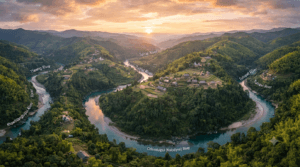
Several rivers originate within or flow through Mizoram, including:
- Chhimtuipui (Kolodyne)
- Tlawng River
- Tuivawl River
- Tuirial River
- Mat River
- Khawthlangtuipui River
These rivers provide water for agriculture, fisheries, and local communities while contributing significantly to the state’s ecosystem.
Forests
Forest ecosystems form one of Mizoram’s greatest natural assets.
- Tropical evergreen forests
- Semi-evergreen forests
- Bamboo forests
- Moist deciduous forests
- Subtropical hill forests
These forests help regulate climate, conserve soil, protect watersheds, and provide habitat for diverse wildlife.
Geographical Importance of Mizoram
Mizoram’s geographical location offers several strategic and environmental advantages.
- Acts as India’s southeastern gateway to Myanmar.
- Supports India’s Act East Policy.
- Forms part of the globally significant Indo-Burma Biodiversity Hotspot.
- Rich in forest resources and bamboo reserves.
- Provides ideal conditions for eco-tourism and adventure tourism.
- Supports diverse wildlife and rare plant species.
- Receives abundant rainfall suitable for agriculture and horticulture.
- Serves as an important region for environmental conservation and sustainable development.
Mizoram’s geography has played a defining role in shaping its history, culture, economy, and lifestyle. Its mountains, forests, rivers, and international location continue to influence the state’s development while preserving one of India’s richest natural environments.
Administrative Divisions and Districts of Mizoram
Efficient administration plays a vital role in the governance and development of Mizoram. Although the state is relatively small in terms of both area and population, its rugged mountainous terrain and scattered settlements require a well-organized administrative system to ensure effective delivery of public services. The Government of Mizoram has divided the state into administrative districts to facilitate better governance, infrastructure development, law enforcement, education, healthcare, disaster management, and rural development.
The capital city, Aizawl, serves as the administrative headquarters of the state and houses the Governor’s office, the State Secretariat, the Legislative Assembly, and the headquarters of most government departments. Each district is headed by a Deputy Commissioner (DC), who oversees district administration, revenue collection, disaster management, implementation of government schemes, and coordination among various departments.
Over the years, Mizoram has undergone administrative reorganization to improve governance and bring government services closer to remote communities. At present, the state consists of 11 districts, each possessing its own geographical characteristics, cultural identity, and developmental priorities.
List of Districts of Mizoram
| District | District Headquarters | Key Features |
|---|---|---|
| Aizawl | Aizawl | State capital, administrative and commercial centre |
| Lunglei | Lunglei | Second-largest urban centre, important educational and business hub |
| Champhai | Champhai | Border district with Myanmar, famous for vineyards and agriculture |
| Kolasib | Kolasib | Gateway to Mizoram from Assam, important trade centre |
| Mamit | Mamit | Rich forest cover and wildlife habitats |
| Serchhip | Serchhip | Known for agriculture, literacy and scenic landscapes |
| Lawngtlai | Lawngtlai | Southern border district with rich tribal diversity |
| Saiha (Siaha) | Saiha | Home to the Mara tribal community and Palak Lake |
| Khawzawl | Khawzawl | Emerging district with agricultural significance |
| Hnahthial | Hnahthial | Developing district known for natural beauty |
| Saitual | Saitual | Predominantly rural district with fertile agricultural land |
Administrative Structure
The administration of Mizoram follows the parliamentary democratic system established under the Constitution of India.
The major administrative components include:
- Governor – Constitutional Head of the State.
- Chief Minister – Head of the State Government.
- Council of Ministers – Responsible for executive administration.
- Legislative Assembly – Makes laws for the state.
- Chief Secretary – Senior-most civil servant coordinating administration.
- Deputy Commissioners – Head district administration.
- Superintendent of Police – Responsible for law and order in districts.
- Village Councils – Local self-governance in rural areas.
- Municipal Councils – Urban local administration.
Role of District Administration
District administrations perform numerous responsibilities to ensure effective governance across the state.
Their key functions include:
- Implementation of Central and State Government schemes.
- Revenue administration.
- Land record management.
- Disaster preparedness and relief operations.
- Maintenance of law and order.
- Conduct of elections.
- Development planning.
- Rural infrastructure projects.
- Public health administration.
- Educational administration.
- Social welfare programme implementation.
- Environmental protection initiatives.
Importance of Village Councils
Village Councils form the foundation of local governance in rural Mizoram.
Their responsibilities include:
- Maintenance of village infrastructure.
- Drinking water management.
- Rural sanitation.
- Village road maintenance.
- Community development activities.
- Settlement of minor disputes.
- Support for agricultural development.
- Implementation of welfare programmes.
- Conservation of community resources.
The strong participation of local communities in village administration reflects the traditional Mizo spirit of collective responsibility and cooperation, contributing significantly to the state’s efficient governance and social harmony.
Mizoram’s administrative system combines modern democratic institutions with strong community participation, ensuring that governance remains accessible even in remote hill regions. This decentralized approach has played an important role in improving public service delivery, promoting inclusive development, and maintaining one of the most peaceful administrative environments in Northeast India.
Physical Features and Topography of Mizoram
The physical landscape of Mizoram is one of the most distinctive in India. Unlike the vast plains of northern and central India, Mizoram is almost entirely mountainous, with long parallel hill ranges, steep slopes, narrow valleys, dense forests, and numerous rivers. These natural features have shaped the state’s climate, agriculture, transportation, settlement patterns, biodiversity, and cultural traditions for centuries.
The state’s terrain belongs to the Purvanchal (Eastern Hills), which form the eastern extension of the Himalayan mountain system. Although these hills are not as high as the Himalayas, they possess remarkable ecological richness and scenic beauty. The continuous succession of green mountain ridges gives Mizoram its unique identity as one of India’s most picturesque states.
Mountain Ranges
Mountain ranges dominate almost the entire geographical area of Mizoram.
Major characteristics include:
- Long parallel hill ranges extending from north to south.
- Elevation generally ranges between 400 metres and 2,157 metres above sea level.
- Numerous steep slopes and narrow ridges characterize the terrain.
- Thick evergreen and bamboo forests cover most hill slopes.
- Many villages are located along hilltops and ridge lines.
The state’s highest mountain is:
| Feature | Details |
|---|---|
| Highest Peak | Phawngpui (Blue Mountain) |
| Height | Approximately 2,157 metres |
| Location | Lawngtlai District |
| Importance | Highest point in Mizoram and part of Phawngpui National Park |
Phawngpui, popularly known as the Blue Mountain, is famous for its breathtaking landscapes, rare orchids, rich wildlife, and panoramic views of the surrounding hills.
Valleys
Although Mizoram is predominantly mountainous, narrow valleys are scattered throughout the state.
Important characteristics include:
- Valleys are formed by river systems flowing between hill ranges.
- Fertile soils support agriculture and horticulture.
- Paddy cultivation is concentrated in valley regions.
- Several towns and villages have developed near valleys.
- Valleys improve water availability for farming.
These valleys play an essential role in supporting rural livelihoods despite their limited geographical extent.
Plateaus and Ridge Tops
Unlike many other Indian states, Mizoram has very few extensive plateaus. Instead, broad ridge tops serve as important locations for settlements.
Characteristics include:
- Ridge tops provide relatively stable land for habitation.
- Most urban centres, including Aizawl, are built along ridges.
- Elevated locations offer protection from floods.
- Cooler climatic conditions make ridge settlements comfortable throughout much of the year.
River Systems
The mountainous landscape gives rise to numerous rivers and streams that flow through deep valleys.
Major rivers include:
- Chhimtuipui (Kolodyne)
- Tlawng River
- Tuirial River
- Tuivawl River
- Mat River
- Khawthlangtuipui River
These rivers contribute significantly to:
- Drinking water supply.
- Irrigation.
- Fisheries.
- Hydroelectric potential.
- Biodiversity conservation.
- River valley agriculture.
Forest Landscape
Forests cover more than three-fourths of Mizoram’s total geographical area, making them one of the state’s greatest natural resources.
Major forest types include:
- Tropical Evergreen Forests.
- Semi-Evergreen Forests.
- Moist Deciduous Forests.
- Bamboo Forests.
- Subtropical Hill Forests.
These forests support hundreds of plant species, medicinal herbs, orchids, mammals, reptiles, butterflies, and birds.
Importance of Mizoram’s Topography
The state’s physical features have influenced nearly every aspect of life.
- Determine settlement patterns.
- Influence agricultural practices such as Jhum cultivation.
- Support exceptional biodiversity.
- Provide habitats for endangered wildlife.
- Promote eco-tourism and adventure tourism.
- Protect watersheds and river systems.
- Regulate local climate.
- Help prevent soil erosion through forest cover.
- Support bamboo-based industries.
- Enhance the state’s scenic beauty and tourism potential.
The rugged topography of Mizoram is not merely a geographical feature but the foundation of the state’s ecological wealth, cultural identity, and sustainable development. Its mountains, valleys, forests, and rivers continue to shape the lives of its people while preserving one of India’s most valuable natural landscapes.
Climate and Weather of Mizoram
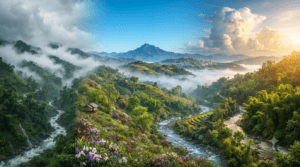
Mizoram experiences a pleasant tropical monsoon climate that is greatly influenced by its mountainous terrain and dense forest cover. Compared to many other parts of India, the state enjoys relatively moderate temperatures throughout the year. The rolling hills, high elevations, and abundant vegetation create a cool and refreshing environment, making Mizoram one of the most comfortable states to visit in Northeast India.
The climate plays a vital role in shaping the state’s agriculture, biodiversity, water resources, tourism, and daily lifestyle. Heavy monsoon rainfall nourishes dense forests and fertile valleys, while the mild winters and pleasant summers support the cultivation of a wide variety of crops, fruits, vegetables, spices, and flowering plants.
Factors Influencing Mizoram’s Climate
Several geographical factors contribute to the state’s unique climatic conditions.
- High elevation above sea level.
- Mountainous terrain with parallel hill ranges.
- Extensive forest cover across the state.
- Moisture-laden southwest monsoon winds.
- Proximity to the Bay of Bengal.
- Numerous rivers, streams, and valleys that help maintain humidity.
These factors together create a cool, humid, and rainfall-rich environment throughout much of the year.
Major Seasons in Mizoram
Mizoram experiences four distinct seasons.
1. Summer Season (March to May)
The summer season remains comparatively mild because of the state’s high altitude.
Characteristics:
- Temperature generally ranges between 20°C and 30°C.
- Days are warm but rarely extremely hot.
- Evenings and nights remain pleasant.
- Occasional pre-monsoon showers occur.
- Ideal conditions for sightseeing and outdoor activities.
2. Monsoon Season (June to September)
The southwest monsoon brings abundant rainfall to Mizoram every year.
Characteristics:
- Annual rainfall ranges between 2,000 mm and 3,000 mm in most regions.
- Hills remain covered with lush green vegetation.
- Rivers and waterfalls flow at full capacity.
- Landslides may occur in steep hilly areas.
- Agriculture receives sufficient water for crop cultivation.
3. Post-Monsoon Season (October to November)
This period marks the transition from the rainy season to winter.
Characteristics:
- Clear blue skies and pleasant weather.
- Fresh greenery across forests and valleys.
- Comfortable temperatures.
- Excellent time for photography and tourism.
- Popular season for festivals and cultural events.
4. Winter Season (December to February)
Winter is cool and comfortable throughout the state.
Characteristics:
- Temperatures generally range between 11°C and 21°C.
- Higher hill regions experience colder conditions.
- Morning mist is common.
- Dry weather with clear visibility.
- Peak tourist season in many destinations.
Average Climatic Conditions
| Climate Factor | Details |
|---|---|
| Climate Type | Tropical Monsoon |
| Summer Temperature | 20°C – 30°C |
| Winter Temperature | 11°C – 21°C |
| Annual Rainfall | Approximately 2,000–3,000 mm |
| Humidity | Moderate to High |
| Best Time to Visit | October to April |
Impact of Climate on Life in Mizoram
The climate has a significant influence on the state’s economy, environment, and society.
- Supports dense evergreen forests.
- Encourages rich biodiversity.
- Provides favourable conditions for horticulture.
- Helps cultivate rice, oranges, pineapples, bananas, ginger, turmeric, and spices.
- Supplies abundant freshwater resources.
- Promotes eco-tourism and adventure tourism.
- Maintains pleasant living conditions throughout most of the year.
- Supports bamboo growth across extensive forest areas.
- Enhances wildlife habitats and ecosystem stability.
- Influences traditional housing styles adapted to heavy rainfall.
Best Time to Visit Mizoram
The ideal period to explore Mizoram is from October to April, when the weather remains cool, dry, and comfortable. During these months, visitors can enjoy scenic mountain views, trekking, wildlife exploration, festivals, photography, and cultural experiences without the challenges posed by heavy monsoon rains.
Mizoram’s pleasant climate, abundant rainfall, and evergreen landscapes make it one of India’s most environmentally attractive states. The harmonious relationship between climate, forests, rivers, agriculture, and biodiversity continues to shape the state’s sustainable development and exceptional natural beauty.
Rivers, Lakes and Water Resources of Mizoram
Water resources are among Mizoram’s most valuable natural assets. The state’s mountainous terrain, abundant rainfall, dense forests, and numerous rivers create a rich freshwater ecosystem that supports agriculture, biodiversity, drinking water supply, fisheries, hydroelectric development, and tourism. Unlike many Indian states that depend primarily on large perennial rivers, Mizoram possesses a network of fast-flowing mountain rivers, streams, waterfalls, and natural lakes that originate from its hills and valleys.
Most rivers flow through deep valleys before entering neighboring states or crossing international borders into Bangladesh and Myanmar. These river systems have shaped the state’s landscape for thousands of years by carving valleys, nourishing forests, supporting wildlife habitats, and sustaining rural communities.
Major Rivers of Mizoram
Several important rivers flow through Mizoram, each playing a significant role in the state’s ecology and economy.
| River | Importance |
|---|---|
| Chhimtuipui (Kolodyne) | Longest river in Mizoram; flows into Myanmar |
| Tlawng River | Major river flowing through central Mizoram |
| Tuirial River | Important source of irrigation and hydroelectric development |
| Tuivawl River | Supports agriculture and rural settlements |
| Mat River | Provides water for farming and local communities |
| Khawthlangtuipui River | Forms part of the international boundary region |
Chhimtuipui (Kolodyne) River
The Chhimtuipui River, also known internationally as the Kolodyne River, is the longest and most important river in Mizoram.
Key Features
- Longest river in the state.
- Originates in the hill regions of Mizoram.
- Flows southward into Myanmar.
- Supports agriculture and fisheries.
- Important for biodiversity conservation.
- Forms part of the Kaladan Multi-Modal Transit Transport Project.
The river plays an important role in improving connectivity between India and Myanmar through international transport initiatives.
Major Lakes of Mizoram
Although Mizoram has relatively few natural lakes, they are ecologically and economically important.
Important Lakes
| Lake | Location | Importance |
|---|---|---|
| Palak Lake (Palak Dil) | Saiha District | Largest natural lake in Mizoram |
| Tam Dil | Near Aizawl | Popular tourist destination and freshwater lake |
| Rungdil | Northern Mizoram | Sacred natural lake surrounded by forests |
Waterfalls
The mountainous landscape gives rise to numerous scenic waterfalls.
Some of the most famous waterfalls include:
- Vantawng Falls (highest waterfall in Mizoram)
- Tuirihiau Falls
- Phulpui Grave Waterfall
- Local seasonal waterfalls across hill ranges
Importance of Water Resources
Water resources contribute significantly to Mizoram’s development.
Major benefits include:
- Drinking water supply.
- Irrigation for agriculture.
- Fisheries and aquaculture.
- Hydroelectric power generation.
- Wildlife habitat conservation.
- Eco-tourism development.
- Flood regulation in river valleys.
- Groundwater recharge.
- Maintenance of forest ecosystems.
- Support for rural livelihoods.
Challenges in Water Resource Management
Despite receiving heavy rainfall, Mizoram faces several water management challenges.
- Seasonal water shortages in some hill settlements.
- Soil erosion due to steep slopes.
- Landslides affecting river systems.
- Increasing pressure from urbanization.
- Climate change affecting rainfall patterns.
- Need for improved watershed management.
- Conservation of natural lakes and wetlands.
- Sustainable utilization of freshwater resources.
The Government of Mizoram is implementing watershed development programmes, rainwater harvesting initiatives, river conservation projects, and sustainable water management practices to ensure long-term water security.
Mizoram’s rivers, lakes, waterfalls, and mountain streams are essential for the state’s environmental sustainability and economic development. Protecting these valuable freshwater resources remains crucial for conserving biodiversity, supporting agriculture, promoting tourism, and improving the quality of life for future generations.
Forests, Flora and Biodiversity of Mizoram
Mizoram is one of the greenest states in India, with forests covering more than three-fourths of its total geographical area. The state’s rich biodiversity is a result of its mountainous terrain, heavy monsoon rainfall, fertile soils, and favourable tropical climate. Located within the globally recognized Indo-Burma Biodiversity Hotspot, Mizoram supports an extraordinary variety of plant and animal species, many of which are rare, endemic, or threatened.
Forests are not only an environmental asset but also a lifeline for the people of Mizoram. They regulate climate, conserve soil, recharge groundwater, protect watersheds, support wildlife, and provide bamboo, medicinal plants, fuelwood, and other forest products that contribute to rural livelihoods. Sustainable forest management has therefore become an important priority for the state.
Forest Cover
According to recent forest assessments, Mizoram has one of the highest percentages of forest cover among all Indian states.
Key Features
- More than 75% of the state’s geographical area is under forest cover.
- Forests are distributed across hills, valleys, and river catchments.
- Dense bamboo forests are a distinctive feature of the landscape.
- Large areas remain relatively undisturbed because of low population density.
- Forests play an essential role in maintaining ecological balance.
Major Types of Forests
| Forest Type | Characteristics |
|---|---|
| Tropical Evergreen Forests | Dense vegetation with high rainfall and rich biodiversity |
| Semi-Evergreen Forests | Mixed evergreen and deciduous tree species |
| Moist Deciduous Forests | Trees shed leaves during dry periods |
| Bamboo Forests | Dominated by numerous bamboo species |
| Subtropical Hill Forests | Found at higher elevations with cool climatic conditions |
Flora of Mizoram
The state possesses an exceptionally rich variety of plant species.
Major Plant Resources
- Bamboo species.
- Orchids.
- Wild bananas.
- Ferns.
- Medicinal herbs.
- Cane and rattan.
- Evergreen trees.
- Flowering shrubs.
- Wild fruits.
- Aromatic plants.
Mizoram is particularly famous for its extensive bamboo resources, which support traditional housing, handicrafts, furniture, paper industries, and rural livelihoods.
Medicinal Plants
The forests contain numerous medicinal plant species traditionally used by local communities.
Examples include:
- Ginger.
- Turmeric.
- Cinnamon.
- Wild medicinal herbs.
- Aromatic shrubs.
- Indigenous healing plants.
Many of these plants continue to play an important role in traditional healthcare practices and modern pharmaceutical research.
Ecological Importance of Forests
The forests of Mizoram provide numerous environmental benefits.
- Maintain ecological balance.
- Prevent soil erosion.
- Regulate rainfall and climate.
- Protect river catchments.
- Recharge groundwater resources.
- Absorb atmospheric carbon dioxide.
- Support wildlife habitats.
- Preserve genetic diversity.
- Improve air quality.
- Reduce the impact of natural disasters.
Threats to Forest Biodiversity
Despite their ecological richness, Mizoram’s forests face several challenges.
- Shifting cultivation in certain areas.
- Illegal logging.
- Forest fires.
- Habitat fragmentation.
- Climate change.
- Urban expansion.
- Infrastructure development.
- Invasive plant species.
The Government of Mizoram, local communities, and conservation organizations are working together to promote afforestation, sustainable forest management, biodiversity conservation, and community participation in protecting these valuable ecosystems.
The forests and plant diversity of Mizoram form the ecological foundation of the state. They support wildlife, agriculture, tourism, climate regulation, and the traditional livelihoods of local communities. Conserving this natural heritage is essential for ensuring environmental sustainability and maintaining Mizoram’s reputation as one of India’s greenest and most biodiverse states.

Wildlife and National Parks of Mizoram
Mizoram is one of India’s richest states in terms of wildlife diversity, owing to its vast forest cover, rugged mountain ranges, abundant rainfall, and location within the globally significant Indo-Burma Biodiversity Hotspot. The state’s diverse ecosystems provide ideal habitats for numerous mammals, birds, reptiles, amphibians, butterflies, and insects. Many species found in Mizoram are rare, endangered, or endemic to Northeast India and Southeast Asia.
Protected areas such as national parks and wildlife sanctuaries play a crucial role in conserving these ecosystems. They safeguard endangered species, preserve natural habitats, promote ecological balance, and support eco-tourism and environmental education.
Wildlife Diversity
Mizoram’s forests are home to a remarkable variety of wildlife.
Major Mammals
- Clouded Leopard (State Animal)
- Asian Elephant
- Leopard Cat
- Himalayan Black Bear
- Barking Deer
- Sambar Deer
- Wild Boar
- Indian Gaur
- Hoolock Gibbon
- Slow Loris
These mammals thrive in the dense forests, bamboo groves, and remote hill ranges spread across the state.
Bird Diversity
Mizoram is a paradise for birdwatchers and ornithologists.
Some notable bird species include:
- Mrs. Hume’s Pheasant (State Bird)
- Great Hornbill
- Oriental Pied Hornbill
- Hill Myna
- Green Pigeon
- Sunbirds
- Eagles
- Owls
- Woodpeckers
- Kingfishers
The state records hundreds of resident and migratory bird species throughout the year.
Reptiles and Amphibians
The warm and humid climate supports numerous reptiles and amphibians.
- King Cobra
- Indian Python
- Bamboo Pit Viper
- Monitor Lizard
- Tree Frogs
- Toads
- Freshwater Turtles
These animals play an important role in maintaining ecological balance.
National Parks of Mizoram
Mizoram has two national parks that protect its rich biodiversity.
| National Park | District | Special Features |
|---|---|---|
| Murlen National Park | Champhai | Dense forests, orchids, rare wildlife |
| Phawngpui National Park | Lawngtlai | Highest peak, cloud forests, endangered species |
Wildlife Sanctuaries
Several wildlife sanctuaries further strengthen conservation efforts.
Major wildlife sanctuaries include:
- Dampa Tiger Reserve
- Ngengpui Wildlife Sanctuary
- Lengteng Wildlife Sanctuary
- Khawnglung Wildlife Sanctuary
- Tawi Wildlife Sanctuary
Conservation Initiatives
The Government of Mizoram actively promotes wildlife conservation through various programmes.
Major initiatives include:
- Protection of endangered species.
- Anti-poaching operations.
- Habitat restoration projects.
- Community forest conservation.
- Eco-development programmes.
- Wildlife research and monitoring.
- Environmental awareness campaigns.
- Promotion of responsible eco-tourism.
Importance of Wildlife Conservation
Wildlife conservation provides numerous ecological and economic benefits.
- Maintains biodiversity.
- Protects endangered species.
- Conserves forest ecosystems.
- Supports eco-tourism.
- Preserves genetic diversity.
- Improves environmental sustainability.
- Enhances scientific research.
- Creates livelihood opportunities for local communities.
- Maintains ecological balance.
- Protects watersheds and natural resources.
Mizoram’s protected forests, national parks, and wildlife sanctuaries represent one of India’s most valuable natural treasures. Continued conservation efforts involving government agencies, local communities, researchers, and environmental organizations are essential to safeguard this exceptional biodiversity for future generations.
Agriculture, Horticulture and Major Crops of Mizoram
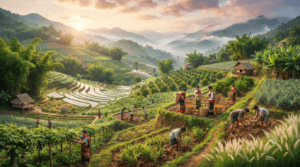
Agriculture is the backbone of Mizoram’s rural economy and provides livelihood opportunities for a large proportion of the state’s population. The state’s fertile soils, abundant rainfall, moderate climate, and extensive hill slopes create favourable conditions for cultivating a wide range of food grains, fruits, vegetables, spices, plantation crops, and medicinal plants. While traditional jhum (shifting) cultivation has been practiced for centuries, Mizoram is gradually adopting modern and sustainable farming methods to improve productivity and conserve natural resources.
Horticulture has emerged as one of the fastest-growing sectors in the state. The cultivation of oranges, bananas, pineapples, passion fruits, dragon fruits, ginger, turmeric, and spices has significantly contributed to farmers’ incomes and agricultural diversification. Government initiatives promoting organic farming, watershed management, and value-added processing are further strengthening the agricultural economy.
Agricultural Profile
Agriculture in Mizoram is mainly rain-fed and depends heavily on the southwest monsoon.
Key Features
- Agriculture is a major source of employment.
- Fertile hill soils support diverse crops.
- Rainfall is sufficient for most farming activities.
- Jhum cultivation remains important in several regions.
- Terrace farming is expanding in suitable hill areas.
- Organic farming is gaining popularity.
- Horticulture contributes significantly to the state’s economy.
Major Food Crops
Food grain cultivation forms the foundation of agricultural production.
| Crop | Importance |
|---|---|
| Rice | Staple food and principal crop |
| Maize | Food, fodder, and poultry feed |
| Pulses | Rich source of protein |
| Millets | Traditional nutritious grain |
| Oilseeds | Used for edible oil production |
Rice occupies the largest cultivated area and is the most important staple crop grown throughout Mizoram.
Major Horticultural Crops
Mizoram is well known for producing high-quality horticultural products.
Fruits
- Pineapple
- Mandarin Orange
- Banana
- Passion Fruit
- Dragon Fruit
- Papaya
- Guava
- Lemon
- Jackfruit
- Mango
Vegetables
- Cabbage
- Cauliflower
- Tomato
- Brinjal
- Chilli
- Beans
- Cucumber
- Pumpkin
- Okra
- Leafy vegetables
Major Spice Crops
The favourable climate supports commercial spice cultivation.
Important spices include:
- Ginger
- Turmeric
- Black Pepper
- Cinnamon
- Large Cardamom
- Bird’s Eye Chilli
These crops have high market demand and provide additional income to farmers.
Livestock and Allied Activities
Livestock farming complements crop cultivation.
Major activities include:
- Pig farming
- Poultry farming
- Dairy farming
- Goat rearing
- Fisheries
- Beekeeping
Pig farming is especially popular because pork is an important part of the traditional Mizo diet.
Agricultural Challenges
Despite significant agricultural potential, farmers face several challenges.
- Dependence on monsoon rainfall.
- Soil erosion on steep slopes.
- Limited mechanization.
- Small landholdings.
- Transportation difficulties.
- Market accessibility.
- Climate variability.
- Need for modern irrigation facilities.
The Government of Mizoram is promoting sustainable agriculture through improved irrigation, organic farming, farmer training, horticulture missions, watershed development, and better market infrastructure.
Agriculture and horticulture continue to play a vital role in Mizoram’s economy by ensuring food security, generating employment, supporting rural livelihoods, and promoting sustainable development. With increasing emphasis on organic farming and high-value horticultural crops, the sector has strong potential for future growth.
Economy and Industries of Mizoram
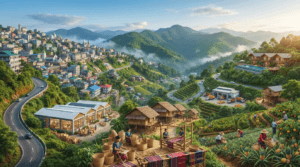
The economy of Mizoram has undergone significant transformation over the past few decades. Traditionally dependent on agriculture and shifting cultivation, the state is gradually developing a more diversified economy driven by horticulture, bamboo-based industries, handloom and handicrafts, tourism, trade, and the service sector. With its strategic location near the international borders of Myanmar and Bangladesh, Mizoram also has immense potential to become an important gateway for cross-border trade under India’s Act East Policy.
The Government of Mizoram is actively promoting sustainable economic growth through infrastructure development, entrepreneurship, skill development, industrial promotion, digital connectivity, and investments in agriculture and tourism. Although the industrial sector remains relatively small compared to other Indian states, the state’s rich natural resources and skilled workforce offer strong opportunities for future development.
Economic Overview
Mizoram’s economy is largely service-oriented while agriculture continues to support rural livelihoods.
Key Features
- Agriculture remains an important source of income.
- The service sector contributes the largest share to the state’s economy.
- Horticulture is rapidly expanding.
- Bamboo resources support rural industries.
- Tourism is emerging as a major growth sector.
- Small-scale industries dominate manufacturing.
- Cross-border trade offers future economic opportunities.
Major Economic Sectors
| Sector | Contribution |
|---|---|
| Agriculture | Food production and rural employment |
| Horticulture | Fruits, spices, and commercial crops |
| Forestry | Bamboo and forest-based products |
| Tourism | Eco-tourism and cultural tourism |
| Services | Government, education, healthcare, banking, IT |
| Small Industries | Handloom, handicrafts, food processing |
Major Industries
Industrial development mainly consists of small and medium enterprises.
Important Industries
- Bamboo processing
- Handloom and weaving
- Handicrafts
- Food processing
- Fruit processing
- Furniture manufacturing
- Rice mills
- Ginger processing
- Spice processing
- Wood-based industries
These industries generate employment while utilizing locally available raw materials.
Handloom and Handicrafts
Handloom weaving is an integral part of Mizo culture.
Major products include:
- Traditional Mizo shawls
- Puan textiles
- Bamboo baskets
- Cane furniture
- Decorative handicrafts
- Household utility items
These products are widely appreciated for their quality, durability, and artistic craftsmanship.
Bamboo Economy
Mizoram possesses one of India’s richest bamboo resources.
Bamboo supports:
- Construction materials
- Furniture manufacturing
- Paper production
- Handicrafts
- Household products
- Biofuel and renewable energy initiatives
The bamboo sector has enormous potential for generating employment and exports.
Challenges
The state’s economic development faces several constraints.
- Difficult mountainous terrain.
- Limited railway connectivity.
- High transportation costs.
- Small domestic market.
- Limited large-scale industries.
- Natural disaster risks.
- Infrastructure development requirements.
- Dependence on central government assistance.
The Government of Mizoram is addressing these challenges by improving road connectivity, industrial infrastructure, entrepreneurship support, digital services, border trade facilities, and investment promotion.
Mizoram’s economy continues to evolve through sustainable development, value-added agriculture, tourism, and small-scale industries. With abundant natural resources, skilled artisans, and increasing regional connectivity, the state is well positioned for long-term economic growth and inclusive development.
Culture, Traditions and Lifestyle of Mizoram
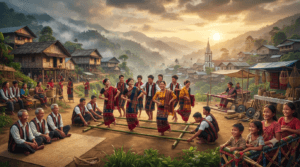
Mizoram is renowned for its vibrant culture, strong sense of community, and rich tribal heritage. The customs and traditions of the Mizo people have been preserved for generations through festivals, folk music, dances, handloom weaving, oral literature, and community-based social practices. Despite embracing modernization, the people of Mizoram continue to uphold their traditional values, making the state one of the most culturally distinctive regions in Northeast India.
One of the most admired aspects of Mizo society is “Tlawmngaihna,” a traditional code of ethics that emphasizes selflessness, honesty, discipline, hospitality, respect, and service to others. This principle influences daily life and strengthens social harmony across communities.
People and Society
The majority of the population belongs to various Mizo tribes, each contributing unique customs while sharing a common cultural identity.
Key Characteristics
- Strong community spirit.
- High literacy and educational awareness.
- Peaceful and disciplined society.
- Respect for elders and traditions.
- Active participation in community activities.
- Equal importance to education and cultural preservation.
- Friendly and welcoming attitude toward visitors.
Traditional Lifestyle
The traditional lifestyle of the Mizo people reflects their close relationship with nature.
Major features include:
- Houses traditionally built on hill slopes.
- Bamboo widely used in construction.
- Agriculture as a traditional occupation.
- Community cooperation during farming.
- Handloom weaving practiced in many households.
- Locally prepared traditional cuisine.
- Music and dance integrated into celebrations.
Although urban lifestyles are becoming more common, many traditional practices continue to thrive in rural areas.
Traditional Dress
Traditional attire showcases the artistic skills of Mizo weavers.
Men
- Puanchei-inspired shawls.
- Traditional jackets.
- Handwoven wraps.
- Headgear during festivals.
Women
- Puanchei (traditional colourful woven dress).
- Handwoven shawls.
- Elegant blouses.
- Traditional ornaments.
- Decorative head accessories during cultural festivals.
The vibrant colours and intricate weaving patterns symbolize the cultural identity of the Mizo people.
Music and Dance
Music and dance form an inseparable part of Mizo culture.
Popular traditional dances include:
- Cheraw (Bamboo Dance)
- Chheih Lam
- Khuallam
- Sarlamkai
- Chailam
Traditional musical instruments include drums, gongs, bamboo instruments, and indigenous percussion instruments that accompany cultural performances.
Traditional Crafts
Mizoram has a rich tradition of handicrafts and handloom weaving.
Important crafts include:
- Bamboo handicrafts.
- Cane products.
- Traditional textiles.
- Basket weaving.
- Decorative household items.
- Wood carving.
These crafts provide employment opportunities while preserving traditional artistic skills.
Modern Lifestyle
Urbanization and education have significantly influenced modern life in Mizoram.
Today’s lifestyle reflects a balance between tradition and progress through:
- Modern education.
- Digital technology.
- Improved healthcare.
- Urban infrastructure.
- Contemporary fashion alongside traditional attire.
- Sustainable development initiatives.
- Active participation of youth in cultural preservation.
The culture of Mizoram represents a harmonious blend of ancient traditions and modern values. The enduring spirit of Tlawmngaihna, vibrant festivals, traditional arts, community living, and respect for cultural heritage continue to define the unique identity of the Mizo people and make Mizoram one of India’s most culturally rich states.
Festivals of Mizoram
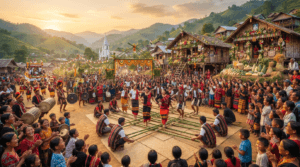
Festivals are an integral part of the cultural identity of Mizoram. They reflect the traditions, agricultural practices, religious beliefs, and community spirit of the Mizo people. Most traditional festivals are closely associated with the agricultural cycle, particularly the cultivation and harvesting of crops. These celebrations are marked by colourful traditional attire, folk music, bamboo dances, feasting, community gatherings, and religious ceremonies.
Although Christianity is the predominant religion in Mizoram today, many traditional festivals continue to be celebrated with great enthusiasm as symbols of cultural heritage. These events strengthen social unity and preserve the customs passed down through generations.
Major Festivals of Mizoram
| Festival | Time of Celebration | Significance |
|---|---|---|
| Chapchar Kut | March | Celebrates the completion of jungle clearing before cultivation |
| Mim Kut | August–September | Harvest festival associated with maize crops |
| Pawl Kut | December | Thanksgiving festival after the harvest season |
| Christmas | December | Celebrated with prayers, music, and community gatherings |
| New Year | January | Marks the beginning of a new year with cultural and social events |
| Easter | March–April | Celebrates the resurrection of Jesus Christ |
Chapchar Kut
Chapchar Kut is the most famous and widely celebrated traditional festival in Mizoram.
Highlights
- Celebrated in March.
- Marks the completion of clearing forests for jhum cultivation.
- Features the famous Cheraw (Bamboo Dance).
- Traditional music and folk songs are performed.
- People wear colourful Mizo attire.
- Community feasts and cultural programmes are organized.
The festival showcases the rich cultural heritage of the Mizo people and attracts visitors from across India and abroad.
Mim Kut
Mim Kut is one of the oldest harvest festivals of Mizoram.
Key Features
- Celebrated after the maize harvest.
- Families offer food in memory of departed ancestors.
- Traditional songs and dances are performed.
- Strengthens family and community bonds.
- Celebrates agricultural prosperity.
Pawl Kut
Pawl Kut is another important harvest festival celebrated after a successful farming season.
Major activities include:
- Community feasts.
- Folk dances.
- Music performances.
- Traditional games.
- Sharing food with relatives and neighbours.
- Thanksgiving for a good harvest.
The festival symbolizes gratitude, unity, and prosperity.
Christian Festivals
Christianity has greatly influenced the cultural life of Mizoram.
Major Christian festivals include:
- Christmas
- Good Friday
- Easter
- New Year celebrations
- Church anniversaries
Churches organize prayers, choir performances, charity programmes, and community meals during these occasions.
Traditional Dance During Festivals
Festivals provide an opportunity to perform traditional dances.
Popular dances include:
- Cheraw (Bamboo Dance)
- Chheih Lam
- Chailam
- Khuallam
- Sarlamkai
These dances preserve the artistic traditions of the Mizo people while promoting cultural tourism.
Importance of Festivals
Festivals contribute significantly to the social and cultural development of Mizoram.
- Preserve traditional heritage.
- Promote unity among communities.
- Encourage tourism.
- Support local artisans and performers.
- Strengthen cultural identity.
- Pass traditions to younger generations.
- Boost the local economy during celebrations.
- Enhance social harmony.
The festivals of Mizoram beautifully combine ancient tribal customs with modern religious traditions. Through vibrant celebrations, traditional dances, music, feasts, and community participation, these festivals continue to preserve the unique cultural identity of the Mizo people while strengthening social bonds and promoting tourism.
Cuisine and Famous Foods of Mizoram
The cuisine of Mizoram is simple, nutritious, and closely connected to the state’s natural environment and agricultural traditions. Fresh vegetables, locally grown herbs, bamboo shoots, rice, meat, and river fish form the foundation of Mizo cooking. Unlike many other Indian cuisines, traditional Mizo food uses very little oil and fewer spices, allowing the natural flavours of the ingredients to stand out.
Rice is the staple food and is eaten with a variety of vegetable, meat, and fish preparations. Pork is the most widely consumed meat, followed by chicken, beef (among communities where it is traditionally consumed), and freshwater fish. Bamboo shoots, smoked meat, fermented ingredients, and seasonal vegetables give Mizo cuisine its distinctive taste.
Characteristics of Mizo Cuisine
Traditional Mizo food is known for its freshness and balanced nutrition.
Key Features
- Rice is the staple food.
- Minimal use of oil and spices.
- Fresh vegetables are served daily.
- Bamboo shoots are widely used.
- Smoked meat is a common ingredient.
- Herbs enhance natural flavours.
- Seasonal ingredients are preferred.
- Meals are healthy and nutritious.
Popular Traditional Dishes
| Dish | Description |
|---|---|
| Bai | Traditional vegetable stew prepared with seasonal greens and bamboo shoots. |
| Sawhchiar | Rice cooked with meat and local herbs. |
| Vawksa Rep | Smoked pork served with herbs and spices. |
| Chhum Han | Steamed mixed vegetables with minimal seasoning. |
| Koat Pitha | Deep-fried rice flour snack. |
| Panch Phoron Vegetable Curry | Vegetable preparation with mild spices. |
| Bamboo Shoot Curry | Curry prepared using fresh bamboo shoots. |
These dishes reflect the simplicity and nutritional value of traditional Mizo cuisine.
Staple Foods
The daily diet of most families includes:
- Rice
- Fresh vegetables
- Pork
- Chicken
- Fish
- Lentils
- Bamboo shoots
- Leafy greens
Traditional Ingredients
Several locally available ingredients give Mizo cuisine its unique identity.
Major ingredients include:
- Bamboo shoots
- Ginger
- Garlic
- Local chillies
- Wild herbs
- Fermented soybeans
- Sesame
- Fresh coriander
- Turmeric
- Seasonal forest vegetables
Popular Beverages
Traditional and modern beverages enjoyed in Mizoram include:
- Black tea
- Green tea
- Herbal drinks
- Fresh fruit juices
- Rice-based traditional beverages (prepared by some communities during cultural occasions)
Tea is commonly served to guests and is an important part of everyday hospitality.
Food Culture
Food plays an important role in family life and community celebrations.
Meals are commonly shared during:
- Festivals
- Weddings
- Religious gatherings
- Community feasts
- Family celebrations
- Harvest festivals
Hospitality is considered an important cultural value, and guests are warmly welcomed with freshly prepared food.
Importance of Mizo Cuisine
Traditional food contributes significantly to the cultural heritage of Mizoram.
- Preserves indigenous culinary traditions.
- Encourages healthy eating habits.
- Promotes the use of local agricultural products.
- Supports farmers and local markets.
- Attracts culinary tourism.
- Strengthens community relationships.
- Reflects the state’s sustainable lifestyle.
The cuisine of Mizoram beautifully reflects the state’s natural resources, agricultural traditions, and cultural values. Its nutritious recipes, fresh ingredients, and simple cooking methods make Mizo food both distinctive and healthy, offering visitors an authentic taste of Northeast India’s rich culinary heritage.
Tourist Places in Mizoram
Mizoram is one of India’s most scenic destinations, offering breathtaking mountain landscapes, lush green valleys, dense forests, sparkling rivers, tranquil lakes, waterfalls, caves, and vibrant tribal culture. The state’s pleasant climate, peaceful environment, and warm hospitality make it an ideal destination for nature lovers, adventure enthusiasts, wildlife photographers, and cultural travelers. From the bustling capital city of Aizawl to the serene Blue Mountain ranges, every part of Mizoram offers unique attractions.
Eco-tourism is growing rapidly in Mizoram, with the government promoting sustainable tourism while preserving the state’s natural and cultural heritage.
Top Tourist Attractions
| Tourist Place | District | Famous For |
|---|---|---|
| Aizawl | Aizawl | Capital city, museums, viewpoints, churches |
| Phawngpui (Blue Mountain) National Park | Lawngtlai | Highest peak, trekking, biodiversity |
| Vantawng Falls | Serchhip | Highest waterfall in Mizoram |
| Tam Dil | Saitual | Natural lake, boating, picnic spot |
| Reiek | Mamit | Hill station, trekking, traditional Mizo village |
| Murlen National Park | Champhai | Dense forests, orchids, wildlife |
| Champhai | Champhai | Vineyards, scenic valleys, Myanmar border views |
| Dampa Tiger Reserve | Mamit | Wildlife and eco-tourism |
| Palak Lake (Palak Dil) | Siaha | Largest natural lake in Mizoram |
| Lengteng Wildlife Sanctuary | Champhai | Birdwatching and biodiversity |
Aizawl
Aizawl, the capital of Mizoram, is located on picturesque hill ridges at an elevation of about 1,132 metres above sea level.
Major Attractions
- Mizoram State Museum
- Solomon’s Temple
- Bara Bazar
- Durtlang Hills
- KV Paradise
- Local handicraft markets
- Scenic viewpoints
The city combines modern urban development with traditional Mizo culture and offers panoramic views of the surrounding hills.
Phawngpui (Blue Mountain) National Park
Phawngpui is the highest mountain in Mizoram, rising to approximately 2,157 metres above sea level.
Highlights
- Highest peak in Mizoram
- Trekking destination
- Rare orchids and wildflowers
- Cloud forests
- Endangered wildlife
- Spectacular sunrise and sunset views
The park is one of the state’s most popular destinations for trekking and nature photography.
Vantawng Falls
Vantawng Falls is the highest waterfall in Mizoram, with water cascading from a height of about 229 metres.
Attractions
- Stunning waterfall views
- Dense surrounding forests
- Photography opportunities
- Nature walks
- Picnic spots
The waterfall becomes especially impressive during the monsoon season.
Tam Dil
Tam Dil is a beautiful natural freshwater lake surrounded by lush green forests.
Visitors can enjoy:
- Boating
- Nature walks
- Birdwatching
- Picnics
- Forest exploration
The peaceful atmosphere makes it one of the most visited lakes in Mizoram.
Reiek
Reiek is a charming hill station located about 30 km from Aizawl.
It is famous for:
- Trekking
- Traditional Mizo heritage village
- Scenic mountain views
- Rich biodiversity
- Cultural tourism
Adventure Tourism
Adventure enthusiasts can enjoy:
- Trekking
- Camping
- Wildlife safaris
- Birdwatching
- Mountain photography
- Nature trails
- Rock climbing (selected areas)
Best Time to Visit
The ideal time to visit Mizoram is October to April, when the weather is cool, dry, and pleasant for sightseeing, trekking, wildlife exploration, and cultural festivals.
Why Visit Mizoram?
- Spectacular mountain landscapes
- Rich tribal culture
- Peaceful environment
- Dense forests and wildlife
- Beautiful waterfalls
- Scenic lakes
- Adventure activities
- Warm hospitality
- Excellent photography opportunities
- Authentic Northeast Indian experiences
Mizoram offers an unforgettable travel experience through its pristine natural beauty, vibrant culture, diverse wildlife, and tranquil atmosphere. Whether exploring hill stations, trekking through national parks, visiting waterfalls, or experiencing traditional Mizo hospitality, visitors will discover one of India’s most beautiful and least-explored travel destinations.
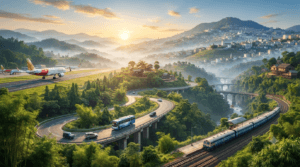
Transport and Connectivity of Mizoram
Transport and connectivity play a vital role in the economic development, tourism, and social integration of Mizoram. Due to its rugged mountainous terrain and remote location in Northeast India, developing transportation infrastructure has been both challenging and essential. Over the years, significant investments by the Government of India and the Government of Mizoram have improved road networks, air connectivity, and rail links, making travel to and within the state more convenient.
Road transport remains the primary mode of travel, while rail and air connectivity continue to expand. Under the Act East Policy, Mizoram is also emerging as an important gateway for trade with Myanmar and other Southeast Asian countries.
Road Connectivity
Roads form the backbone of Mizoram’s transportation system.
Key Features
- National Highways connect Mizoram with Assam and other northeastern states.
- Well-developed state highways link major towns and district headquarters.
- Regular bus services operate between important cities and villages.
- Private taxis and shared vehicles are widely available.
- Road transport supports tourism, trade, and daily commuting.
The scenic hill roads provide breathtaking views but require careful driving, especially during the monsoon season.
National Highways
| Highway | Importance |
|---|---|
| NH-6 | Connects Aizawl with Assam and other northeastern states. |
| NH-306 | Major route connecting Mizoram to Silchar (Assam). |
| NH-502A | Provides connectivity toward southern Mizoram. |
| NH-502B | Links border regions and important interior areas. |
These highways are crucial for transporting goods, agricultural produce, and passengers.
Rail Connectivity
Rail connectivity in Mizoram is steadily improving.
Key Information
- Bairabi Railway Station is the primary railway station serving Mizoram.
- Bairabi is connected to the Indian railway network through Assam.
- The Bairabi–Sairang Railway Project is under development to improve rail access to Aizawl.
- The project includes tunnels, bridges, and modern engineering structures across the hilly terrain.
Once completed, the railway line will significantly improve passenger and freight transportation.
Air Connectivity
Air travel provides the fastest access to Mizoram.
Lengpui Airport
Lengpui Airport, located about 32 km from Aizawl, is the state’s only airport.
Major features include:
- Regular flights to Kolkata.
- Flights to Guwahati.
- Connections to Imphal and other northeastern cities (subject to airline schedules).
- Modern passenger facilities.
- Scenic hilltop location.
The airport plays an important role in promoting tourism, business, and emergency services.
Public Transport
Local transportation options include:
- State-run buses.
- Private buses.
- Shared taxis.
- Maxi cabs.
- Auto-rickshaws (limited in some towns).
- Rental vehicles.
Shared taxis are among the most popular and convenient modes of transportation within Mizoram.
Future Infrastructure Development
Major infrastructure projects include:
- Expansion of National Highways.
- Completion of the Bairabi–Sairang Railway Project.
- Improvement of border trade routes.
- Smart city development in Aizawl.
- Better rural road connectivity.
- Enhanced digital infrastructure supporting transport services.
Improved connectivity is expected to boost tourism, trade, agriculture, and overall economic development.
Importance of Transport
Efficient transportation contributes to:
- Economic growth.
- Tourism development.
- Regional integration.
- Better healthcare access.
- Educational opportunities.
- Employment generation.
- Faster movement of goods.
- Improved disaster response.
Mizoram’s transport infrastructure continues to develop rapidly despite geographical challenges. With ongoing investments in roads, railways, airports, and border connectivity, the state is becoming increasingly accessible while strengthening its role as an important gateway between India and Southeast Asia.
Education and Healthcare in Mizoram
Education and healthcare are two of the strongest pillars of Mizoram’s social development. The state consistently ranks among the most literate in India and has made remarkable progress in expanding access to quality education and healthcare services. A strong emphasis on literacy, community participation, and public welfare has helped Mizoram achieve impressive human development indicators compared to many other Indian states.
The Government of Mizoram continues to invest in schools, colleges, universities, hospitals, primary health centres, and digital health initiatives to improve the quality of life for its citizens. Alongside government institutions, private organizations, missionary institutions, and community groups also play an important role in delivering educational and healthcare services.
Education in Mizoram
Mizoram has one of the highest literacy rates in India, reflecting the importance placed on education by Mizo society.
Key Features
- One of the highest literacy rates in India.
- Strong network of government and private schools.
- English is widely used as the medium of instruction.
- Focus on inclusive and quality education.
- Increasing adoption of digital learning.
- Vocational and skill-based education is expanding.
- Scholarships support deserving students.
Major Educational Institutions
| Institution | Location | Specialization |
|---|---|---|
| Mizoram University | Aizawl | Higher education and research |
| National Institute of Technology (NIT) Mizoram | Aizawl | Engineering and technology |
| ICFAI University Mizoram | Aizawl | Management, science, and professional courses |
| Mizoram College of Nursing | Aizawl | Nursing education |
| Government Aizawl College | Aizawl | Arts, science, and commerce |
These institutions contribute significantly to higher education, research, and professional skill development in the state.
Healthcare System
The healthcare infrastructure of Mizoram has improved considerably over the years.
Major Healthcare Facilities
- State government hospitals.
- District hospitals.
- Community Health Centres (CHCs).
- Primary Health Centres (PHCs).
- Urban health clinics.
- Private hospitals.
- Mobile medical units.
Healthcare services focus on preventive care, maternal and child health, immunization, and disease control.
Major Hospitals
Some of the important hospitals in Mizoram include:
- Aizawl Civil Hospital
- Zoram Medical College Hospital
- Synod Hospital
- Regional Referral Hospital
These hospitals provide specialized medical care, emergency services, diagnostics, and surgical treatment.
Public Health Initiatives
The Government of Mizoram implements several programmes to improve public health.
Major initiatives include:
- Universal immunization.
- Maternal and child healthcare.
- Tuberculosis control.
- HIV/AIDS awareness and treatment.
- Malaria prevention.
- Nutrition programmes.
- Digital health services.
- Telemedicine initiatives.
Challenges
Despite significant achievements, certain challenges remain.
- Difficult access to remote hill villages.
- Shortage of specialists in some areas.
- Transportation challenges during monsoons.
- Need for advanced medical infrastructure.
- Expanding higher education opportunities.
- Strengthening digital education facilities.
Continued investment in infrastructure, teacher training, healthcare professionals, and digital technologies is helping overcome these challenges.
Mizoram’s commitment to education and healthcare has played a crucial role in improving human development, literacy, public health, and overall quality of life. The state’s continued focus on innovation, accessibility, and inclusive development is expected to further strengthen these sectors in the years ahead.
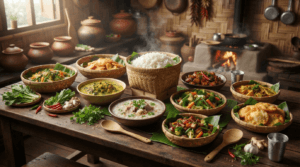
Famous Food and Traditional Cuisine of Mizoram
The traditional cuisine of Mizoram is simple, healthy, nutritious, and deeply connected to the lifestyle of the Mizo people. Most dishes are prepared using fresh, locally sourced ingredients such as rice, leafy vegetables, bamboo shoots, herbs, smoked meat, fish, and seasonal produce. Unlike many other Indian cuisines, Mizo food uses very little oil and a limited amount of spices, allowing the natural flavors of the ingredients to stand out.
Rice is the staple food and is served with almost every meal. Traditional cooking methods such as boiling, steaming, smoking, and fermenting are commonly used, making the cuisine both wholesome and flavorful. The influence of the state’s cool climate, rich forests, and agricultural traditions is reflected in its unique culinary heritage.
Characteristics of Mizo Cuisine
The food culture of Mizoram is known for its simplicity and nutritional value.
Key Features
- Rice is the staple food.
- Fresh vegetables are used in daily meals.
- Smoked pork and smoked beef are popular.
- Bamboo shoots are widely used in cooking.
- Fermented ingredients enhance flavor.
- Food contains less oil and fewer spices.
- Seasonal herbs add natural aroma.
- Locally grown vegetables form an essential part of the diet.
Popular Traditional Dishes
| Dish | Description |
|---|---|
| Bai | Traditional vegetable stew made with seasonal vegetables and bamboo shoots. |
| Sawhchiar | Rice cooked with meat, often chicken or pork. |
| Vawksa Rep | Smoked pork prepared with herbs and spices. |
| Chhum Han | Steamed mixed vegetables with minimal seasoning. |
| Bamboo Shoot Curry | Curry prepared using fresh or fermented bamboo shoots. |
| Koat Pitha | Fried snack made from rice flour and bananas. |
| Misa Mach Poora | Grilled shrimp prepared with local spices. |
| Panch Phoron Vegetable Curry | Vegetable dish flavored with aromatic spices. |
Traditional Beverages
Popular beverages include:
- Fresh herbal tea.
- Black tea.
- Rice-based traditional drinks (prepared during cultural occasions).
- Fresh fruit juices.
- Locally grown citrus beverages.
Common Ingredients
The ingredients most frequently used in Mizo cooking include:
- Rice.
- Bamboo shoots.
- Smoked pork.
- Fish.
- Chicken.
- Mustard leaves.
- Pumpkin.
- Beans.
- Ginger.
- Garlic.
- Green chilies.
- Local herbs.
- Sesame.
- Banana flowers.
Food Culture
Meals are often shared with family members and guests, reflecting the Mizo values of hospitality and community. Traditional recipes are passed down through generations and continue to be prepared during festivals, family gatherings, and special occasions.
Freshness is considered an essential aspect of cooking, with many households using vegetables harvested from nearby farms or home gardens. Seasonal ingredients ensure that meals remain both nutritious and environmentally sustainable.
Street Food
Visitors can enjoy a variety of local snacks and street foods in markets across Mizoram, including:
- Koat Pitha.
- Roasted corn.
- Fresh fruit.
- Local noodles.
- Grilled meat.
- Bamboo shoot delicacies.
- Traditional sweets.
Street food offers tourists an opportunity to experience authentic local flavors at affordable prices.
Importance of Traditional Cuisine
The cuisine of Mizoram reflects the state’s agricultural traditions, natural environment, and cultural identity. Its emphasis on fresh ingredients, healthy cooking methods, and balanced nutrition makes it one of the healthiest regional cuisines in India. Preserving these traditional recipes also helps protect the rich culinary heritage of the Mizo people for future generations.
Festivals and Cultural Celebrations of Mizoram
Festivals are an integral part of the cultural identity of Mizoram, reflecting the traditions, history, agricultural practices, and community spirit of the Mizo people. Although Christianity is the predominant religion in the state and festivals like Christmas and Easter are celebrated with great enthusiasm, Mizoram has also preserved its traditional tribal festivals that date back centuries. These celebrations are marked by vibrant dances, folk music, traditional attire, feasts, sports, and cultural performances that strengthen social bonds and preserve the state’s rich heritage.
Most traditional festivals are closely linked to the agricultural cycle, especially the practice of jhum (shifting) cultivation. They celebrate the completion of sowing, harvesting, and other important stages of farming, expressing gratitude for nature’s blessings and praying for prosperity.
Major Festivals of Mizoram
| Festival | Time of Celebration | Significance |
|---|---|---|
| Chapchar Kut | March | Celebrates the completion of jungle clearing before jhum cultivation. |
| Mim Kut | August–September | Festival associated with maize harvest and remembrance of departed souls. |
| Pawl Kut | December | Harvest festival celebrating abundance and thanksgiving. |
| Christmas | December | Celebrated with church services, community feasts, and carol singing. |
| Easter | March–April | Commemorates the resurrection of Jesus Christ with prayers and celebrations. |
| New Year | January | Welcomed with cultural programmes, church gatherings, and family celebrations. |
Chapchar Kut
Chapchar Kut is the largest and most famous traditional festival of Mizoram. It is celebrated after the forests have been cleared for jhum cultivation and before the fields are burned. The festival features colorful cultural programmes, traditional dances, folk songs, indigenous games, handicraft exhibitions, and local cuisine.
People wear beautifully woven Mizo traditional dresses and participate in community celebrations, making it one of the best times for tourists to experience the state’s cultural richness.
Mim Kut
Mim Kut is celebrated after the maize harvest and has deep cultural and spiritual significance. Families traditionally offer the first harvested maize in memory of deceased relatives, reflecting respect for ancestors and gratitude for nature’s bounty.
The festival also includes folk music, traditional meals, and gatherings that strengthen family and community ties.
Pawl Kut
Pawl Kut is celebrated after the successful harvest season and symbolizes prosperity, happiness, and thanksgiving. It is marked by grand feasts, cultural performances, dances, and social gatherings where communities come together to celebrate the abundance of agricultural produce.
Christian Festivals
Christianity has greatly influenced the cultural life of Mizoram. Festivals such as Christmas, Easter, Good Friday, and New Year are celebrated across the state with church services, choir performances, community feasts, and charitable activities. Homes, churches, and public spaces are beautifully decorated, creating a festive atmosphere.
Traditional Music and Dance
Festivals provide an opportunity to showcase Mizoram’s rich performing arts.
Popular traditional dances include:
- Cheraw (Bamboo Dance)
- Chheih Lam
- Khuallam
- Sarlamkai
- Chawnglaizawn
Traditional musical instruments such as drums, gongs, and bamboo instruments accompany these performances, creating a lively and energetic atmosphere.
Traditional Attire During Festivals
Men and women proudly wear colorful handwoven garments during cultural celebrations.
Common traditional attire includes:
- Puan (traditional woven cloth)
- Puanchei
- Kawrchei
- Vakiria headgear
- Traditional shawls
- Handcrafted ornaments
These garments showcase the exceptional weaving skills of Mizo artisans and represent the cultural identity of different communities.
Importance of Festivals
Festivals in Mizoram promote cultural preservation, social harmony, and community participation. They strengthen relationships among families and villages while preserving traditional customs for future generations. At the same time, these celebrations attract domestic and international tourists, contributing to the state’s cultural tourism and local economy.
The vibrant festivals of Mizoram beautifully blend ancient tribal traditions with modern Christian values, making them a unique expression of the state’s rich cultural heritage.
Famous Tourist Places in Mizoram
Mizoram is one of India’s most scenic destinations, offering breathtaking landscapes, rolling green hills, cascading waterfalls, dense forests, peaceful lakes, and vibrant tribal culture. Often referred to as the “Land of the Blue Mountains,” the state provides a perfect blend of natural beauty, adventure, wildlife, and cultural experiences. From picturesque hill stations to serene lakes and wildlife sanctuaries, Mizoram has numerous attractions that appeal to nature lovers, photographers, trekkers, and cultural enthusiasts.
The state’s clean environment, pleasant climate, warm hospitality, and unique traditions make it an emerging destination for eco-tourism and sustainable travel in Northeast India.
Top Tourist Attractions
| Tourist Place | Location | Highlights |
|---|---|---|
| Aizawl | Aizawl District | Capital city, viewpoints, museums, churches. |
| Reiek | Mamit District | Scenic hill, trekking, traditional Mizo village. |
| Vantawng Falls | Serchhip District | Highest waterfall in Mizoram. |
| Tam Dil | Saitual District | Natural freshwater lake, boating, picnic. |
| Phawngpui National Park | Lawngtlai District | Blue Mountain, trekking, wildlife. |
| Dampa Tiger Reserve | Mamit District | Wildlife, birdwatching, biodiversity. |
| Hmuifang | Aizawl District | Hill station, adventure tourism. |
| Rih Dil | Near India–Myanmar border | Sacred lake with cultural significance. |
Aizawl
Aizawl, the capital city of Mizoram, is built along scenic hill ridges and offers panoramic views of the surrounding valleys. It is known for its clean streets, vibrant local markets, churches, museums, and cultural centres.
Popular attractions in Aizawl include:
- Solomon’s Temple
- Mizoram State Museum
- Bara Bazar
- Durtlang Hills
- KV Paradise
Reiek
Reiek is one of the most popular hill stations in Mizoram, located about 30 km from Aizawl. It offers spectacular views of the surrounding mountains and forests. Visitors can enjoy trekking, birdwatching, photography, and traditional Mizo village experiences.
Vantawng Falls
Vantawng Falls is the tallest waterfall in Mizoram, with water cascading dramatically through dense forests. The viewpoint provides breathtaking scenery and is one of the state’s most photographed natural attractions.
Tam Dil
Tam Dil is a beautiful natural freshwater lake surrounded by lush green forests. It is one of Mizoram’s most popular picnic spots and offers boating, angling, birdwatching, and nature walks. The peaceful environment makes it an ideal destination for families and nature lovers.
Phawngpui National Park
Also known as the Blue Mountain National Park, Phawngpui National Park is home to Mizoram’s highest peak. The park is famous for its rolling grasslands, rare orchids, rhododendrons, medicinal plants, and diverse wildlife, including clouded leopards, Himalayan black bears, serows, and numerous bird species. Trekking through its scenic trails is a memorable experience for adventure enthusiasts.
Dampa Tiger Reserve
Dampa Tiger Reserve is the largest wildlife reserve in Mizoram and is renowned for its rich biodiversity. The reserve supports Bengal tigers, leopards, elephants, hoolock gibbons, barking deer, hornbills, butterflies, reptiles, and hundreds of plant species. It is an important destination for wildlife tourism, photography, and conservation.
Adventure Activities
Visitors can enjoy a variety of outdoor activities throughout Mizoram, including:
- Trekking
- Camping
- Birdwatching
- Wildlife photography
- Boating
- Nature walks
- Mountain biking
- Cultural tourism
Best Time to Visit Tourist Places
The ideal time to visit Mizoram is from October to April, when the weather remains cool, pleasant, and perfect for sightseeing, trekking, wildlife exploration, and cultural experiences. Although the monsoon season transforms the landscape into lush greenery, heavy rainfall may occasionally disrupt travel plans.
Importance of Tourism
Tourism plays a significant role in Mizoram’s economy by generating employment, supporting local handicrafts, promoting eco-tourism, and preserving the state’s cultural heritage. Continued investment in tourism infrastructure and sustainable development is helping attract more domestic and international visitors.
With its breathtaking landscapes, rich biodiversity, welcoming communities, and vibrant tribal traditions, Mizoram stands out as one of India’s most captivating and unspoiled travel destinations.
Shopping in Mizoram – Famous Handicrafts, Handlooms and Souvenirs
Shopping in Mizoram offers visitors an opportunity to experience the state’s rich tribal heritage through beautifully handcrafted products, colorful textiles, bamboo and cane crafts, traditional ornaments, and locally produced food items. Most products are handmade by skilled artisans using techniques that have been passed down through generations. Purchasing these authentic items not only provides memorable souvenirs but also supports local communities and traditional craftsmanship.
The state’s markets are known for their eco-friendly products, high-quality weaving, and unique tribal designs that reflect the culture and lifestyle of the Mizo people.
Popular Shopping Destinations
| Market | Location | Famous For |
|---|---|---|
| Bara Bazar | Aizawl | Traditional products, fresh produce, textiles. |
| Millennium Centre | Aizawl | Shopping complex, garments, handicrafts. |
| New Market | Aizawl | Local crafts, clothing, household items. |
| Luangmual Handicrafts Centre | Aizawl | Bamboo crafts, handloom products. |
| Government Emporiums | Various towns | Authentic Mizo handicrafts and souvenirs. |
Famous Handloom Products
Mizoram is well known for its colorful woven textiles.
Popular handloom items include:
- Puan (traditional woven cloth)
- Puanchei
- Kawrchei
- Traditional shawls
- Stoles
- Scarves
- Table runners
- Decorative fabrics
These handwoven products feature intricate tribal patterns and vibrant colors, making them highly valued across India.
Bamboo and Cane Handicrafts
Bamboo and cane are among the most important raw materials used by Mizo artisans.
Popular handicrafts include:
- Bamboo baskets
- Decorative baskets
- Furniture
- Bamboo lamps
- Flower vases
- Storage containers
- Cane chairs
- Handcrafted home décor items
These products are durable, eco-friendly, and beautifully designed.
Traditional Jewellery and Accessories
Visitors can also purchase a variety of traditional jewellery and fashion accessories handcrafted by local artisans.
- Tribal necklaces
- Beaded ornaments
- Handmade earrings
- Bracelets
- Traditional headgear
- Decorative accessories
These items reflect the artistic traditions and cultural identity of different Mizo communities.
Local Food Products
Popular food items to buy include:
- Bamboo shoot pickles
- Local honey
- Organic spices
- Ginger products
- Turmeric
- Herbal tea
- Homemade snacks
- Traditional sweets
Many of these products are prepared using locally grown organic ingredients.
Shopping Tips
To enjoy a better shopping experience:
- Purchase from government-approved emporiums for authentic products.
- Support local artisans by buying handmade items.
- Compare prices before purchasing.
- Carry reusable shopping bags.
- Handle fragile bamboo products carefully.
- Respect local customs while visiting traditional markets.
Importance of Local Handicrafts
The handicraft and handloom industries provide employment to thousands of artisans across Mizoram, particularly women in rural areas. These traditional industries help preserve cultural heritage while contributing to the state’s economy and promoting sustainable livelihoods.
By purchasing locally made products, visitors directly support traditional craftsmanship, rural development, and the preservation of Mizoram’s rich artistic legacy. The state’s unique handicrafts and handlooms remain among the finest examples of tribal artistry in Northeast India.
Best Time to Visit Mizoram
Mizoram is a year-round destination, but the best time to visit depends on the type of experience travelers seek. With its pleasant climate, lush green hills, waterfalls, and vibrant festivals, every season offers a unique charm. However, the period from October to April is generally considered the ideal time to explore the state due to comfortable weather and clear skies.
Whether you are interested in sightseeing, trekking, wildlife, photography, or experiencing Mizo culture, choosing the right season can make your trip more enjoyable.
Season-wise Travel Guide
| Season | Months | Weather | Best For |
|---|---|---|---|
| Winter | October – February | Cool and pleasant (11°C–24°C) | Sightseeing, trekking, festivals, photography |
| Summer | March – May | Mild and comfortable (20°C–30°C) | Nature walks, birdwatching, adventure activities |
| Monsoon | June – September | Heavy rainfall (20°C–28°C) | Lush greenery, waterfalls, scenic landscapes |
Winter (October to February)
Winter is widely regarded as the best season to visit Mizoram. The weather remains cool, dry, and pleasant, making it perfect for outdoor activities.
Highlights
- Comfortable temperatures for sightseeing.
- Clear mountain views.
- Ideal conditions for trekking.
- Popular festival season.
- Excellent opportunities for photography.
- Pleasant evenings and cool nights.
This season attracts the highest number of domestic and international tourists.
Summer (March to May)
Unlike many parts of India, Mizoram experiences a relatively mild summer because of its higher elevation.
Visitors during summer can enjoy:
- Comfortable daytime temperatures.
- Blooming flowers and green landscapes.
- Wildlife exploration.
- Camping and trekking.
- Fewer crowds at tourist attractions.
Summer is a great choice for travelers seeking peaceful holidays in nature.
Monsoon (June to September)
The southwest monsoon transforms Mizoram into a lush green paradise.
During this season:
- Waterfalls flow at full strength.
- Forests become exceptionally vibrant.
- Mist-covered hills create spectacular scenery.
- Nature photography becomes highly rewarding.
However, heavy rainfall may occasionally lead to landslides and road disruptions, so travelers should check weather conditions before planning their journey.
Festival Season
Many tourists prefer visiting Mizoram during major festivals to experience its rich traditions.
- Chapchar Kut
- Mim Kut
- Pawl Kut
- Christmas
- Easter
- New Year celebrations
These festivals showcase traditional dances, music, handicrafts, and authentic Mizo cuisine.
Travel Tips
To ensure a comfortable trip:
- Carry light woollen clothing during winter.
- Pack rain gear if traveling during the monsoon.
- Wear comfortable trekking shoes.
- Keep basic medicines and a first-aid kit.
- Book hotels and transport in advance during festival seasons.
- Respect local customs and environmental guidelines.
Why October to April is Recommended
The months from October to April offer the most favorable weather for exploring Mizoram’s natural beauty and cultural attractions. Travelers can comfortably visit hill stations, national parks, waterfalls, lakes, villages, and historical sites without major weather-related interruptions.
With pleasant temperatures, colorful festivals, breathtaking landscapes, and excellent opportunities for outdoor activities, this period provides the most rewarding travel experience in Mizoram. It is therefore considered the peak tourist season and the best time to discover the state’s unique charm.
How to Reach Mizoram
Mizoram is well connected to the rest of India through airways, railways, and roadways. Although the state is located in the far northeastern part of the country and is characterized by rugged hills, continuous improvements in transport infrastructure have made travel easier and more convenient. Visitors can choose the most suitable mode of transport depending on their budget, travel time, and starting location.
The state’s only airport, expanding railway network, and national highways provide reliable access for tourists, business travelers, and local residents alike.
Reach Mizoram by Air
Lengpui Airport
Lengpui Airport is the only airport in Mizoram and is located about 32 km from Aizawl, the state capital.
Key Features
- Regular flights from Kolkata.
- Frequent flights from Guwahati.
- Seasonal or connecting flights from other major Indian cities.
- Taxi services available from the airport.
- Modern passenger facilities.
After arriving at Lengpui Airport, visitors can hire taxis or use public transport to reach Aizawl and nearby destinations.
Reach Mizoram by Train
Although Mizoram has limited railway connectivity, rail services are steadily improving.
Nearest Railway Station
- Bairabi Railway Station is the primary railway station in Mizoram.
- Connected to the Indian Railways network through Assam.
- The Bairabi–Sairang Railway Project is under construction and will improve connectivity to Aizawl.
Many travelers also use railway stations in Assam, such as Silchar, before continuing their journey by road.
Reach Mizoram by Road
Road transport is the most widely used mode of travel within the state.
National Highways
- NH-6
- NH-306
- NH-502A
- NH-502B
These highways connect Mizoram with Assam and neighboring northeastern states.
Bus Services
Regular bus services operate between Mizoram and neighboring states.
- State Transport buses.
- Private buses.
- Deluxe coaches.
- Shared taxis.
- Tourist vehicles.
Road journeys offer scenic views of hills, forests, rivers, and valleys throughout the route.
Travel from Nearby Cities
| City | Mode | Approximate Travel Time |
|---|---|---|
| Guwahati | Flight | 1.5–2 hours |
| Kolkata | Flight | About 1.5 hours |
| Silchar | Road | 6–8 hours |
| Agartala | Road | 10–12 hours |
| Imphal | Road | 12–14 hours |
Travel times may vary depending on weather, road conditions, and transportation schedules.
Travel Tips
- Book flight tickets in advance during the tourist season.
- Carry valid identification documents.
- Check weather and road conditions before traveling.
- Keep sufficient cash for remote areas where digital payments may not always be accepted.
- Travel during daylight hours when driving through hilly roads.
- Follow local traffic regulations and environmental guidelines.
Future Connectivity Projects
- Completion of the Bairabi–Sairang Railway Project.
- Expansion and modernization of national highways.
- Improved rural road networks.
- Enhanced airport facilities.
- Better interstate transport services.
These developments will strengthen tourism, trade, and economic growth across Mizoram.
With improved air, rail, and road infrastructure, reaching Mizoram has become easier than ever. Whether arriving by flight, train, or road, travelers are rewarded with breathtaking landscapes, warm hospitality, and unforgettable cultural experiences from the moment they enter the state.
Travel Tips for Visiting Mizoram
Planning your trip well can make your visit to Mizoram safe, comfortable, and memorable. Known for its peaceful atmosphere, clean environment, and warm hospitality, the state welcomes travelers who respect its traditions, culture, and natural surroundings. Whether you are visiting for sightseeing, trekking, wildlife exploration, photography, or cultural experiences, following a few practical travel tips will help you make the most of your journey.
Plan Your Trip During the Best Season
The ideal time to visit Mizoram is October to April, when the weather is cool, pleasant, and suitable for outdoor activities. During the monsoon months (June to September), heavy rainfall may occasionally cause landslides and road delays, so travelers should check weather forecasts before departure.
Carry Valid Identification
Always carry a government-issued photo identity card such as:
- Passport
- Aadhaar Card
- Driving Licence
- Voter ID
Foreign nationals should also carry the necessary travel documents required under the latest government regulations.
Pack Smart
Due to Mizoram’s hilly terrain and changing weather, it is advisable to pack:
- Comfortable walking or trekking shoes
- Light woollen clothes (especially during winter)
- Raincoat or umbrella (during monsoon)
- Personal medicines
- First-aid kit
- Water bottle
- Power bank
- Camera and binoculars for wildlife viewing
Respect Local Culture
The Mizo people are known for their discipline, hospitality, and strong community values.
- Dress modestly while visiting villages and religious places.
- Ask permission before photographing local people.
- Follow local customs and traditions.
- Respect church services and community events.
- Avoid littering public places.
Travel Safely
For a safe journey:
- Drive carefully on winding hill roads.
- Avoid traveling late at night in unfamiliar areas.
- Follow local traffic rules.
- Hire licensed guides for trekking.
- Inform someone about your travel plans when visiting remote locations.
Protect Nature
Mizoram is rich in forests, wildlife, and biodiversity. Responsible tourism helps preserve its natural beauty for future generations.
- Avoid single-use plastics whenever possible.
- Do not disturb wildlife or feed wild animals.
- Stay on designated trekking trails.
- Dispose of waste responsibly.
- Support eco-friendly tourism initiatives.
Currency and Connectivity
Although digital payments are increasingly accepted in major towns, carrying some cash is recommended for travel to remote villages and rural markets.
Mobile and internet connectivity is generally good in urban areas but may be limited in certain remote locations.
Health and Emergency Preparedness
Before traveling:
- Carry essential medicines.
- Stay hydrated during trekking.
- Keep emergency contact numbers handy.
- Follow local health advisories.
- Purchase travel insurance if planning adventure activities.
Support Local Communities
Travelers can contribute to the local economy by:
- Purchasing handmade handicrafts.
- Staying in locally managed accommodations.
- Hiring local guides.
- Eating at local restaurants.
- Respecting community-based tourism initiatives.
This helps preserve traditional livelihoods while promoting sustainable tourism.
Final Travel Advice
A visit to Mizoram is more than just a sightseeing trip—it’s an opportunity to experience one of India’s most peaceful, culturally vibrant, and environmentally rich states. By respecting local traditions, protecting nature, and planning responsibly, travelers can enjoy a safe, enriching, and unforgettable journey through the beautiful hills of Mizoram.
Interesting Facts About Mizoram
Mizoram is one of India’s most fascinating states, known for its breathtaking landscapes, vibrant tribal culture, exceptional literacy rate, and peaceful way of life. Despite being one of the smaller states in terms of population, Mizoram stands out for its environmental conservation, community spirit, and rich cultural heritage. From the majestic Blue Mountains to colorful festivals and unique traditions, the state offers countless interesting facts that make it truly special.
Amazing Facts About Mizoram
1. One of India’s Most Literate States
Mizoram consistently ranks among the states with the highest literacy rates in India, reflecting the importance of education in Mizo society.
2. The Land of the Blue Mountains
The name Mizoram means “Land of the Highlanders,” and the state is popularly known as the “Land of the Blue Mountains” because of its mist-covered hills and scenic mountain ranges.
3. Home to the Famous Cheraw Dance
Cheraw, also known as the Bamboo Dance, is one of India’s oldest and most graceful traditional dances. It is performed during festivals and cultural celebrations.
4. Rich Bamboo Forests
Nearly one-third of Mizoram’s geographical area is covered with bamboo forests, making bamboo an important natural resource for local livelihoods, handicrafts, and construction.
5. Highest Peak – Phawngpui
Phawngpui, also called the Blue Mountain, is the highest peak in Mizoram and is renowned for its spectacular landscapes and biodiversity.
6. A Biodiversity Hotspot
The state is home to numerous rare plants, orchids, medicinal herbs, butterflies, mammals, reptiles, and hundreds of bird species, making it an important part of the Indo-Burma Biodiversity Hotspot.
7. Strong Community Spirit
The Mizo people practice “Tlawmngaihna,” a unique traditional value emphasizing selflessness, kindness, hospitality, and service to the community. This principle plays a vital role in everyday life.
8. Predominantly Christian State
Christianity is the major religion in Mizoram, and churches play an important role in education, healthcare, community welfare, and cultural life.
9. Eco-Friendly Lifestyle
Many communities actively participate in environmental conservation through afforestation, waste management, sustainable farming practices, and community-led cleanliness drives.
10. Unique Traditional Clothing
Mizoram is famous for its beautifully handwoven textiles such as Puan and Puanchei, which feature colorful tribal designs and exceptional craftsmanship.
11. Peaceful Society
Mizoram is widely regarded as one of the most peaceful states in India, with a strong sense of social harmony, community cooperation, and civic discipline.
12. Delicious Healthy Cuisine
Traditional Mizo cuisine uses fresh vegetables, bamboo shoots, smoked meat, herbs, and minimal oil, making it one of the healthiest regional cuisines in India.
13. Beautiful Waterfalls and Lakes
The state is home to scenic attractions such as Vantawng Falls, Tam Dil, and numerous rivers, offering breathtaking natural beauty throughout the year.
14. Gateway to Southeast Asia
Sharing international borders with Myanmar and Bangladesh, Mizoram plays a strategic role in India’s Act East Policy and cross-border trade.
15. Emerging Eco-Tourism Destination
With its pristine forests, wildlife, trekking trails, and cultural experiences, Mizoram is rapidly gaining recognition as one of India’s leading eco-tourism destinations.
Why Mizoram is Unique
Mizoram beautifully combines natural beauty, rich traditions, modern education, peaceful communities, and sustainable development. Its breathtaking landscapes, welcoming people, colorful festivals, and commitment to preserving culture and the environment make it one of the most distinctive destinations in Northeast India.
Whether visiting for adventure, wildlife, cultural exploration, or relaxation, travelers leave Mizoram with unforgettable memories and a deep appreciation of its unique heritage.
Frequently Asked Questions (FAQs) About Mizoram
Frequently Asked Questions (FAQs) help visitors, students, and competitive exam aspirants quickly understand the most important facts about Mizoram. The following questions cover the state’s geography, history, culture, tourism, economy, transportation, and other essential information.
1. Where is Mizoram located?
Mizoram is a state in Northeast India. It shares international borders with Myanmar to the east and south and Bangladesh to the west. Within India, it borders the states of Assam, Manipur, and Tripura.
2. What is the capital of Mizoram?
Aizawl is the capital and largest city of Mizoram. It serves as the state’s administrative, cultural, educational, and commercial center.
3. What is the meaning of the name “Mizoram”?
The word Mizoram is derived from three Mizo words:
- Mi – People
- Zo – Highland or hill
- Ram – Land
Together, Mizoram means “Land of the Highland People.”
4. Which is the highest peak in Mizoram?
Phawngpui, also known as the Blue Mountain, is the highest peak in Mizoram, standing at approximately 2,157 metres (7,077 feet) above sea level.
5. Which is the highest waterfall in Mizoram?
Vantawng Falls is the highest waterfall in Mizoram and one of the state’s most popular tourist attractions.
6. What is the official language of Mizoram?
The official language is Mizo. English is also widely used in administration, education, and business.
7. What is the famous traditional dance of Mizoram?
Cheraw, popularly known as the Bamboo Dance, is the most famous traditional dance of Mizoram.
8. Which festival is most famous in Mizoram?
Chapchar Kut is the most celebrated traditional festival, though Mim Kut and Pawl Kut are also important cultural festivals.
9. What is the best time to visit Mizoram?
The best time to visit Mizoram is from October to April, when the weather remains cool, pleasant, and ideal for sightseeing, trekking, wildlife exploration, and cultural festivals.
10. How can I reach Mizoram?
Mizoram can be reached through multiple modes of transport:
- By air via Lengpui Airport.
- By train through Bairabi Railway Station.
- By road using National Highways connecting the state with Assam and other northeastern states.
11. What are the famous foods of Mizoram?
Popular traditional dishes include:
- Bai
- Sawhchiar
- Vawksa Rep
- Chhum Han
- Bamboo Shoot Curry
- Koat Pitha
12. What are the major tourist attractions in Mizoram?
Some of the top tourist destinations are:
- Aizawl
- Reiek
- Phawngpui National Park
- Vantawng Falls
- Tam Dil
- Dampa Tiger Reserve
- Hmuifang
- Rih Dil
13. Why is Mizoram famous?
Mizoram is famous for its:
- Beautiful mountains
- Dense forests
- Rich tribal culture
- High literacy rate
- Bamboo forests
- Traditional festivals
- Handwoven textiles
- Peaceful environment
- Eco-tourism
14. What is the main occupation of people in Mizoram?
Agriculture remains the primary occupation, while horticulture, bamboo-based industries, handloom weaving, handicrafts, tourism, and government services also contribute significantly to the state’s economy.
15. Why should tourists visit Mizoram?
Tourists should visit Mizoram to experience its breathtaking landscapes, pleasant climate, rich tribal heritage, unique festivals, wildlife, trekking opportunities, delicious cuisine, and the warm hospitality of the Mizo people. It offers an unforgettable travel experience for nature lovers, adventure enthusiasts, photographers, and cultural explorers.
Conclusion – Why Visit Mizoram?
Mizoram is one of India’s most beautiful and culturally rich states, offering an extraordinary combination of breathtaking natural landscapes, vibrant tribal traditions, peaceful communities, and modern development. Nestled in the lush hills of Northeast India, the state captivates visitors with its mist-covered mountains, pristine forests, sparkling waterfalls, serene lakes, and colorful festivals.
From exploring the bustling streets of Aizawl to trekking through the majestic Phawngpui National Park, admiring the spectacular Vantawng Falls, relaxing beside the tranquil Tam Dil Lake, or discovering the rich biodiversity of the Dampa Tiger Reserve, every corner of Mizoram offers a unique and memorable experience. The state’s clean environment, pleasant climate, and warm hospitality make every journey enjoyable for travelers of all ages.
Mizoram’s rich cultural heritage is reflected in its traditional festivals such as Chapchar Kut, Mim Kut, and Pawl Kut, as well as its famous Cheraw (Bamboo Dance), colorful handwoven textiles, bamboo handicrafts, and delicious local cuisine. The strong community spirit, known as Tlawmngaihna, represents the values of kindness, selflessness, discipline, and mutual respect that define Mizo society.
Nature lovers can explore dense forests, wildlife sanctuaries, national parks, and scenic trekking trails, while adventure enthusiasts can enjoy camping, birdwatching, mountain biking, and photography. Those interested in history, culture, and local traditions will find numerous museums, churches, villages, and heritage sites that showcase the state’s unique identity.
Mizoram also serves as an important gateway to Southeast Asia due to its international borders with Myanmar and Bangladesh. Ongoing improvements in roads, railways, airports, and tourism infrastructure continue to enhance accessibility and create new opportunities for sustainable economic development.
Whether you are planning a family vacation, honeymoon, solo adventure, educational tour, wildlife expedition, or cultural journey, Mizoram offers something special for every traveler. Its combination of natural beauty, peaceful surroundings, friendly people, and authentic tribal heritage creates an unforgettable travel experience.
As tourism continues to grow responsibly, visitors are encouraged to respect local customs, support local artisans and communities, and help preserve the state’s extraordinary environment for future generations.
Mizoram is more than just a destination—it is an experience of nature, culture, harmony, and hospitality that leaves a lasting impression on every visitor.
Related Articles
- Manipur – Complete Travel Guide
- Sikkim – Complete Travel Guide
- Jharkhand – Complete Travel Guide
- Assam – Complete Travel Guide
- Arunachal Pradesh – Complete Travel Guide
- Mahatma Gandhi Biography
- Chhattisgarh – Complete Travel Guide
- Odisha – Complete Travel Guide
- Bihar – Complete Travel Guide
- Uttar Pradesh – Complete Travel Guide
- Uttarakhand – Complete Travel Guide
- Haryana – Complete Travel Guide
- Punjab – Complete Travel Guide
- Himachal Pradesh – Complete Travel Guide
- Madhya Pradesh – Complete Travel Guide
- Rajasthan – Complete Travel Guide
- Gujarat – Complete Travel Guide
- Goa – Complete Travel Guide
- Maharashtra – Complete Travel Guide
- Kerala – Complete Travel Guide
- Tamil Nadu – Complete Travel Guide
- Karnataka – Complete Travel Guide
- Andhra Pradesh – Complete Travel Guide
- Telangana Complete Guide (2026)
- Dr. A.P.J. Abdul Kalam Biography
- Ratan Tata Biography