
Introduction:
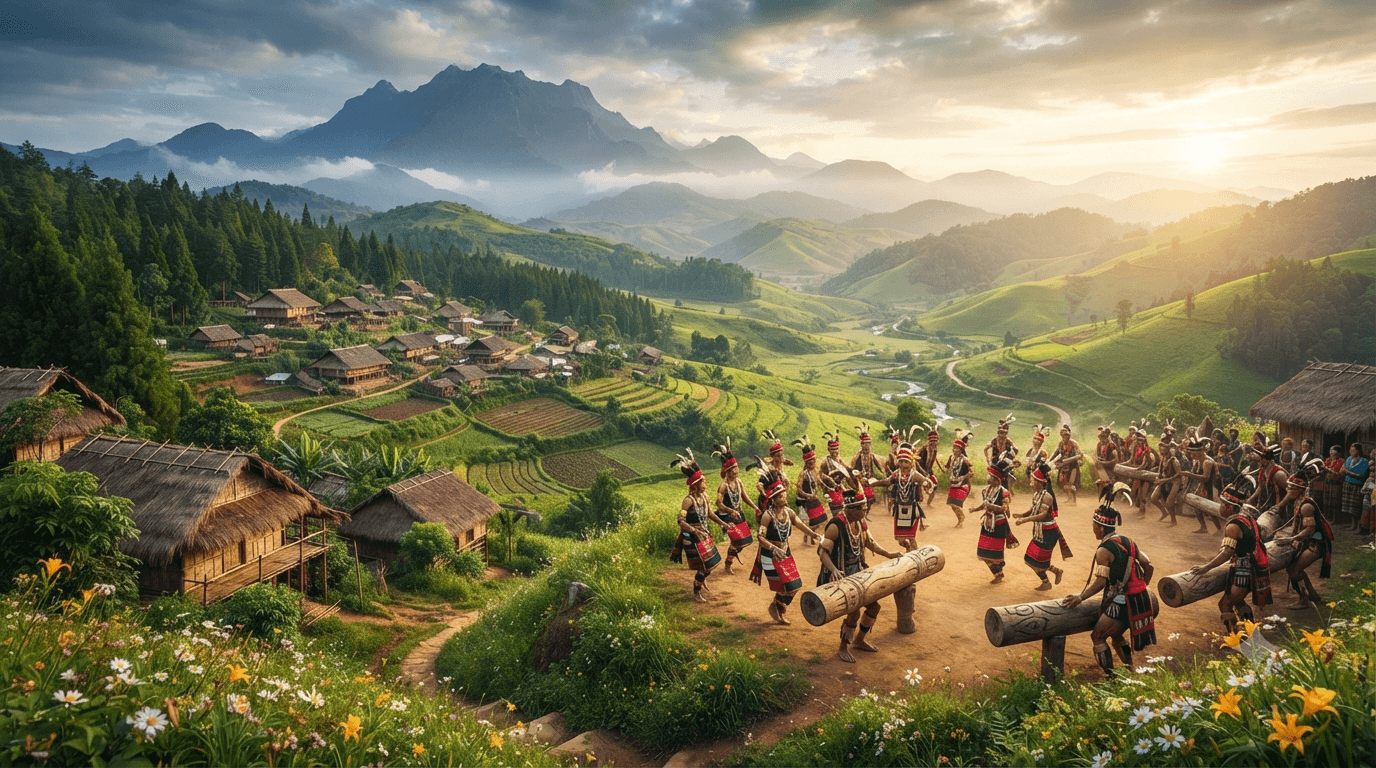
Nagaland is one of the most fascinating states in Northeast India, known for its breathtaking mountain landscapes, vibrant tribal traditions, colourful festivals, and rich cultural heritage. Located in the northeastern part of the country, the state shares its international border with Myanmar and domestic borders with Assam, Arunachal Pradesh, and Manipur. Despite being one of India’s smaller states by population, Nagaland is famous for its extraordinary ethnic diversity, with several officially recognized Naga tribes preserving their unique customs, languages, and traditional lifestyles.
The state was officially formed on 1 December 1963, becoming the 16th state of India. Since then, Nagaland has developed into a destination admired for eco-tourism, adventure tourism, indigenous crafts, and cultural experiences. The capital city, Kohima, is renowned for its historical significance and scenic beauty, while Dimapur serves as the state’s largest commercial centre and transportation gateway.
Nagaland’s geography is dominated by rolling hills, dense forests, deep valleys, and crystal-clear rivers. The state enjoys a pleasant climate for most of the year, making it an attractive destination for travellers seeking nature and tranquillity. Agriculture remains the backbone of the economy, with rice being the principal crop, while horticulture, bamboo products, handloom weaving, and handicrafts contribute significantly to local livelihoods.
One of Nagaland’s greatest strengths is its cultural richness. Every tribe celebrates its own festivals, wears distinctive traditional attire, and follows customs passed down through generations. The world-famous Hornbill Festival, celebrated every December, brings together all major Naga tribes and showcases traditional dances, folk music, indigenous cuisine, handicrafts, and adventure sports. This festival has earned Nagaland the title of the “Festival State of India.”
Wildlife enthusiasts also appreciate Nagaland for its forests, rare bird species, and protected wildlife habitats. The state offers excellent opportunities for trekking, birdwatching, camping, photography, and village tourism. Visitors can experience authentic tribal hospitality while learning about centuries-old traditions that continue to thrive in modern times.
Quick Facts about Nagaland
- State: Nagaland
- Capital: Kohima
- Largest City: Dimapur
- Formation Date: 1 December 1963
- Country: India
- Region: Northeast India
- Official Language: English
- Major Tribal Communities: Angami, Ao, Sumi, Lotha, Konyak, Chakhesang, Rengma, Phom, Sangtam, Chang, Yimkhiung, Khiamniungan, Pochury, Zeliang and others
- Area: Approximately 16,579 sq km
- Population: Around 20 lakh (Census 2011)
- Highest Peak: Mount Saramati
- Major River: Doyang River
- State Animal: Mithun
- State Bird: Blyth’s Tragopan
- State Tree: Alder
- State Flower: Rhododendron
- Famous Festival: Hornbill Festival
Nagaland beautifully combines untouched natural beauty with vibrant indigenous traditions. Whether exploring scenic mountains, experiencing colourful festivals, tasting authentic tribal cuisine, or discovering historic villages, the state offers visitors an unforgettable journey into one of India’s most culturally unique destinations.
Nagaland on India Map
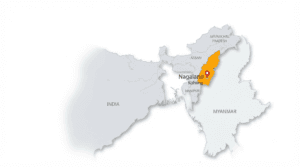
Nagaland is situated in the northeastern part of India and is one of the country’s eight Northeastern states, collectively known as the Seven Sisters and One Brother region. The state occupies a strategically important position along India’s eastern frontier and shares an international border with Myanmar, making it significant for trade, cultural exchange, and regional connectivity.
The geographical location of Nagaland places it amidst picturesque mountain ranges, lush green valleys, dense forests, and winding rivers. Its terrain is predominantly hilly, with elevations ranging from low-lying plains near Dimapur to the majestic peaks of the Naga Hills. This varied landscape supports rich biodiversity and provides breathtaking natural scenery throughout the year.
Nagaland is bordered by four regions:
- North: Arunachal Pradesh
- West: Assam
- South: Manipur
- East: Myanmar (International Border)
The state’s total geographical area is approximately 16,579 square kilometres, making it one of India’s smaller states in terms of land area. Despite its compact size, Nagaland is home to diverse tribal communities, unique ecosystems, and numerous tourist attractions spread across its districts.
The capital city, Kohima, is located in the southern-central part of the state at an elevation of over 1,400 metres above sea level. It serves as the administrative, political, and cultural centre of Nagaland. Dimapur, situated in the western plains, is the state’s largest city and acts as the primary commercial hub. It also houses the only airport and the major railway station in Nagaland, making it the main gateway for visitors.
Nagaland’s location plays an important role in India’s Act East Policy, which aims to strengthen economic and strategic relations with Southeast Asian countries. The state’s border with Myanmar creates opportunities for cross-border trade, tourism, and cultural cooperation while enhancing its importance in Northeast India’s development.
From a tourism perspective, Nagaland’s map reveals easy access to several scenic destinations, including Kohima, Khonoma, Mokokchung, Mon, Tuophema, Dzukou Valley, Japfu Peak, Mount Saramati, and numerous traditional Naga villages. Each region offers distinct landscapes, cultures, and experiences that attract travellers from across India and around the world.
Understanding Nagaland’s geographical location helps visitors appreciate its strategic importance, remarkable natural beauty, and rich cultural diversity. Whether viewed on India’s political map or explored on the ground, Nagaland stands out as one of the country’s most unique and captivating destinations.
Districts of Nagaland
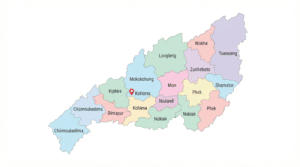
Nagaland is administratively divided into 17 districts, each with its own headquarters, cultural identity, and geographical characteristics. Every district is home to one or more major Naga tribes, making the state one of the most ethnically diverse regions in India. These districts vary in terms of landscape, population, economic activities, and tourism potential, but together they reflect the rich heritage and traditions of Nagaland.
The districts are responsible for local administration, law and order, education, healthcare, infrastructure development, and rural welfare. Agriculture, horticulture, handicrafts, bamboo products, and tourism remain important sources of livelihood across most districts.
The table below provides an overview of the districts of Nagaland and their administrative headquarters.
| District | Headquarters | Highlights |
|---|---|---|
| Chümoukedima | Chümoukedima | Rapidly developing urban district near Dimapur |
| Dimapur | Dimapur | Largest city, commercial and transport hub |
| Kiphire | Kiphire | Home to Mount Saramati, the highest peak in Nagaland |
| Kohima | Kohima | State capital, Hornbill Festival, WWII heritage |
| Longleng | Longleng | Rich tribal traditions and scenic hills |
| Meluri | Meluri | Known for biodiversity and traditional villages |
| Mokokchung | Mokokchung | Cultural centre of the Ao Naga tribe |
| Mon | Mon | Famous for the Konyak tribe and traditional heritage |
| Niuland | Niuland | Fertile agricultural region |
| Noklak | Noklak | Border district adjoining Myanmar |
| Peren | Peren | Home to Zeliang community and natural attractions |
| Phek | Phek | Gateway to Shilloi Lake and scenic landscapes |
| Shamator | Shamator | Predominantly inhabited by Yimkhiung tribe |
| Tseminyu | Tseminyu | Cultural region of the Rengma tribe |
| Tuensang | Tuensang | One of the largest districts with diverse tribes |
| Wokha | Wokha | Known for Doyang Reservoir and Lotha culture |
| Zunheboto | Zunheboto | Homeland of the Sumi Naga tribe |
Among these districts, Kohima, Dimapur, Mon, Mokokchung, Phek, and Wokha are among the most popular destinations for travellers. They offer historical landmarks, tribal villages, trekking routes, wildlife, lakes, festivals, and opportunities to experience authentic Naga culture.
The districts of Nagaland are also recognised for preserving traditional village governance systems. Many villages continue to follow customary practices that have been passed down through generations while embracing modern development in education, healthcare, and infrastructure.
Several newly created districts have strengthened local administration and improved the delivery of public services. This administrative expansion has contributed to better governance, rural connectivity, and balanced regional development across the state.
Whether visitors are interested in cultural tourism, adventure, history, wildlife, or scenic beauty, every district in Nagaland offers unique experiences that showcase the state’s extraordinary diversity.
History of Nagaland
Nagaland has a fascinating history shaped by ancient tribal traditions, centuries of self-governance, colonial encounters, and its eventual integration into the Republic of India. Long before written records existed, the Naga tribes lived independently in fortified hilltop villages, developing distinct languages, customs, and social systems. Their history has largely been preserved through oral traditions, folk songs, legends, and community storytelling passed down from one generation to another.
Archaeological evidence suggests that the Naga Hills have been inhabited for thousands of years. Although the various Naga tribes shared certain cultural similarities, each tribe maintained its own customs, dialect, traditional attire, festivals, and village administration. Every village functioned as an independent unit governed by councils of respected elders, who settled disputes, protected community interests, and ensured social harmony.
The mountainous terrain naturally isolated many villages from one another. As a result, each community developed a unique cultural identity while preserving its ancestral traditions. Agriculture, hunting, fishing, and forest resources formed the foundation of daily life. Terrace farming and shifting cultivation, locally known as Jhum cultivation, became the primary methods of food production across the hills.
Before British rule, the Naga tribes had very limited interaction with kingdoms in the Indian plains. Trade mainly took place with neighbouring communities in present-day Assam and Myanmar, where local products such as salt, iron tools, textiles, forest produce, and agricultural goods were exchanged. Despite these trade links, the Naga villages remained politically independent and were never united under a single kingdom or ruler.
The first significant contact with the British occurred during the early nineteenth century after the British East India Company expanded its influence into Assam following the First Anglo-Burmese War (1824–1826). As British administrators explored the surrounding hill regions, they came into contact with several Naga communities. Initial relations were often tense because the tribes strongly defended their independence and traditional way of life.
During the nineteenth century, the British gradually extended administrative control over parts of the Naga Hills. They established military outposts, administrative centres, and communication routes while introducing modern education, healthcare, and missionary activities. Christian missionaries played an important role in spreading formal education and literacy among many Naga communities. Over time, Christianity became the dominant religion across most parts of Nagaland, influencing education, healthcare, literature, and social development.
Although British administration brought roads, schools, and new institutions, many tribal communities continued to preserve their customs, village councils, traditional festivals, and indigenous governance systems. These cultural foundations remain an important part of Nagaland’s identity even today.
The closing decades of British rule witnessed increasing political awareness among the Naga people. Local leaders began discussing issues related to identity, self-governance, and future political arrangements. These developments eventually laid the foundation for the major political events that unfolded after India’s independence on 15 August 1947, the political future of the Naga Hills became an important subject of discussion between Naga leaders and the Government of India. Different groups expressed varying views regarding administration, autonomy, and governance. During the following years, several political developments and negotiations took place to determine the future of the region.
Initially, the Naga Hills formed part of the state of Assam. As public demand for a separate administrative unit increased, the Government of India held discussions with community leaders and representatives. Various committees and agreements were established to address local aspirations while ensuring peace and development in the region.
A major milestone in the state’s history came with the 16-Point Agreement, signed in 1960 between representatives of the Naga People’s Convention and the Government of India. The agreement proposed the creation of a separate state for the Naga people along with constitutional safeguards for their traditional customs, land ownership, and local governance.
As a result of this historic agreement, Nagaland officially became the 16th state of India on 1 December 1963. Kohima was declared the state capital, while Dimapur continued to grow as the commercial and transportation hub. The formation of the new state marked the beginning of a new administrative chapter focused on development, education, infrastructure, and public welfare.
After statehood, Nagaland established its Legislative Assembly, government departments, educational institutions, healthcare facilities, and road networks. Development projects gradually improved connectivity between remote hill districts and urban centres. Schools, colleges, hospitals, and communication facilities expanded across many parts of the state.
The Constitution of India provides special protection to Nagaland through Article 371A. This constitutional provision safeguards Naga customary laws, traditional social practices, religious matters, ownership of land and natural resources, and the functioning of customary village institutions. Article 371A continues to play a significant role in preserving the unique cultural identity of the people of Nagaland.
Over the decades, the Central Government, State Government, and various community organisations have made continuous efforts to promote peace, dialogue, and socio-economic development. Infrastructure projects, tourism initiatives, skill development programmes, educational reforms, and digital connectivity have contributed to improving the quality of life across the state.
Today, Nagaland is recognised as one of India’s most culturally vibrant states. Traditional tribal heritage coexists with modern education, entrepreneurship, music, sports, and tourism. Festivals such as the internationally acclaimed Hornbill Festival have introduced Naga culture to visitors from across the world, strengthening tourism and preserving indigenous traditions.
The history of Nagaland is therefore a remarkable journey from independent tribal village societies to a modern democratic state within the Republic of India. While embracing development and progress, the people of Nagaland continue to preserve their languages, customs, festivals, handicrafts, and cultural values, ensuring that their rich heritage remains alive for future generations.
Geography of Nagaland
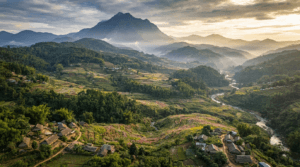
Nagaland is one of the most scenic states in Northeast India, renowned for its rugged mountains, rolling hills, deep valleys, dense forests, and pristine rivers. Covering an area of approximately 16,579 square kilometres, the state is located between 25°06′ and 27°04′ North latitude and 93°20′ and 95°15′ East longitude. Its unique geographical setting has played a significant role in shaping the state’s climate, biodiversity, agriculture, and traditional way of life.
The state shares its boundaries with four regions:
- North: Arunachal Pradesh
- West: Assam
- South: Manipur
- East: Myanmar (International Border)
Most of Nagaland lies within the Naga Hills, a mountain range that forms part of the eastern extension of the Himalayan system. The terrain is predominantly mountainous, with elevations ranging from around 200 metres in the western plains near Dimapur to more than 3,800 metres at the summit of Mount Saramati, the highest peak in Nagaland. This dramatic variation in altitude creates diverse ecosystems and supports a wide variety of plant and animal species.
The western districts consist of relatively lower elevations and fertile valleys, making them suitable for agriculture, trade, and urban development. In contrast, the eastern and southern regions are characterised by steep hills, thick forests, and remote villages that preserve centuries-old tribal traditions.
Nagaland’s landscape is crossed by several rivers that originate in the surrounding hills. These rivers provide water for agriculture, drinking, and local ecosystems while supporting fisheries and biodiversity. Among the important rivers flowing through the state are:
- Doyang River
- Dhansiri River
- Dikhu River
- Tizu River
- Milak River
These rivers eventually join larger river systems in neighbouring states, contributing to the hydrological network of Northeast India.
Forests cover a significant portion of Nagaland’s geographical area and include tropical evergreen forests, subtropical broadleaf forests, pine forests, bamboo groves, and high-altitude vegetation. These forests are home to numerous wildlife species, medicinal plants, orchids, and rare birds, making the state one of India’s biodiversity hotspots.
The geographical diversity of Nagaland also influences settlement patterns. Most towns and villages are located on hill slopes and ridges, providing natural protection and panoramic views of the surrounding valleys. Traditional Naga villages were carefully planned to utilise the terrain for defence, water conservation, and agriculture.
Nagaland’s remarkable geography not only supports rich biodiversity but also offers excellent opportunities for eco-tourism, trekking, camping, birdwatching, photography, and adventure travel. The state’s mountains, forests, and rivers continue to attract nature lovers from across India and around the world.
The geographical features of Nagaland have a direct influence on the state’s economy, biodiversity, agriculture, transportation, and tourism. The combination of high mountain ranges, fertile valleys, dense forests, and abundant rainfall creates favourable conditions for diverse ecosystems and sustainable livelihoods. Every district has unique geographical characteristics that contribute to the state’s natural beauty and ecological importance.
One of the most remarkable geographical landmarks is Mount Saramati, located in the Kiphire district along the India–Myanmar border. Rising to an elevation of approximately 3,841 metres (12,602 feet) above sea level, it is the highest peak in Nagaland. The mountain attracts trekkers, adventure enthusiasts, and nature lovers who visit to experience panoramic views, alpine vegetation, and pristine wilderness.
Another iconic geographical attraction is the Dzukou Valley, situated on the border of Nagaland and Manipur. Often referred to as the “Valley of Flowers of the Northeast,” Dzukou Valley is famous for its rolling green meadows, seasonal wildflowers, crystal-clear streams, and breathtaking landscapes. During the monsoon season, the valley transforms into a colourful carpet of blooming flowers, making it one of the most photographed destinations in Northeast India.
The state experiences moderate to steep slopes across most regions, which influence both agriculture and settlement patterns. To overcome these challenges, local communities have developed innovative farming techniques such as terrace cultivation and traditional water conservation practices. These methods help reduce soil erosion while improving agricultural productivity in hilly terrain.
Nagaland is located in a high seismic zone, making it susceptible to earthquakes. As a result, modern infrastructure projects increasingly incorporate earthquake-resistant construction techniques to enhance public safety and minimise disaster risks.
The forests of Nagaland play a vital role in maintaining ecological balance. They help regulate the climate, conserve water resources, prevent soil erosion, and provide habitat for numerous wildlife species. Bamboo forests are particularly abundant and support local industries producing furniture, handicrafts, baskets, household items, and eco-friendly products.
Several rivers originating in the hills also possess significant hydroelectric potential. Small and medium-scale hydropower projects contribute to electricity generation while supporting irrigation and rural development. Water resources further sustain agriculture, fisheries, and biodiversity throughout the state.
Nagaland’s geographical diversity has also encouraged the growth of eco-tourism and adventure tourism. Activities such as trekking, mountain hiking, camping, birdwatching, wildlife photography, and village tourism have become increasingly popular among domestic and international travellers. Scenic destinations including Dzukou Valley, Mount Saramati, Shilloi Lake, Japfu Peak, Pulie Badze Wildlife Sanctuary, and Khonoma Village highlight the state’s remarkable natural heritage.
Overall, the geography of Nagaland is one of its greatest strengths. The harmonious blend of mountains, forests, rivers, valleys, and traditional villages creates a landscape that is both environmentally significant and culturally inspiring. This unique natural setting continues to support sustainable development while preserving the ecological wealth that defines Nagaland.
Climate of Nagaland
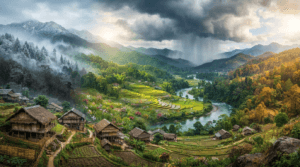
Nagaland experiences a pleasant subtropical highland climate, influenced by its mountainous terrain, elevation, and the southwest monsoon. Unlike many parts of India that experience extreme heat, Nagaland generally enjoys moderate temperatures throughout the year. The cool mountain air, abundant forests, and regular rainfall create favourable conditions for agriculture, biodiversity, and tourism.
The state’s climate varies from one region to another because of differences in altitude. Low-lying areas such as Dimapur experience relatively warmer weather, while higher-altitude regions like Kohima, Dzukou Valley, and Mount Saramati remain cooler throughout the year. This variation makes Nagaland an attractive destination in every season.
Summer Season
The summer season usually begins in March and continues until May. Temperatures generally range between 16°C and 31°C, depending on the altitude.
Summer in Nagaland is much milder than in the plains of India. Cool mornings and pleasant evenings make outdoor activities comfortable. During this season, forests remain lush, flowers begin to bloom, and trekking trails become ideal for adventure enthusiasts.
Monsoon Season
The southwest monsoon arrives in June and usually lasts until September. Nagaland receives an average annual rainfall of 1,800 to 2,500 millimetres, although rainfall varies across districts.
During the monsoon, the hills turn vibrant green, rivers flow at full capacity, and waterfalls become more spectacular. The abundant rainfall supports agriculture, forests, and wildlife. However, heavy rains may occasionally lead to landslides and temporary road disruptions in hilly areas.
Winter Season
Winter extends from October to February, offering cool and refreshing weather across the state. Temperatures generally range from 4°C to 24°C, with higher elevations occasionally experiencing temperatures close to freezing.
The winter months are considered the most comfortable period for sightseeing, trekking, camping, wildlife photography, and cultural tourism. Clear blue skies, crisp mountain air, and excellent visibility make this season particularly attractive for travellers.
Seasonal Climate Overview
- Summer: March to May (16°C–31°C)
- Monsoon: June to September (Heavy rainfall)
- Winter: October to February (4°C–24°C)
- Average Annual Rainfall: 1,800–2,500 mm
The balanced climate of Nagaland supports a rich variety of forests, wildlife, agricultural crops, and flowering plants throughout the year. Seasonal changes also influence local festivals, farming activities, and tourism, making each season unique in its own way.
Nagaland’s climate plays a crucial role in shaping the state’s agriculture, forests, biodiversity, and tourism industry. The combination of moderate temperatures, abundant rainfall, and mountainous terrain creates favourable conditions for a wide variety of crops, flowering plants, and wildlife. Seasonal changes are distinct yet generally comfortable, allowing visitors to explore the state throughout the year.
Influence of Climate on Agriculture
Agriculture is the primary occupation for a large section of Nagaland’s population, and climatic conditions strongly influence farming activities. The arrival of the southwest monsoon marks the beginning of the agricultural season, providing sufficient moisture for paddy cultivation and other crops.
Major crops grown under these climatic conditions include:
- Rice
- Maize
- Millets
- Pulses
- Oilseeds
- Vegetables
- Ginger
- Turmeric
- Pineapple
- Oranges
The cool climate in higher-altitude districts also supports horticulture and the cultivation of temperate fruits and vegetables.
Climate and Biodiversity
The favourable climate has enabled Nagaland to become one of Northeast India’s biodiversity-rich regions. Different climatic zones support tropical evergreen forests, subtropical forests, bamboo groves, pine forests, orchids, medicinal plants, and numerous species of birds and animals.
Seasonal rainfall replenishes rivers, wetlands, and forest ecosystems, helping maintain ecological balance while supporting wildlife habitats throughout the state.
Best Time to Experience Nagaland’s Climate
Although Nagaland can be visited throughout the year, the period between October and May is generally considered the most comfortable for tourism.
Visitors during these months can enjoy:
- Pleasant weather for sightseeing
- Clear mountain views
- Trekking and camping opportunities
- Wildlife photography
- Cultural festivals
- Outdoor adventure activities
The famous Hornbill Festival, organised every year during the first week of December, also takes place during this pleasant winter season, attracting visitors from across India and abroad.
Climate Change and Environmental Conservation
Like many mountain regions across the world, Nagaland has also experienced changing weather patterns in recent years. Variations in rainfall, occasional extreme weather events, and changing temperatures have highlighted the importance of sustainable environmental management.
The Government of Nagaland, local communities, and environmental organisations are promoting afforestation, watershed conservation, biodiversity protection, sustainable farming, and responsible tourism to preserve the state’s natural resources for future generations.
Overall, Nagaland’s pleasant climate, clean mountain environment, and rich natural ecosystems make it one of the most attractive destinations in Northeast India. Whether visitors are interested in adventure tourism, wildlife exploration, photography, or cultural experiences, the state’s favourable weather enhances every journey.
Major Rivers of Nagaland
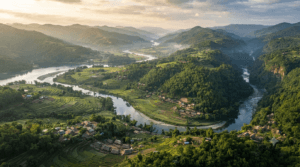
Rivers are an integral part of Nagaland’s geography, supporting agriculture, drinking water supply, fisheries, biodiversity, and rural livelihoods. Most rivers originate in the forested hills and mountains of the state before flowing into the larger river systems of neighbouring Assam and Myanmar. These rivers have shaped the landscape for centuries by carving deep valleys, nourishing fertile plains, and sustaining diverse ecosystems.
Although Nagaland does not have very large perennial rivers like the Ganga or Brahmaputra, its network of mountain rivers plays a vital role in maintaining ecological balance and meeting the daily needs of local communities. Many villages depend on these rivers and streams for irrigation, domestic use, and traditional fishing practices.
Major Rivers of Nagaland
The state is blessed with several important rivers, each contributing to the natural and economic development of the region.
- Doyang River: The Doyang River is one of the most important rivers in Nagaland. It flows through Wokha district and is known for the Doyang Reservoir, which supports hydroelectric power generation, irrigation, fisheries, and tourism. During the migration season, thousands of Amur Falcons gather near the reservoir, making it a globally recognised birdwatching destination.
- Dhansiri River: Originating in the Laisang Peak region of Nagaland, the Dhansiri River flows through Dimapur before entering Assam, where it eventually joins the Brahmaputra River. It plays a crucial role in agriculture, groundwater recharge, and floodplain ecosystems.
- Dikhu River: The Dikhu River flows through Mokokchung, Longleng, and Tuensang districts. It provides water for farming, supports aquatic life, and forms an important natural resource for nearby villages.
- Tizu River: The Tizu River originates in the eastern hills of Nagaland and flows towards Myanmar. It is one of the few rivers in Northeast India that ultimately drains into the Chindwin River basin in Myanmar rather than the Brahmaputra basin.
- Milak River: The Milak River is an important tributary that supports local agriculture and rural settlements. Its seasonal flow contributes to irrigation and groundwater replenishment in surrounding areas.
Importance of Rivers
Nagaland’s rivers are essential for the state’s sustainable development because they support multiple sectors.
- Irrigation for agricultural fields
- Drinking water supply
- Fisheries and aquatic biodiversity
- Hydroelectric power generation
- Wildlife habitats
- Eco-tourism and birdwatching
- Soil conservation and groundwater recharge
These rivers continue to sustain both human settlements and natural ecosystems, making them among the state’s most valuable natural resources.
Nagaland’s rivers are not only important geographical features but also serve as lifelines for the state’s environment, economy, and cultural heritage. Flowing through forested mountains, fertile valleys, and tribal villages, these rivers provide freshwater resources that support agriculture, fisheries, wildlife, and daily life. Their waters also help maintain ecological balance by sustaining forests, wetlands, and diverse plant and animal species.
Doyang River and Hydroelectric Development
Among all the rivers in Nagaland, the Doyang River holds special importance because of the Doyang Hydroelectric Project. The reservoir created by this project supplies electricity, supports irrigation, and has become a major attraction for birdwatchers. Every year, millions of Amur Falcons stop near the reservoir during their migration from Siberia to southern Africa. This spectacular migration has made the Doyang Reservoir one of the world’s most famous birdwatching locations.
Rivers and Agriculture
Most farming communities in Nagaland depend on rivers and seasonal streams for irrigation. Water from these rivers supports the cultivation of rice, maize, vegetables, pulses, fruits, and spices. In addition to irrigation, river valleys contain fertile soils that enhance agricultural productivity in many districts.
Traditional village communities have long practised sustainable water management by protecting natural springs, constructing small irrigation channels, and conserving surrounding forests to ensure a continuous supply of clean water.
Ecological Importance
The river systems of Nagaland support a wide variety of aquatic plants, freshwater fish, amphibians, reptiles, birds, and mammals. Riverbanks and wetlands serve as feeding and breeding grounds for numerous species, while forest streams help maintain healthy ecosystems across the state.
Healthy river systems also perform several environmental functions:
- Recharging groundwater reserves
- Preventing soil erosion
- Supporting forest ecosystems
- Maintaining freshwater biodiversity
- Regulating local climate
- Sustaining wetlands and natural springs
Conservation of River Ecosystems
Rapid urbanisation, deforestation, plastic waste, and unsustainable land use can affect the health of river ecosystems. To address these challenges, the Government of Nagaland, local communities, and environmental organisations promote river conservation through afforestation, watershed management, rainwater harvesting, pollution control, and public awareness programmes.
Many traditional Naga villages actively protect nearby forests and water sources under customary community management systems. These indigenous conservation practices have helped preserve natural resources for generations and continue to play an important role in environmental sustainability.
Nagaland’s rivers remain among the state’s greatest natural assets. Beyond providing water for daily life, they enrich biodiversity, strengthen agriculture, generate clean energy, and enhance tourism. Protecting these rivers is essential for ensuring sustainable development and preserving the ecological heritage of Nagaland for future generations.

Flora and Fauna of Nagaland
Nagaland is one of India’s richest biodiversity regions, blessed with vast forests, diverse ecosystems, and an extraordinary variety of plant and animal species. Approximately 70% of the state’s geographical area is covered by forests, making Nagaland an important ecological zone in Northeast India. The state’s varying altitudes, abundant rainfall, and favourable climate create ideal habitats for tropical, subtropical, and temperate vegetation.
The forests of Nagaland are home to thousands of species of flowering plants, trees, medicinal herbs, orchids, ferns, bamboo, and grasses. These forests not only support wildlife but also provide livelihoods for local communities through sustainable harvesting of forest resources.
Flora of Nagaland
Nagaland possesses an exceptionally rich floral diversity. Dense evergreen forests dominate the lower elevations, while subtropical broadleaf forests, pine forests, and temperate vegetation occur in higher regions.
Some of the most important plant species found in Nagaland include:
- Alder
- Bamboo
- Oak
- Pine
- Rhododendron
- Wild Banana
- Cane
- Ferns
- Orchids
- Medicinal herbs
Nagaland is especially famous for its colourful orchids. More than 300 species of orchids have been recorded across the state, making it one of India’s leading orchid-rich regions. During the flowering season, hills and forests become vibrant with a wide variety of native orchid species.
Bamboo is another valuable natural resource. It is widely used for constructing traditional houses, making furniture, handicrafts, baskets, musical instruments, agricultural tools, and household items. Bamboo also plays an important role in the state’s rural economy and cultural heritage.
Fauna of Nagaland
The rich forests of Nagaland support an impressive variety of wildlife. Mammals, birds, reptiles, amphibians, and insects thrive in the state’s protected forests and community conservation areas.
Some notable wildlife species include:
- Mithun (State Animal)
- Asian Elephant
- Bengal Tiger
- Clouded Leopard
- Leopard Cat
- Himalayan Black Bear
- Barking Deer
- Wild Boar
- Hoolock Gibbon
- Slow Loris
The forests also provide habitat for numerous reptiles, butterflies, amphibians, and freshwater fish, contributing to the state’s remarkable ecological diversity.
Nagaland’s biodiversity makes it an important destination for wildlife researchers, conservationists, photographers, and nature enthusiasts who wish to explore one of India’s most biologically diverse landscapes.
Nagaland’s rich biodiversity is not limited to forests alone. The state also supports numerous bird species, butterflies, medicinal plants, and community-managed forests that play an important role in environmental conservation. Many villages have adopted traditional conservation practices, protecting forests and wildlife through customary laws that have been followed for generations. These community efforts have significantly contributed to preserving the state’s natural heritage.
Birdlife of Nagaland
Nagaland is regarded as one of the finest birdwatching destinations in Northeast India. Its forests, wetlands, and mountain habitats provide shelter to both resident and migratory birds.
Some of the prominent bird species found in the state include:
- Blyth’s Tragopan (State Bird)
- Amur Falcon
- Great Hornbill
- Rufous-necked Hornbill
- Kalij Pheasant
- Mountain Bamboo Partridge
- Oriental Pied Hornbill
- Scarlet Minivet
- Hill Myna
- Crested Serpent Eagle
Every year, millions of Amur Falcons arrive in Nagaland during their migration from Siberia to southern Africa. Their arrival near the Doyang Reservoir has transformed the region into an internationally recognised birdwatching destination and a successful example of community-led wildlife conservation.
Medicinal Plants and Forest Resources
The forests of Nagaland contain a wide variety of medicinal plants that have been traditionally used by local communities for generations. Indigenous knowledge of herbal medicine continues to play an important role in rural healthcare.
Major forest resources include:
- Bamboo
- Cane
- Firewood
- Medicinal herbs
- Wild fruits
- Edible mushrooms
- Natural fibres
- Aromatic plants
Wildlife Conservation
Wildlife conservation has become a priority in Nagaland through the combined efforts of government agencies, local communities, conservation organisations, and village councils. Several protected areas and community conservation zones have been established to safeguard endangered species and their habitats.
Important conservation initiatives include:
- Protection of community forests
- Conservation of Amur Falcons
- Afforestation programmes
- Anti-poaching awareness campaigns
- Biodiversity documentation
- Sustainable forest management
These initiatives have helped improve awareness about the importance of protecting wildlife while promoting eco-tourism and environmental education.
The flora and fauna of Nagaland represent one of the state’s greatest natural treasures. From colourful orchids and dense bamboo forests to rare birds and majestic mammals, the state’s biodiversity reflects the ecological richness of Northeast India. Continued conservation efforts by local communities and government authorities ensure that this invaluable natural heritage will be preserved for future generations.

National Parks and Wildlife Sanctuaries of Nagaland
Nagaland is home to several protected areas that preserve its rich biodiversity, unique ecosystems, and diverse wildlife. Although the state has only one national park, it contains multiple wildlife sanctuaries and community conservation areas that play an important role in protecting forests, endangered species, and natural habitats. These protected landscapes also support eco-tourism, environmental education, scientific research, and sustainable conservation.
The protected areas of Nagaland range from dense evergreen forests and mountain slopes to grasslands and river valleys. They provide safe habitats for mammals, birds, reptiles, butterflies, and countless plant species. Many of these forests are managed with the active participation of local communities, making Nagaland a leading example of community-based conservation in India.
National Park and Wildlife Sanctuaries
| Protected Area | Location | Major Attractions |
|---|---|---|
| Intanki National Park | Peren District | Elephants, Hoolock Gibbons, Hornbills, Dense Forests |
| Fakim Wildlife Sanctuary | Kiphire District | Rare Birds, Orchids, Mountain Forests |
| Pulie Badze Wildlife Sanctuary | Kohima District | Blyth’s Tragopan, Dzukou Landscape, Birdwatching |
| Rangapahar Wildlife Sanctuary | Dimapur District | Deer, Birds, Butterflies, Nature Trails |
Intanki National Park
Intanki National Park, located in Peren District, is the only national park in Nagaland. Covering a large area of tropical and subtropical forests, the park is one of the state’s most important biodiversity hotspots.
The park provides habitat for numerous wildlife species, including:
- Asian Elephant
- Hoolock Gibbon
- Barking Deer
- Wild Boar
- Leopard
- Sloth Bear
- Great Hornbill
- Various reptiles and butterflies
The dense forests, scenic landscapes, and rich biodiversity make Intanki National Park an ideal destination for wildlife enthusiasts, birdwatchers, researchers, and photographers.
Fakim Wildlife Sanctuary
Situated near the India–Myanmar border in Kiphire District, Fakim Wildlife Sanctuary is known for its mountainous forests and exceptional floral diversity. The sanctuary is particularly famous for its orchids, rare birds, butterflies, and pristine natural environment.
Nature lovers visiting Fakim can experience peaceful trekking routes, untouched forests, and spectacular panoramic views of the surrounding hills.
The protected areas of Nagaland demonstrate the state’s commitment to preserving its unique natural heritage while promoting responsible tourism and environmental conservation.
Nagaland’s protected areas are not only important for wildlife conservation but also serve as centres for ecological research, environmental education, and sustainable tourism. Several wildlife sanctuaries and community-managed forests safeguard endangered species while preserving the state’s rich natural heritage. These conservation efforts are strengthened by the active participation of local tribal communities, who have traditionally protected forests and wildlife through customary practices.
Pulie Badze Wildlife Sanctuary
Pulie Badze Wildlife Sanctuary, located near Kohima, is one of Nagaland’s most significant bird conservation areas. The sanctuary covers forested hills overlooking the capital city and forms part of the larger Dzukou–Japfu landscape, which is renowned for its scenic beauty and rich biodiversity.
The sanctuary is best known for:
- Blyth’s Tragopan (State Bird of Nagaland)
- Colourful pheasants and hornbills
- Dense subtropical forests
- Nature trails and trekking routes
- Excellent birdwatching opportunities
Pulie Badze is a favourite destination for birdwatchers, wildlife photographers, and trekkers who wish to explore Nagaland’s natural landscapes.
Rangapahar Wildlife Sanctuary
Located near Dimapur, Rangapahar Wildlife Sanctuary is one of the most accessible protected areas in the state. Although relatively small, it supports a rich variety of flora and fauna.
Visitors can observe:
- Deer species
- Wild boars
- Numerous resident and migratory birds
- Butterflies
- Reptiles and small mammals
Its peaceful environment and well-preserved forests make it an ideal destination for nature walks and environmental education.
Community Conservation Areas
One of the unique features of wildlife conservation in Nagaland is the presence of community-managed forests. Many villages voluntarily protect nearby forests, rivers, and wildlife through traditional customary laws.
These community conservation areas help:
- Protect endangered wildlife
- Preserve native forests
- Conserve water sources
- Prevent illegal hunting
- Promote eco-tourism
- Maintain ecological balance
The globally recognised conservation of Amur Falcons around the Doyang Reservoir is a remarkable example of successful community participation in wildlife protection.
Eco-Tourism and Conservation
Nagaland continues to promote responsible eco-tourism while ensuring that its fragile ecosystems remain protected. Visitors are encouraged to follow sustainable tourism practices such as respecting wildlife, avoiding littering, and supporting local conservation initiatives.
The national park, wildlife sanctuaries, and community conservation areas together protect the state’s extraordinary biodiversity. These protected landscapes ensure the survival of rare plants and animals while providing opportunities for scientific research, nature education, birdwatching, trekking, and eco-tourism. Their conservation remains essential for preserving Nagaland’s ecological wealth for future generations.
Culture and Traditions of Nagaland
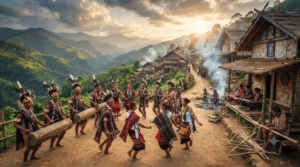
Nagaland is renowned for its vibrant tribal culture, colourful festivals, traditional attire, folk music, and centuries-old customs. Home to 17 major recognised tribes and several sub-tribes, the state showcases one of the richest cultural heritages in India. Each tribe has its own language or dialect, traditional dress, customs, architecture, dances, and social practices, making Nagaland a fascinating destination for cultural exploration.
Despite their diversity, the tribes of Nagaland share values of community living, respect for nature, hospitality, and preservation of ancestral traditions. Cultural identity continues to play a central role in the daily lives of the Naga people.
Major Tribes of Nagaland
Some of the major tribes living in Nagaland include:
- Angami
- Ao
- Sumi (Sema)
- Lotha
- Konyak
- Chakhesang
- Chang
- Sangtam
- Phom
- Yimkhiung
- Khiamniungan
- Rengma
- Pochury
- Zeliang
- Kuki
- Kachari
- Tikhir
Each tribe celebrates its own festivals, wears distinctive traditional clothing, follows unique customs, and preserves rich oral traditions that have been passed down through generations.
Traditional Lifestyle
Traditionally, Naga villages were self-sufficient communities situated on hilltops for security and access to natural resources. Village life revolved around agriculture, hunting, weaving, craftsmanship, and community cooperation.
Some notable features of the traditional lifestyle include:
- Strong village governance through village councils
- Community participation in farming and festivals
- Wooden houses decorated with intricate carvings
- Traditional log drums used for communication and ceremonies
- Morungs (traditional youth dormitories) for cultural education
- Respect for elders and customary laws
Traditional Clothing and Ornaments
The traditional attire of Nagaland is famous for its vibrant colours, intricate weaving patterns, and symbolic designs. Every tribe has its own distinctive shawls, headgear, ornaments, and accessories that represent social status, achievements, and cultural identity.
Common elements of traditional Naga attire include:
- Handwoven shawls
- Colourful warrior headgear
- Beaded necklaces
- Brass and bone ornaments
- Bamboo and cane accessories
- Traditional spears and daos (ceremonial swords)
Today, these traditional costumes are proudly worn during festivals, cultural programmes, weddings, and important community events, reflecting the enduring pride of the Naga people in their cultural heritage.
Nagaland’s cultural identity extends far beyond its traditional attire and tribal diversity. The state is equally celebrated for its folk music, energetic dances, indigenous crafts, community festivals, and deep respect for ancestral traditions. Even in the modern era, many Naga communities continue to preserve their customs while embracing education, technology, and economic development. This harmonious blend of tradition and modernity makes Nagaland one of the most culturally distinctive states in India.
Folk Music and Traditional Dance
Music and dance are inseparable parts of Naga culture. They are performed during festivals, weddings, harvest celebrations, and important community gatherings. Traditional songs often narrate stories of bravery, agriculture, friendship, love, and the history of individual tribes.
Popular forms of cultural performances include:
- Warrior dances
- Harvest dances
- Folk songs
- Community choir performances
- Ceremonial drum performances
- Traditional storytelling through music
Many performances are accompanied by indigenous musical instruments such as log drums, bamboo flutes, trumpets, mouth organs, and percussion instruments, creating vibrant and energetic celebrations.
Traditional Handicrafts and Weaving
Nagaland has a rich tradition of handicrafts that reflects the artistic skills of its tribal communities. Skilled artisans produce beautiful handmade products using locally available materials such as bamboo, cane, wood, cotton, and natural fibres.
Popular handicraft products include:
- Handwoven tribal shawls
- Bamboo baskets
- Cane furniture
- Wooden carvings
- Traditional jewellery
- Decorative masks
- Pottery
- Handcrafted household items
Community Life and Hospitality
Community living remains one of the strongest pillars of Naga society. Village councils play an important role in maintaining harmony, resolving disputes, organising festivals, and protecting community resources.
Visitors to Nagaland often appreciate the warm hospitality of the Naga people. Guests are traditionally welcomed with kindness and respect, and many festivals encourage cultural exchange between local communities and tourists.
Preservation of Cultural Heritage
The Government of Nagaland, tribal organisations, village councils, and cultural institutions actively promote the preservation of traditional languages, folk arts, dances, crafts, and indigenous knowledge. Events such as the famous Hornbill Festival provide an important platform for showcasing the state’s diverse tribal heritage to visitors from across India and around the world.
Nagaland’s culture represents a remarkable blend of ancient traditions, artistic excellence, and strong community values. From colourful tribal attire and handcrafted artefacts to folk music, dances, and age-old customs, the cultural heritage of Nagaland remains one of its greatest strengths and continues to inspire future generations.
Festivals of Nagaland
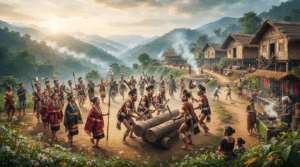
Festivals are the heart and soul of Nagaland’s cultural identity. Every major tribe in the state celebrates its own traditional festivals, reflecting centuries-old customs, agricultural practices, folklore, and spiritual beliefs. These festivals are marked by colourful attire, traditional dances, folk music, indigenous games, feasting, and community gatherings. They strengthen social bonds and preserve the unique cultural heritage of the Naga people.
While each tribe has its own distinctive celebrations, the Hornbill Festival has emerged as the state’s most famous cultural event, bringing together all major tribes on a single platform to showcase Nagaland’s rich traditions.
Major Festivals of Nagaland
| Festival | Celebrating Tribe | Usual Month | Significance |
|---|---|---|---|
| Hornbill Festival | All Naga Tribes | December | Celebration of Naga culture and heritage |
| Sekrenyi | Angami | February | Purification and renewal festival |
| Moatsu | Ao | May | Post-sowing festival celebrating friendship and prosperity |
| Tuluni | Sumi | July | Festival of thanksgiving and unity |
| Tokhu Emong | Lotha | November | Harvest festival promoting peace and reconciliation |
| Aoling | Konyak | April | Spring and New Year festival |
| Naknyülüm | Chang | July | Festival celebrating light, friendship, and community |
| Monyü | Phom | April | Agricultural and community festival |
Hornbill Festival
The Hornbill Festival is the largest and most celebrated cultural festival in Nagaland. It is organised every year from 1st to 10th December at the Naga Heritage Village, Kisama, near Kohima. The festival is named after the Great Indian Hornbill, a bird that holds cultural significance for many Naga tribes.
The festival showcases:
- Traditional tribal dances
- Folk music performances
- Indigenous sports
- Naga cuisine
- Handicraft exhibitions
- Traditional games
- Cultural processions
- Rock music concerts
- Adventure activities
- Local art and craft displays
Often referred to as the “Festival of Festivals,” the Hornbill Festival attracts thousands of visitors from across India and around the world, making it one of Northeast India’s premier tourism events.
Sekrenyi Festival
Sekrenyi is the traditional festival of the Angami Tribe and is celebrated in February. It is a purification festival that symbolises spiritual cleansing, renewal, and preparation for the agricultural season.
The celebrations include:
- Traditional rituals
- Folk songs
- Community feasts
- Indigenous dances
- Cultural ceremonies
- Family gatherings
Sekrenyi reflects the Angami community’s respect for tradition, unity, and harmony with nature.
Nagaland’s festivals are deeply connected with agriculture, seasonal changes, community life, and tribal traditions. Most celebrations mark important stages of the farming cycle, such as sowing, harvesting, or the beginning of a new year. These festivals provide opportunities for families and villages to come together through music, dance, traditional games, feasts, and religious ceremonies. They also play a significant role in preserving the cultural identity of each tribe for future generations.
Other Major Tribal Festivals
Moatsu Festival
Moatsu is celebrated by the Ao Tribe during May, after the completion of sowing activities. The festival symbolises friendship, unity, and gratitude for a successful agricultural season.
Major highlights include:
- Community feasts
- Traditional folk dances
- Singing competitions
- Bonfire gatherings
- Exchange of gifts
- Cultural performances
Tuluni Festival
The Tuluni Festival is celebrated by the Sumi Tribe in July. It is one of the most important harvest-related festivals and represents prosperity, thanksgiving, and social harmony.
During Tuluni, people participate in:
- Traditional feasts
- Rice beer ceremonies
- Folk songs
- Cultural dances
- Community gatherings
- Family celebrations
Tokhu Emong Festival
Tokhu Emong is the harvest festival of the Lotha Tribe, celebrated in November after the harvest season.
The festival is known for:
- Sharing traditional meals
- Strengthening friendships
- Community reconciliation
- Exchange of gifts
- Folk music and dances
- Village celebrations
Aoling Festival
The Aoling Festival is celebrated by the Konyak Tribe in April to welcome the traditional New Year and the arrival of spring.
The celebrations include:
- Colourful cultural dances
- Traditional songs
- Community feasts
- Ceremonial rituals
- Tribal games
- Display of traditional attire
Importance of Festivals
Festivals in Nagaland are more than cultural celebrations—they are a living expression of the state’s heritage and community values. They help preserve tribal languages, customs, music, dance forms, handicrafts, and oral traditions while promoting unity among different communities.
The growing popularity of these festivals has also strengthened tourism, providing visitors with an opportunity to experience Nagaland’s vibrant traditions, delicious cuisine, and warm hospitality. Together, these celebrations showcase the cultural richness of Nagaland and continue to strengthen the identity of its diverse tribal communities.

Famous Food of Nagaland
Nagaland offers one of the most distinctive and flavourful cuisines in India. Traditional Naga food is known for its simple cooking methods, fresh local ingredients, smoked meats, fermented foods, aromatic herbs, and fiery chillies. Unlike many other Indian cuisines, Naga dishes use very little oil and rely on natural flavours, bamboo shoots, fermented soybeans, local spices, and indigenous vegetables.
Rice is the staple food of Nagaland and is served with a variety of meat, fish, vegetable, and bamboo shoot preparations. The cuisine varies slightly among different tribes, but the emphasis on fresh, seasonal, and locally sourced ingredients remains common across the state.
Popular Dishes of Nagaland
| Dish | Main Ingredients | Description |
|---|---|---|
| Smoked Pork with Bamboo Shoot | Pork, bamboo shoot | Signature Naga dish with smoky flavour |
| Galho | Rice, vegetables, meat | Traditional one-pot meal |
| Axone | Fermented soybean | Popular condiment and flavouring ingredient |
| Anishi | Dried colocasia leaves | Traditional fermented delicacy |
| Bamboo Shoot Curry | Bamboo shoots, vegetables or meat | Mildly tangy traditional curry |
| Fish in Bamboo Stem | Fresh fish, bamboo stem | Traditional slow-cooked fish preparation |
| Dry Pork Curry | Smoked pork, local spices | Rich tribal meat dish |
| Sticky Rice | Glutinous rice | Common festive and daily food |
Smoked Pork with Bamboo Shoot
One of the most iconic dishes of Nagaland is Smoked Pork with Bamboo Shoot. The pork is traditionally smoked over a wood fire, giving it a rich smoky aroma before being cooked with fresh or fermented bamboo shoots and local chillies.
The dish is famous for:
- Smoky flavour
- Tender meat
- Minimal use of oil
- Authentic tribal cooking style
- Rich nutritional value
It is commonly served with steamed rice and is considered a must-try dish for visitors exploring Naga cuisine.
Galho
Galho is a wholesome traditional one-pot meal prepared with rice, seasonal vegetables, herbs, and either pork or chicken. It resembles a comforting rice porridge and is enjoyed throughout the year.
Galho is valued because it is:
- Nutritious
- Easy to digest
- Rich in vegetables
- Prepared with fresh local ingredients
- Suitable for all age groups
It is often served during family meals and community gatherings, reflecting the simplicity and warmth of traditional Naga hospitality.
Nagaland’s cuisine reflects the close relationship between its people and nature. Fresh vegetables, wild herbs, bamboo shoots, fermented ingredients, smoked meat, river fish, and locally grown spices form the foundation of everyday meals. Traditional recipes have been passed down through generations, preserving the authentic flavours of Naga tribal communities. While each tribe has its own culinary specialties, the emphasis on fresh, natural ingredients remains common throughout the state.
Axone (Fermented Soybean)
Axone, also known as fermented soybean, is one of the most iconic ingredients in Naga cuisine. It has a strong aroma and a distinctive flavour that enhances a variety of dishes, particularly pork, chicken, and vegetable preparations.
Axone is valued because it:
- Adds a rich umami flavour
- Is naturally fermented
- Contains beneficial nutrients
- Is widely used across many Naga tribes
- Represents a traditional method of food preservation
Today, Axone has gained popularity beyond Nagaland and is increasingly featured in restaurants across India.
Anishi
Anishi is a traditional delicacy prepared from fermented and sun-dried colocasia (taro) leaves. The leaves are processed into cakes and later cooked with pork or vegetables to create a nutritious dish with a unique earthy flavour.
Anishi is appreciated for its:
- Traditional preparation method
- Distinctive taste
- Long shelf life
- Nutritional value
- Cultural significance
Bamboo Shoot Dishes
Fresh and fermented bamboo shoots are widely used in Nagaland. They are combined with pork, fish, chicken, or vegetables to create mildly tangy and aromatic dishes. Bamboo shoots are also valued for their nutritional benefits, including dietary fibre, vitamins, and minerals.
Other popular foods enjoyed across Nagaland include:
- Sticky rice
- Fish cooked in bamboo stems
- Dry smoked pork curry
- Boiled seasonal vegetables
- Fresh river fish
- Local chilli chutneys
- Wild edible herbs
- Traditional rice-based beverages during festivals
Culinary Heritage of Nagaland
Food in Nagaland is more than nourishment—it reflects the traditions, agricultural practices, and community life of its tribal societies. Meals are often prepared using age-old cooking techniques such as smoking, boiling, fermenting, and slow cooking, which preserve both flavour and nutrition.
Visitors to Nagaland have the opportunity to experience a cuisine that is authentic, wholesome, and deeply rooted in local culture. From the famous smoked pork with bamboo shoots to fermented delicacies like Axone and Anishi, the state’s culinary traditions offer a unique gastronomic journey that distinguishes Nagaland from every other region of India.
Top Tourist Places in Nagaland
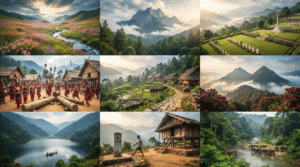
Nagaland is one of Northeast India’s most captivating travel destinations, offering a perfect blend of breathtaking landscapes, vibrant tribal culture, rich history, and diverse wildlife. From picturesque hill stations and scenic valleys to traditional villages and wildlife sanctuaries, the state provides unforgettable experiences for nature lovers, adventure enthusiasts, photographers, and cultural explorers. Every destination reflects the unique heritage and natural beauty that make Nagaland a remarkable place to visit.
Top Tourist Attractions in Nagaland
| Tourist Place | District | Famous For |
|---|---|---|
| Kohima | Kohima | Capital city, War Cemetery, Heritage |
| Dzukou Valley | Kohima | Trekking, seasonal flowers, scenic landscapes |
| Kisama Heritage Village | Kohima | Hornbill Festival, tribal culture |
| Khonoma Village | Kohima | Green Village, community conservation |
| Japfu Peak | Kohima | Trekking, panoramic views, rhododendrons |
| Mokokchung | Mokokchung | Ao tribal culture and traditions |
| Mon | Mon | Konyak tribal heritage |
| Intanki National Park | Peren | Wildlife and biodiversity |
| Shilloi Lake | Meluri | Natural freshwater lake |
| Dimapur | Chümoukedima/Dimapur | Gateway to Nagaland, shopping, history |
Kohima
Kohima, the capital city of Nagaland, is one of the state’s most visited tourist destinations. Surrounded by rolling hills and lush forests, it beautifully combines historical landmarks, cultural attractions, and modern urban life.
Major attractions in Kohima include:
- Kohima War Cemetery
- Nagaland State Museum
- Kisama Heritage Village
- Local markets
- Cathedral Church
- Traditional Naga architecture
- Scenic viewpoints
Kohima also serves as the main gateway to many nearby tourist attractions, including Dzukou Valley and Japfu Peak.
Dzukou Valley
Located on the border of Nagaland and Manipur, Dzukou Valley is widely regarded as one of the most beautiful valleys in India. Famous for its rolling green meadows, crystal-clear streams, and colourful seasonal flowers, the valley attracts trekkers and nature lovers from around the world.
Highlights of Dzukou Valley include:
- Spectacular trekking trails
- Seasonal wildflowers
- Dzukou Lily (found only in this region)
- Panoramic mountain views
- Camping opportunities
- Sunrise and sunset viewpoints
The valley is especially beautiful during the monsoon and post-monsoon months when the landscape is covered with lush greenery and blooming flowers.
Nagaland offers an incredible variety of travel experiences, from heritage villages and mountain peaks to serene lakes and wildlife-rich forests. Each destination reflects the state’s unique blend of natural beauty, tribal traditions, and historical significance. Whether visitors seek adventure, cultural immersion, photography, or peaceful retreats, Nagaland has attractions that cater to every type of traveller.
Kisama Heritage Village
Located about 12 km from Kohima, Kisama Heritage Village is one of Nagaland’s most iconic cultural destinations. It serves as the venue for the world-famous Hornbill Festival, where all major Naga tribes come together to celebrate their customs, music, dances, cuisine, and handicrafts.
Major attractions include:
- Traditional tribal morungs (youth dormitories)
- Cultural performances
- Folk music and dance shows
- Handicraft exhibitions
- Authentic Naga cuisine
- Adventure activities during the Hornbill Festival
The village provides visitors with an excellent opportunity to experience the rich cultural diversity of Nagaland in one place.
Khonoma Village
Khonoma, located around 20 km from Kohima, is popularly known as India’s First Green Village. It is internationally recognised for its successful community-based conservation efforts and sustainable tourism practices.
Highlights of Khonoma include:
- Traditional Angami architecture
- Terraced paddy fields
- Eco-tourism initiatives
- Birdwatching opportunities
- Trekking trails
- Historical significance related to the Anglo-Naga conflicts
Khonoma is an ideal destination for travellers interested in rural tourism, conservation, and authentic tribal experiences.
Japfu Peak
Standing at an elevation of approximately 3,048 metres, Japfu Peak is the second-highest peak in Nagaland. The mountain is famous for its breathtaking trekking routes, panoramic views, dense forests, and vibrant rhododendron blooms.
Visitors can enjoy:
- Challenging trekking adventures
- Sunrise viewpoints
- Mountain photography
- Rich biodiversity
- Seasonal wildflowers
- Peaceful natural surroundings
The peak is also known for the world’s tallest rhododendron tree, recognised by the Guinness World Records.
Other Must-Visit Attractions
In addition to the destinations above, Nagaland offers several remarkable places worth exploring:
- Mokokchung – Cultural centre of the Ao Tribe
- Mon – Home of the Konyak Tribe and traditional heritage
- Shilloi Lake – Picturesque natural freshwater lake surrounded by hills
- Intanki National Park – Rich wildlife and tropical forests
- Dimapur – Gateway to Nagaland, shopping centres, and historical attractions
The diverse tourist destinations of Nagaland offer unforgettable experiences that combine spectacular landscapes, vibrant tribal culture, adventure, wildlife, and warm hospitality. From the scenic beauty of Dzukou Valley to the cultural richness of Kisama and the conservation success of Khonoma, every corner of Nagaland promises memorable journeys for travellers from across the world.
Transport in Nagaland
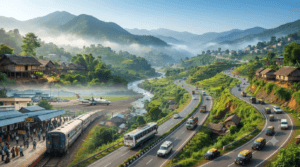
Transport plays a vital role in connecting Nagaland’s hilly terrain, remote villages, major towns, and neighbouring states. Although the state’s mountainous landscape presents unique challenges, continuous improvements in road infrastructure, railway connectivity, and air services have significantly enhanced accessibility over the years. Today, Nagaland is well connected with the rest of India through highways, railways, and air transport, making travel easier for residents, tourists, and businesses.
Road Transport
Roadways are the primary mode of transportation in Nagaland. A network of National Highways, State Highways, district roads, and rural roads connects important cities, towns, and villages across the state.
Major national highways serving Nagaland include:
| National Highway | Connects | Importance |
|---|---|---|
| NH-29 | Dimapur – Chümoukedima – Kohima | Main highway linking the commercial hub with the capital |
| NH-2 | Kohima – Mokokchung – Tuensang | Connects central and eastern districts |
| NH-202 | Mokokchung – Tuensang – Kiphire | Provides access to eastern Nagaland |
| NH-702 | Mokokchung – Wokha | Important regional highway |
| NH-702D | Dimapur – Niuland – Zunheboto | Connects western districts |
Road transport services include:
- Nagaland State Transport (NST) buses
- Private buses
- Shared taxis
- Tourist taxis
- Intercity cabs
- Local auto-rickshaws in selected towns
Road journeys also provide travellers with scenic views of lush forests, rolling hills, terraced fields, and picturesque valleys.
Railway Connectivity
Rail transport in Nagaland is limited but continues to improve. Dimapur Railway Station is the state’s principal railway station and serves as the main rail gateway to Nagaland.
Key features include:
- Direct trains to Guwahati
- Connectivity with Kolkata
- Links to New Delhi
- Services to Dibrugarh
- Connections to other major Indian cities
The ongoing railway expansion projects aim to improve connectivity between Dimapur and Kohima, further strengthening transportation infrastructure within the state.
Air Connectivity
Air travel is the fastest way to reach Nagaland. Dimapur Airport is the state’s only commercial airport and connects Nagaland with several major Indian cities.
Regular flight services are available to destinations such as:
- Kolkata
- Guwahati
- Delhi (via connecting flights)
- Other major cities through connecting services
From Dimapur Airport, travellers can easily reach Kohima and other parts of the state by taxi or bus.
Nagaland’s transport network continues to expand through infrastructure development, improving connectivity between urban centres, remote villages, and neighbouring states. Better roads, railway expansion, and upgraded public transport services have made travel more convenient for residents, tourists, traders, and businesses. Despite the state’s mountainous terrain, transportation has become increasingly efficient with ongoing government initiatives.
Public Transport
Public transport is an important mode of travel for people across Nagaland. Both government-operated and private transport services connect major towns and district headquarters.
Common public transport options include:
- Nagaland State Transport (NST) buses
- Private bus operators
- Shared taxis
- Tourist taxis
- Rental cars
- Local taxi services
- Two-wheeler rentals in selected towns
Shared taxis are among the most popular modes of transport because they provide regular services between cities and nearby villages.
Important Transport Hubs
| Transport Hub | Importance |
|---|---|
| Dimapur | Main commercial city, airport, railway station, road junction |
| Kohima | State capital and major road transport hub |
| Chümoukedima | Emerging commercial and logistics centre |
| Mokokchung | Gateway to central Nagaland |
| Tuensang | Major transport hub for eastern districts |
Infrastructure Development
The Government of India and the Government of Nagaland are implementing several infrastructure projects to modernise the state’s transport network.
Major initiatives include:
- Four-laning of important highways
- Construction of new bridges
- Upgradation of rural roads
- Expansion of the Dimapur–Kohima railway line
- Improvement of tourism roads
- Better connectivity to border areas
- Smart city infrastructure in Kohima
Travel Tips
Visitors planning a trip to Nagaland should keep the following points in mind:
- Road journeys may take longer due to the hilly terrain.
- Travel during daylight hours is generally recommended for mountain routes.
- During the monsoon season, check weather and road conditions before travelling.
- Book accommodation and transport in advance if visiting during the Hornbill Festival.
- Carry valid identification documents and follow local travel guidelines.
With continuous improvements in infrastructure and connectivity, Nagaland is becoming increasingly accessible to travellers from across India and abroad. Its efficient transport network, combined with breathtaking landscapes and rich cultural heritage, makes exploring the state both convenient and rewarding.
Shopping in Nagaland
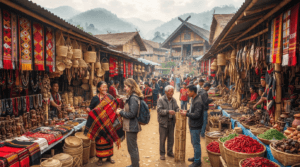
Shopping in Nagaland is a delightful experience that offers visitors a glimpse into the state’s rich tribal heritage and skilled craftsmanship. Local markets are filled with colourful handwoven textiles, bamboo and cane products, traditional jewellery, wood carvings, organic food items, and handmade souvenirs. Many of these products are crafted by local artisans using techniques that have been passed down through generations, making them unique keepsakes and excellent gifts.
From bustling city markets to village craft centres, shopping in Nagaland allows travellers to support local communities while taking home authentic tribal products that reflect the culture and traditions of the state.
Best Places for Shopping
| Shopping Destination | Location | Famous For |
|---|---|---|
| Naga Market | Kohima | Handicrafts, local produce, traditional products |
| Super Market | Kohima | Clothing, souvenirs, handicrafts |
| Hong Kong Market | Dimapur | Electronics, garments, accessories |
| New Market | Dimapur | Local products and household goods |
| Kisama Heritage Village | Kohima | Tribal handicrafts during Hornbill Festival |
| Mokokchung Local Market | Mokokchung | Ao tribal crafts and textiles |
Popular Handicrafts
Nagaland is famous for its beautiful handmade products created from natural materials such as bamboo, cane, wood, cotton, and beads.
Popular handicraft items include:
- Handwoven tribal shawls
- Bamboo baskets
- Cane furniture
- Wooden carvings
- Decorative masks
- Traditional bead necklaces
- Handcrafted home décor
- Bamboo kitchen utensils
These handicrafts showcase the artistic excellence of Naga artisans and are highly valued by tourists and collectors.
Traditional Textiles
Handloom weaving is one of the oldest and most respected traditional crafts in Nagaland. Every tribe has its own distinctive weaving style, colours, and patterns that represent its cultural identity.
Popular textile products include:
- Tribal shawls
- Traditional scarves
- Handwoven stoles
- Cotton fabrics
- Table runners
- Decorative wall hangings
These textiles are admired for their vibrant colours, intricate geometric designs, and exceptional craftsmanship, making them among the most sought-after souvenirs from Nagaland.
Shopping in Nagaland is more than buying souvenirs—it is an opportunity to experience the creativity, traditions, and craftsmanship of its tribal communities. Many products available in local markets are handmade using eco-friendly materials sourced from nearby forests and farms. Purchasing these items not only provides visitors with authentic keepsakes but also supports the livelihoods of local artisans and helps preserve traditional skills that have been passed down through generations.
Local Food Products
Nagaland is known for a variety of locally produced food items that make excellent gifts for visitors. These products reflect the unique flavours of Naga cuisine and are prepared using traditional methods.
Popular food products include:
- Organic Naga King Chilli (Raja Mircha)
- Bamboo shoot pickles
- Axone (fermented soybean)
- Anishi (fermented colocasia leaves)
- Organic honey
- Locally grown spices
- Handmade fruit preserves
- Traditional herbal tea
Many of these products are available at local markets, cooperative stores, and seasonal festivals such as the Hornbill Festival.
Handmade Jewellery and Decorative Items
Traditional Naga jewellery is admired for its bold colours and intricate designs. Skilled artisans create unique accessories using natural materials such as beads, shells, brass, cane, and wood.
Popular decorative items include:
- Beaded necklaces
- Tribal earrings
- Bracelets
- Bamboo lamps
- Wooden sculptures
- Decorative masks
- Cane baskets
- Handcrafted wall décor
Shopping Tips
To enjoy a memorable shopping experience in Nagaland, travellers should keep the following tips in mind:
- Purchase authentic handmade products from local artisans.
- Compare prices at different markets before buying.
- Carry cash, as digital payments may not be accepted everywhere.
- Respect local customs while shopping in tribal villages.
- Pack fragile handicrafts carefully for safe transportation.
- Visit markets during the Hornbill Festival for the widest variety of products.
Why Shop in Nagaland?
Shopping in Nagaland offers visitors a chance to take home unique handcrafted products that cannot easily be found elsewhere in India. From colourful tribal shawls and bamboo handicrafts to organic food products and traditional jewellery, every purchase reflects the state’s rich cultural heritage and skilled craftsmanship. By supporting local artisans and community markets, travellers contribute to the preservation of Nagaland’s traditional arts while enjoying an authentic and memorable shopping experience.
Best Time to Visit Nagaland
Nagaland is a year-round travel destination, with each season offering unique landscapes, cultural experiences, and outdoor activities. However, the best time to visit Nagaland is from October to May, when the weather is pleasant, the skies are generally clear, and most tourist attractions are easily accessible. This period is ideal for sightseeing, trekking, wildlife exploration, photography, and experiencing the state’s colourful tribal festivals.
Visitors planning their trip should choose the season based on their interests, whether they prefer adventure, nature, cultural events, or peaceful hill retreats.
Seasonal Weather Overview
| Season | Months | Temperature | Travel Experience |
|---|---|---|---|
| Winter | October – February | 4°C to 24°C | Best for sightseeing, festivals, and trekking |
| Summer | March – May | 16°C to 30°C | Pleasant weather for nature tourism and outdoor activities |
| Monsoon | June – September | 18°C to 28°C | Lush greenery, waterfalls, but occasional heavy rainfall |
Winter (October to February)
Winter is widely regarded as the best season to visit Nagaland. The weather remains cool, fresh, and comfortable, making it perfect for exploring the state’s mountains, valleys, villages, and wildlife sanctuaries.
Winter highlights include:
- Pleasant climate for sightseeing
- Excellent trekking conditions
- Clear mountain views
- Birdwatching opportunities
- Cultural festivals
- Photography and camping
The world-famous Hornbill Festival, held every year from 1st to 10th December, attracts thousands of visitors from India and abroad, making December one of the most popular months to visit Nagaland.
Summer (March to May)
Summer in Nagaland is mild compared to many other parts of India. The pleasant temperatures make it an ideal time for trekking, exploring tribal villages, visiting national parks, and enjoying outdoor adventures.
Popular summer activities include:
- Nature walks
- Mountain trekking
- Village tourism
- Wildlife photography
- Exploring waterfalls
- Visiting scenic valleys
The blooming forests and colourful landscapes during this season add to the natural beauty of the state, making it an excellent time for eco-tourism and family vacations.
Every season in Nagaland offers a unique travel experience. While winter is the most popular time for tourism, the monsoon transforms the hills into lush green landscapes, and summer provides pleasant weather for outdoor adventures. Choosing the right season depends on your travel interests, preferred activities, and the places you plan to visit.
Monsoon (June to September)
The monsoon season brings moderate to heavy rainfall across Nagaland, revitalising its forests, rivers, and valleys. The hills become exceptionally green, waterfalls flow at full strength, and the entire landscape appears fresh and vibrant.
Highlights of the monsoon season include:
- Lush green mountain scenery
- Spectacular waterfalls
- Refreshing climate
- Excellent opportunities for nature photography
- Peaceful travel with fewer tourists
However, travellers should note that continuous rainfall may occasionally lead to slippery roads, landslides, or travel delays in some hilly areas. It is advisable to check weather forecasts and road conditions before planning a trip during this season.
Best Time for Major Activities
| Activity | Best Time |
|---|---|
| Sightseeing | October to May |
| Hornbill Festival | 1–10 December |
| Trekking | October to April |
| Birdwatching | November to April |
| Wildlife Tourism | November to March |
| Photography | October to May |
| Nature Walks | March to May |
| Waterfall Visits | June to September |
Travel Tips
To make your visit enjoyable and comfortable, consider the following recommendations:
- Carry warm clothing during winter, especially for higher-altitude destinations.
- Wear comfortable trekking shoes for mountain trails and valley treks.
- Keep rain gear handy if travelling during the monsoon.
- Book hotels and transportation well in advance during the Hornbill Festival.
- Respect local customs and traditions while visiting villages and cultural events.
- Carry essential medicines and personal travel documents.
Why October to May Is the Ideal Time
The period from October to May combines pleasant weather, clear skies, colourful festivals, blooming landscapes, and excellent road conditions. Visitors can comfortably explore Kohima, Dzukou Valley, Khonoma Village, Japfu Peak, wildlife sanctuaries, and many other attractions without facing the challenges of heavy monsoon rains.
Whether you are interested in trekking through scenic valleys, experiencing tribal festivals, discovering local cuisine, or exploring Nagaland’s rich biodiversity, visiting during these months ensures the most rewarding travel experience. With its welcoming people, breathtaking landscapes, and vibrant cultural heritage, Nagaland promises unforgettable memories in every season.
How to Reach Nagaland
Nagaland is well connected to the rest of India through airways, railways, and roadways. Although the state is located in the mountainous region of Northeast India, modern transport infrastructure has made travel convenient for tourists, business travellers, and pilgrims. The main entry points to Nagaland are Dimapur Airport, Dimapur Railway Station, and the national highway network connecting the state with Assam and other neighbouring states.
Visitors can choose the most suitable mode of transport depending on their budget, travel time, and starting location.
Reach Nagaland by Air
Air travel is the fastest and most convenient way to reach Nagaland.
Dimapur Airport is the state’s only commercial airport and serves as the primary gateway for domestic air travel.
Major flight connections include:
| Departure City | Connectivity |
|---|---|
| Kolkata | Direct flights |
| Guwahati | Direct flights |
| Delhi | Connecting flights |
| Bengaluru | Connecting flights |
| Mumbai | Connecting flights |
| Hyderabad | Connecting flights |
After arriving at Dimapur Airport, travellers can hire taxis, shared cabs, or board buses to reach Kohima, which is approximately 70 km away.
Reach Nagaland by Train
Nagaland’s railway network is centred around Dimapur Railway Station, the state’s principal railhead.
Important train connections are available from:
- Guwahati
- Kolkata
- New Delhi
- Dibrugarh
- Tinsukia
- Silchar (via connecting routes)
Dimapur Railway Station is well connected with India’s railway network, making it a convenient option for travellers who prefer rail journeys.
The proposed expansion of the Dimapur–Kohima railway line is expected to further improve rail connectivity in the coming years.
Reach Nagaland by Road
Nagaland has an extensive road network connecting it with neighbouring states, particularly Assam. National Highways provide easy access to major towns and tourist destinations.
Popular road routes include:
- Guwahati → Dimapur → Kohima
- Jorhat → Mokokchung
- Golaghat → Dimapur
- Imphal → Kohima
- Shillong → Guwahati → Dimapur
Both government-operated and private buses, along with shared taxis and tourist vehicles, regularly operate on these routes.
Reaching Nagaland has become increasingly convenient with improvements in road infrastructure, better air connectivity, and the ongoing expansion of the railway network. Whether you are travelling from a nearby northeastern state or from a major Indian city, multiple transport options are available to suit different budgets and travel preferences.
Distance from Major Cities
| City | Approximate Distance | Preferred Mode of Travel |
|---|---|---|
| Guwahati | 350 km | Road / Train + Road |
| Dimapur | 70 km | Road |
| Imphal | 140 km | Road |
| Shillong | 430 km | Road |
| Kolkata | 1,350 km | Flight / Train |
| New Delhi | 2,100 km | Flight |
| Mumbai | 2,800 km | Flight |
| Hyderabad | 2,000 km | Flight |
Distances are approximate and may vary depending on the chosen route.
Local Transportation
After reaching Nagaland, visitors can easily travel within the state using various local transport options.
Popular local transport services include:
- Shared taxis
- Private taxis
- Tourist cabs
- Nagaland State Transport (NST) buses
- Private buses
- Rental vehicles
- Two-wheeler rentals (available in selected towns)
Shared taxis are the most widely used mode of transportation for travelling between towns and villages due to their affordability and frequent availability.
Travel Tips
To ensure a smooth and enjoyable journey, keep the following tips in mind:
- Book flight and hotel reservations well in advance during the Hornbill Festival season.
- Start long road journeys early in the morning to avoid travelling after dark in hilly regions.
- Carry valid government-issued identification at all times.
- Keep some cash for purchases in rural areas where digital payment facilities may be limited.
- Check weather forecasts before travelling during the monsoon season.
- Follow local traffic regulations and respect the customs of tribal communities.
Conclusion
Nagaland is easily accessible through a combination of air, rail, and road transport. Dimapur Airport, Dimapur Railway Station, and the state’s well-maintained highway network provide convenient entry points for visitors from across India. With improving infrastructure, scenic road journeys, and reliable public transport, travelling to and within Nagaland has become easier than ever.
Whether you are planning a cultural tour, an adventure trek, a wildlife expedition, or a visit to the famous Hornbill Festival, reaching Nagaland is the beginning of an unforgettable journey through one of India’s most beautiful and culturally diverse states.
Travel Tips for Visiting Nagaland
Planning your trip carefully can help you enjoy a safe, comfortable, and memorable experience in Nagaland. The state is known for its breathtaking landscapes, diverse tribal cultures, warm hospitality, and peaceful hill towns. While travelling in Nagaland is generally enjoyable, understanding local customs, weather conditions, and transportation options will make your journey smoother.
Whether you are visiting for adventure, sightseeing, wildlife, photography, or cultural festivals, these travel tips will help you make the most of your trip.
Plan Your Trip According to the Season
Selecting the right season is one of the most important aspects of planning a visit to Nagaland.
- October to May is considered the best time for tourism.
- December is the ideal month to experience the famous Hornbill Festival.
- March to May offers pleasant weather for trekking and nature walks.
- June to September brings lush greenery but also frequent rainfall and occasional travel disruptions.
Always check the weather forecast before your journey, especially if you plan to visit high-altitude areas or remote villages.
Respect Local Culture and Traditions
Nagaland is home to numerous tribal communities, each with its own customs, traditions, languages, and festivals. Visitors are encouraged to respect local culture throughout their stay.
Keep these points in mind:
- Dress modestly while visiting villages and religious places.
- Always ask permission before photographing local people.
- Respect traditional ceremonies and cultural events.
- Avoid littering in villages and natural areas.
- Follow instructions provided by local guides and community leaders.
Showing respect for local traditions helps create meaningful interactions with the people of Nagaland.
Carry Essential Travel Items
Packing wisely ensures a more comfortable journey, especially when travelling to hilly regions.
Recommended items include:
- Comfortable walking or trekking shoes
- Warm clothing during winter
- Raincoat or umbrella during the monsoon
- Personal medicines
- Reusable water bottle
- Power bank
- Flashlight
- Valid government-issued identification
If you plan to trek or camp, carry additional outdoor gear suitable for mountain conditions.
A well-planned journey allows visitors to enjoy Nagaland’s scenic landscapes, vibrant tribal culture, and unique traditions with confidence. Following a few practical travel guidelines can help ensure a safe, comfortable, and environmentally responsible trip while respecting the customs of local communities.
Safety Tips
Nagaland is generally a welcoming destination for tourists. However, following basic safety precautions will make your visit more enjoyable.
Keep these safety tips in mind:
- Avoid travelling on remote mountain roads late at night.
- Follow the advice of local authorities and experienced guides.
- Keep emergency contact numbers easily accessible.
- Store important documents and valuables securely.
- Stay informed about local weather conditions before heading to remote areas.
- Use licensed taxis and registered tour operators whenever possible.
Responsible Tourism
Responsible tourism helps preserve Nagaland’s natural beauty and rich cultural heritage for future generations.
Visitors are encouraged to:
- Avoid using single-use plastic whenever possible.
- Dispose of waste only in designated bins.
- Respect wildlife and avoid disturbing animals in protected areas.
- Support local artisans by purchasing authentic handmade products.
- Stay on marked trekking trails to protect fragile ecosystems.
- Respect the traditions and privacy of tribal communities.
By practising responsible tourism, travellers contribute to sustainable development while helping protect Nagaland’s unique environment and cultural identity.
Useful Travel Information
| Travel Item | Recommendation |
|---|---|
| Clothing | Carry light cotton clothes in summer and warm woollen clothes in winter |
| Footwear | Wear comfortable trekking or walking shoes |
| Payments | Carry both cash and digital payment options |
| Mobile Network | Network coverage is good in towns but may be limited in remote villages |
| Health | Carry a personal first-aid kit and prescribed medicines |
| Photography | Seek permission before photographing local people or cultural ceremonies |
Final Travel Advice
Nagaland offers an unforgettable blend of spectacular landscapes, vibrant festivals, fascinating tribal traditions, delicious cuisine, and warm hospitality. Whether you are trekking through the picturesque Dzukou Valley, exploring historic villages, attending the world-famous Hornbill Festival, or discovering local handicrafts, thoughtful planning will enhance your travel experience.
Respect local customs, travel responsibly, and embrace the diverse culture of the Naga tribes. With proper preparation and an open mind, your journey through Nagaland will be rewarding, memorable, and filled with authentic experiences that showcase one of India’s most captivating destinations.
Interesting Facts About Nagaland
Nagaland is one of India’s most fascinating states, known for its breathtaking mountain landscapes, vibrant tribal heritage, colourful festivals, rich biodiversity, and unique traditions. Often referred to as the “Land of Festivals,” the state offers countless interesting facts that make it unlike any other destination in India. From its diverse tribal communities to its world-famous cultural celebrations, Nagaland continues to attract travellers, researchers, photographers, and nature lovers from around the world.
Quick Facts About Nagaland
| Fact | Details |
|---|---|
| Statehood | Became the 16th state of India on 1 December 1963 |
| Capital | Kohima |
| Largest City | Dimapur |
| Official Language | English |
| Number of Districts | 17 |
| Major Tribes | Angami, Ao, Sumi, Lotha, Konyak, Chakhesang, Chang, Phom, Sangtam, Yimkhiung and others |
| State Animal | Mithun (Gayal) |
| State Bird | Blyth’s Tragopan |
| State Tree | Alder |
| State Flower | Rhododendron |
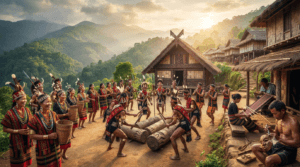
Unique Cultural Identity
Nagaland is home to numerous indigenous tribes, each preserving its own language, customs, traditional attire, music, dances, and festivals. Every tribe celebrates its cultural identity through colourful ceremonies, community feasts, and handcrafted ornaments.
Unlike many other Indian states, English serves as the official language, making communication easier for visitors from different parts of the country and abroad.
The Land of Festivals
Nagaland is popularly known as the “Land of Festivals” because almost every tribe celebrates traditional festivals throughout the year. These festivals are closely connected to agriculture, community life, and ancestral traditions.
Some of the state’s most famous festivals include:
- Hornbill Festival
- Sekrenyi Festival
- Moatsu Festival
- Tokhu Emong Festival
- Tuluni Festival
- Aoling Festival
- Naknyulem Festival
- Monyü Festival
These celebrations feature traditional dances, folk music, indigenous sports, local cuisine, and colourful tribal costumes, providing visitors with an unforgettable cultural experience.
Home to the Famous Hornbill Festival
The Hornbill Festival, organised annually from 1st to 10th December at Kisama Heritage Village near Kohima, is one of India’s largest cultural festivals. It brings together all major Naga tribes on a single platform to showcase their traditions, music, dances, handicrafts, food, and indigenous games.
The festival attracts thousands of domestic and international tourists every year, making it one of Northeast India’s most significant tourism events.
Nagaland is a land of extraordinary natural beauty, remarkable biodiversity, and centuries-old traditions. Beyond its famous festivals and tribal culture, the state is filled with fascinating facts that make it one of the most unique destinations in India. From its rare wildlife and sustainable farming practices to its colourful handicrafts and scenic mountain landscapes, Nagaland continues to surprise visitors with its diversity and charm.
Amazing Facts About Nagaland
- Nagaland is home to 16 officially recognised major tribes, along with several sub-tribes, each having its own language, customs, and traditional attire.
- Dzukou Valley, located on the Nagaland–Manipur border, is renowned for its breathtaking seasonal flowers and is often called the “Valley of Flowers of the Northeast.”
- The Mithun (Gayal), the state animal, holds great cultural and economic importance among many Naga tribes.
- Nagaland is one of the few Indian states where English is the official language, making communication convenient for visitors.
- The state is known for its eco-friendly bamboo and cane handicrafts, which are admired across India.
- Traditional Naga shawls use distinctive colours and patterns that often represent the identity and heritage of individual tribes.
- The Hornbill Festival has earned international recognition for showcasing the rich cultural diversity of Nagaland.
- Nagaland’s forests are home to numerous rare birds, butterflies, orchids, and medicinal plants.
Did You Know?
| Did You Know? | Information |
|---|---|
| Highest Peak | Mount Saramati (3,841 metres) |
| Famous Valley | Dzukou Valley |
| Largest City | Dimapur |
| State Animal | Mithun (Gayal) |
| State Bird | Blyth’s Tragopan |
| State Tree | Alder |
| State Flower | Rhododendron |
| Popular Nickname | Land of Festivals |
Why Nagaland Is Unique
Nagaland stands out for its exceptional blend of natural beauty and cultural richness. Unlike many destinations, it offers visitors the opportunity to experience living tribal traditions, vibrant festivals, authentic village life, scenic trekking routes, diverse wildlife, and handcrafted art—all within a relatively compact geographical area.
The state’s welcoming communities, sustainable lifestyles, traditional architecture, and colourful cultural celebrations create an unforgettable travel experience. Whether exploring the picturesque Dzukou Valley, attending the Hornbill Festival, visiting heritage villages, or discovering local handicrafts and cuisine, every journey through Nagaland reveals something new and memorable.
Conclusion
Nagaland is much more than a scenic hill state—it is a destination where history, culture, adventure, and nature come together in perfect harmony. Its vibrant festivals, unique tribal heritage, breathtaking landscapes, and warm hospitality make it one of India’s most rewarding places to explore.
For travellers seeking authentic cultural experiences, mountain adventures, wildlife encounters, and unforgettable memories, Nagaland remains one of the finest destinations in Northeast India. Every visit offers a deeper appreciation of the state’s traditions, biodiversity, and the resilient spirit of its people.
UNESCO World Heritage Sites in Nagaland
Although Nagaland does not currently have any UNESCO World Heritage Sites, the state possesses an extraordinary wealth of cultural traditions, biodiversity, and natural landscapes that are of national and international significance. Its living tribal heritage, scenic mountain valleys, dense forests, and unique ecosystems make Nagaland one of India’s most culturally rich destinations.
Several locations in the state have the potential to gain greater international recognition in the future because of their outstanding natural beauty and cultural importance.
UNESCO Status of Nagaland
| Category | Status |
|---|---|
| UNESCO World Heritage Sites | None |
| UNESCO Cultural World Heritage Sites | None |
| UNESCO Natural World Heritage Sites | None |
| UNESCO Intangible Cultural Recognition | Various traditional practices receive national and international appreciation, though no state-wide UNESCO inscription currently exists |
Heritage Attractions of International Importance
Even without UNESCO World Heritage status, Nagaland is home to several remarkable destinations that attract visitors from around the world.
Some of the most significant heritage attractions include:
- Dzukou Valley
- Kisama Heritage Village
- Khonoma Green Village
- Mount Saramati
- Japfu Peak
- Intanki National Park
- Traditional tribal villages
- Historic World War II sites around Kohima
Why Nagaland’s Heritage Is Special
Nagaland’s heritage is unique because it combines living tribal traditions with spectacular natural landscapes. Unlike monuments preserved only as historical sites, many Naga customs, festivals, crafts, music, dances, and community practices continue to be actively followed today.
Important features of Nagaland’s heritage include:
- Rich tribal diversity
- Traditional village governance systems
- Indigenous architecture
- Colourful festivals
- Handwoven textiles
- Bamboo and cane craftsmanship
- Community-based conservation
- Sustainable agricultural practices
Conservation and Sustainable Tourism
The Government of Nagaland and local communities are actively working to preserve the state’s cultural and natural heritage. Community participation plays a vital role in protecting forests, wildlife habitats, traditional villages, and indigenous knowledge.
Visitors can contribute to conservation by:
- Respecting local customs and traditions.
- Supporting local artisans by purchasing authentic handmade products.
- Avoiding littering in forests and tourist destinations.
- Following designated trekking routes.
- Respecting wildlife and protected areas.
- Promoting responsible and sustainable tourism.
Although Nagaland does not yet have a UNESCO World Heritage Site, its remarkable landscapes, vibrant tribal culture, and living traditions make it one of India’s most distinctive heritage destinations. Every visit offers an opportunity to experience authentic cultural diversity while supporting the preservation of this unique legacy.
Famous Personalities of Nagaland
Nagaland has produced many distinguished personalities who have made significant contributions in the fields of politics, literature, music, sports, social service, education, entrepreneurship, and public administration. Their achievements have brought recognition to the state at the national and international levels while inspiring future generations of Nagas to excel in diverse fields.
These personalities reflect the determination, creativity, and cultural pride of the people of Nagaland.
Notable Personalities of Nagaland
| Personality | Field | Contribution |
|---|---|---|
| Dr. S. C. Jamir | Politics | Former Chief Minister of Nagaland and former Governor of several Indian states |
| Neiphiu Rio | Politics | Long-serving Chief Minister of Nagaland and an influential political leader |
| Temsüla Ao | Literature | Renowned writer, poet, academic, and recipient of the Padma Shri |
| Dr. Shürhozelie Liezietsu | Politics & Education | Former Chief Minister, educationist, and author |
| Abu Metha | Public Policy & Sports Administration | Advisor to the Chief Minister and active promoter of youth and sports initiatives |
| Nzan Humtsoe | Sports | National-level footballer representing Nagaland |
| Alobo Naga | Music | Popular singer, songwriter, and founder of the Alobo Naga & The Band |
| Tetseo Sisters | Folk Music | Internationally recognised music group promoting the traditional Li folk songs of Nagaland |
Contributions to Literature and Culture
Nagaland has a rich literary tradition preserved through oral storytelling, folklore, poetry, and modern writing. Authors and scholars from the state have played an important role in documenting tribal history, customs, and indigenous knowledge.
Major contributions include:
- Preservation of tribal folklore
- Promotion of indigenous languages
- Publication of poetry and novels
- Research on tribal traditions
- Cultural documentation
- Promotion of Naga identity through literature
These efforts have helped preserve the state’s cultural heritage for future generations.
Contributions to Music and Performing Arts
Music is an integral part of Naga culture, and many artists have gained recognition for blending traditional folk music with contemporary styles.
Important contributions include:
- Promotion of traditional folk songs
- Preservation of indigenous musical instruments
- Contemporary Naga rock and gospel music
- International cultural performances
- Youth music festivals
- Cultural exchange programmes
The Hornbill Festival and other cultural events provide a platform for local musicians, dancers, and performers to showcase Nagaland’s artistic excellence.
Inspiration for Future Generations
The achievements of Nagaland’s leaders, artists, writers, athletes, and social reformers continue to inspire young people across the state. Their dedication to education, culture, public service, and creativity demonstrates how local traditions can coexist with modern development.
By celebrating these remarkable individuals, Nagaland honours its rich heritage while encouraging future generations to contribute to the state’s progress and India’s cultural diversity.
Architecture & Historical Monuments of Nagaland
Nagaland’s architecture reflects the traditions, craftsmanship, and cultural identity of its tribal communities. Unlike many Indian states that are known for grand palaces or medieval forts, Nagaland is celebrated for its traditional tribal houses, ceremonial village gates, morungs (youth dormitories), memorial stones, and heritage villages. These structures showcase centuries of indigenous knowledge, sustainable building practices, and artistic expression.
The state’s historical monuments are closely connected with tribal history, World War II events, and the evolution of modern Nagaland. Together, they offer visitors a fascinating insight into the region’s rich cultural heritage.
Major Architectural and Historical Sites
| Site | Location | Significance |
|---|---|---|
| Kohima War Cemetery | Kohima | Memorial dedicated to Allied soldiers of World War II |
| Kisama Heritage Village | Near Kohima | Showcases traditional architecture of all major Naga tribes |
| Khonoma Heritage Village | Khonoma | India’s first Green Village, known for traditional Angami architecture |
| Longwa Village | Mon District | Traditional Konyak houses and village located on the India–Myanmar border |
| Ungma Village | Mokokchung District | One of the oldest Ao Naga settlements with preserved traditional architecture |
| Naga Heritage Complex | Kisama | Venue of the Hornbill Festival, featuring authentic tribal structures |
Traditional Naga Architecture
Traditional Naga architecture is designed to suit the region’s mountainous terrain and climatic conditions. Houses are primarily constructed using locally available materials such as bamboo, timber, cane, stone, and thatch.
Key features include:
- Large sloping roofs for efficient rainwater drainage
- Bamboo and wooden walls
- Handcrafted carvings and tribal motifs
- Spacious community courtyards
- Elevated wooden structures in some regions
- Decorative entrances featuring symbolic tribal artwork
Each tribe has its own distinctive architectural style, reflecting its history, beliefs, and way of life.
Morungs – Traditional Youth Dormitories
One of the most distinctive elements of Naga architecture is the Morung, a traditional community dormitory that historically served as a centre for education, social gatherings, and cultural training for young members of the tribe.
Morungs were traditionally used for:
- Teaching tribal customs and values
- Preserving folklore and oral history
- Training in craftsmanship and community responsibilities
- Conducting cultural performances
- Strengthening social unity
Today, reconstructed Morungs can be seen in heritage villages such as Kisama, where they help preserve and showcase Naga traditions.
World War II Heritage
Nagaland played a significant role during the Battle of Kohima in 1944, one of the most important campaigns of the Second World War. The Kohima War Cemetery stands as a tribute to the soldiers who lost their lives during the battle and is one of the most visited historical landmarks in the state.
The cemetery is renowned for its beautifully maintained gardens and the famous epitaph:
“When You Go Home, Tell Them of Us and Say, For Your Tomorrow, We Gave Our Today.”
This historic site serves as a place of remembrance and attracts visitors, historians, and military enthusiasts from around the world.
Religious Places in Nagaland
Nagaland is a land of deep spiritual faith and cultural diversity. The majority of the population follows Christianity, making it one of the most Christian-majority states in India. Alongside numerous churches, the state is also home to traditional sacred sites, Hindu temples, Buddhist monasteries, and places of worship that reflect its multicultural heritage. These religious places attract devotees, history enthusiasts, and tourists seeking peace, spirituality, and architectural beauty.
Major Religious Places in Nagaland
| Religious Place | Location | Significance |
|---|---|---|
| Kohima Cathedral (Mary Help of Christians Cathedral) | Kohima | One of the largest and most beautiful Catholic churches in Northeast India |
| Nagaland Baptist Church Council (NBCC) | Kohima | Prominent Christian institution representing Baptist churches across Nagaland |
| Dimapur Jain Temple | Dimapur | Well-known Jain temple admired for its colourful architecture |
| Kalibari Temple | Dimapur | Popular Hindu temple dedicated to Goddess Kali |
| Shiv Mandir | Dimapur | Revered Hindu temple dedicated to Lord Shiva |
| Rangapahar Reserve Area Churches | Near Dimapur | Historic churches serving local Christian communities |
Christianity in Nagaland
Christianity plays a central role in the social and cultural life of Nagaland. Baptist churches are especially influential and contribute significantly to education, healthcare, community welfare, and social development.
Key features of Christian life in Nagaland include:
- Sunday worship services across towns and villages
- Community prayer gatherings
- Gospel music and choir performances
- Christmas and Easter celebrations
- Church-led educational institutions
- Social welfare and community service programmes
The state’s churches are not only places of worship but also important centres of community life and cultural preservation.
Traditional Indigenous Beliefs
Before the spread of Christianity, the various Naga tribes followed indigenous spiritual traditions closely connected with nature, ancestors, and community customs. While Christianity is now the dominant religion, elements of traditional beliefs continue to be preserved through folklore, festivals, customary practices, and cultural ceremonies.
These traditions include:
- Respect for ancestral heritage
- Sacred forests and natural sites
- Harvest-related rituals
- Traditional community ceremonies
- Indigenous moral values and customs
Today, these cultural practices remain an important part of Nagaland’s identity and heritage.
Religious Harmony
Nagaland is known for its peaceful coexistence among people of different faiths. Churches, temples, and other places of worship contribute to an atmosphere of mutual respect and understanding. Festivals such as Christmas, Easter, Diwali, and other religious celebrations are observed with enthusiasm by different communities, reflecting the state’s spirit of unity in diversity.
Visitors are encouraged to dress modestly, maintain silence where appropriate, and respect local customs while visiting religious sites. Exploring these places offers not only spiritual enrichment but also valuable insights into Nagaland’s history, culture, and traditions.

GI Tagged Products of Nagaland
Nagaland is known for its rich agricultural heritage, traditional craftsmanship, and indigenous products that reflect the state’s unique cultural identity. Geographical Indication (GI) tags help protect products that possess qualities or a reputation linked to a specific geographical region. These tags preserve traditional knowledge, promote local economies, and ensure that authentic products receive national and international recognition.
Although the number of GI-tagged products from Nagaland is relatively limited compared to some other Indian states, its recognised products are highly valued for their quality, uniqueness, and cultural significance.
GI Tagged Products of Nagaland
| GI Tagged Product | Category | District/Region | Specialty |
|---|---|---|---|
| Naga Mircha (Naga King Chilli / Raja Mircha) | Agricultural Product | Across Nagaland | One of the world’s hottest chillies, known for its intense heat and distinctive flavour |
| Chakhesang Shawl | Handloom & Textile | Chakhesang tribal areas | Traditional handwoven shawl featuring distinctive tribal patterns and cultural motifs |
Naga Mircha (Naga King Chilli)
The Naga Mircha, also known as Naga King Chilli or Raja Mircha, is the most famous GI-tagged product of Nagaland. It is internationally recognised for its exceptional pungency and unique flavour.
Key features include:
- One of the hottest chillies in the world
- Rich aroma and smoky flavour
- Widely used in traditional Naga cuisine
- Cultivated using traditional farming methods
- Exported to various parts of India and overseas
- Used in pickles, chutneys, sauces, and spice blends
The cultivation of Naga Mircha provides an important source of income for many farmers across the state.
Chakhesang Shawl
The Chakhesang Shawl represents the rich handloom tradition of the Chakhesang tribe. Each shawl is woven using traditional techniques and features intricate patterns that reflect tribal history and identity.
Its notable characteristics include:
- Handwoven by skilled local artisans
- Distinctive geometric motifs
- Durable, high-quality cotton fabric
- Traditional colour combinations
- Symbol of tribal heritage and craftsmanship
Importance of GI Tags
Geographical Indication status provides several benefits to producers, artisans, and consumers.
Some of the major advantages include:
- Protects authentic regional products
- Prevents misuse of product names
- Encourages traditional craftsmanship
- Promotes rural employment
- Increases market value
- Supports exports and tourism
- Preserves indigenous knowledge for future generations
Nagaland’s GI-tagged products represent the state’s rich agricultural traditions and artistic excellence. By purchasing authentic GI-certified products, visitors not only take home genuine souvenirs but also contribute to the preservation of local heritage and the sustainable development of artisan and farming communities.

Education & Universities in Nagaland
Education plays a vital role in the social and economic development of Nagaland. Since attaining statehood in 1963, the state has made significant progress in expanding educational opportunities, improving literacy, and strengthening higher education. Today, Nagaland is home to universities, engineering colleges, medical institutions, teacher training colleges, and research centres that serve students from across Northeast India.
The state government, private institutions, and religious organisations have contributed significantly to the growth of the education sector by promoting quality learning, vocational training, and skill development.
Education at a Glance
| Feature | Details |
|---|---|
| Literacy Rate | Around 80% (as per recent official estimates) |
| Official Language of Education | English |
| School Education Board | Nagaland Board of School Education (NBSE) |
| Major University | Nagaland University |
| Medical Education | Nagaland Institute of Medical Sciences & Research (NIMSR) and other institutions |
| Technical Education | Engineering, Polytechnic, ITI, and professional colleges |
Major Universities and Higher Education Institutions
| Institution | Location | Specialisation |
|---|---|---|
| Nagaland University | Lumami | Central University offering Arts, Science, Commerce, Agriculture, Engineering, and Research programmes |
| Nagaland Institute of Medical Sciences & Research (NIMSR) | Kohima | Medical education and healthcare training |
| St. Joseph University | Chümoukedima | Arts, Science, Commerce, Management, Law, and Research |
| ICFAI University, Nagaland | Chümoukedima | Management, Engineering, Law, Information Technology, and Professional Studies |
| School of Agricultural Sciences & Rural Development (SASRD), Nagaland University | Medziphema | Agriculture, Horticulture, and Rural Development |
School Education
School education in Nagaland is provided through government schools, private schools, missionary institutions, and residential schools. English is widely used as the medium of instruction, making education accessible to students from different linguistic backgrounds.
The school system includes:
- Pre-primary education
- Primary schools
- Upper primary schools
- High schools
- Higher secondary schools
- Vocational education programmes
The Nagaland Board of School Education (NBSE) conducts secondary and higher secondary examinations and plays a key role in maintaining academic standards across the state.
Skill Development and Vocational Education
To improve employment opportunities, Nagaland has introduced various skill development and vocational training programmes. These initiatives focus on preparing students and youth for careers in both traditional and modern industries.
Major areas of training include:
- Information Technology
- Hospitality and Tourism
- Agriculture and Horticulture
- Handloom and Handicrafts
- Healthcare
- Entrepreneurship
- Automotive Technology
- Electronics and Electrical Trades
These programmes encourage self-employment, innovation, and sustainable economic growth while supporting the state’s development goals.
Economy & Industries of Nagaland
Nagaland’s economy is primarily based on agriculture, horticulture, forestry, livestock, handicrafts, handloom, tourism, and small-scale industries. Over the years, the state has diversified its economy by promoting entrepreneurship, skill development, food processing, eco-tourism, and sustainable resource management. The rich natural resources, fertile land, and vibrant tribal craftsmanship contribute significantly to the livelihoods of its people.
The Government of Nagaland continues to encourage industrial growth through infrastructure development, investment promotion, and support for micro, small, and medium enterprises (MSMEs).
Economy at a Glance
| Sector | Major Contribution |
|---|---|
| Agriculture | Rice, maize, millets, pulses, vegetables |
| Horticulture | Pineapple, orange, banana, passion fruit, kiwi |
| Forestry | Bamboo, timber, medicinal plants |
| Livestock | Mithun, cattle, pigs, poultry |
| Handloom & Handicrafts | Tribal shawls, bamboo and cane products, wood carvings |
| Tourism | Eco-tourism, cultural tourism, adventure tourism |
| MSMEs | Food processing, weaving, furniture, handicrafts |
Agriculture
Agriculture is the backbone of Nagaland’s economy, providing employment to a large portion of the population. Both traditional farming and modern agricultural practices are followed across the state.
Major agricultural crops include:
- Rice
- Maize
- Millets
- Pulses
- Oilseeds
- Ginger
- Turmeric
- Vegetables
The traditional jhum (shifting) cultivation system continues in several areas, while terrace farming is practised in suitable hilly regions.
Horticulture
Nagaland has excellent climatic conditions for horticulture. The cultivation of fruits, spices, and plantation crops has become an important source of income for farmers.
Major horticultural products include:
- Pineapple
- Mandarin orange
- Kiwi
- Passion fruit
- Banana
- Large cardamom
- Black pepper
- Naga King Chilli (Raja Mircha)
Many of these products are supplied to markets across India and are also processed into value-added products.
Handloom and Handicrafts
Handloom weaving and handicrafts are among the oldest traditional industries in Nagaland. Skilled artisans produce high-quality products using bamboo, cane, wood, cotton, and natural fibres.
Popular products include:
- Tribal shawls
- Bamboo baskets
- Cane furniture
- Wooden carvings
- Traditional jewellery
- Decorative handicrafts
- Home décor items
These industries preserve the state’s cultural heritage while generating employment and supporting rural livelihoods.
Healthcare in Nagaland
Healthcare is an essential pillar of Nagaland’s development, with continuous efforts being made to improve medical infrastructure, public health services, disease prevention, and access to quality healthcare. The state government, in collaboration with the Government of India, has expanded hospitals, primary health centres, community health centres, and specialised medical institutions to provide better healthcare services across urban and rural areas.
Despite its mountainous terrain and scattered settlements, Nagaland continues to strengthen its healthcare system through improved medical education, digital health initiatives, vaccination programmes, and maternal and child healthcare services.
Healthcare at a Glance
| Healthcare Facility | Details |
|---|---|
| Major Government Medical Institution | Nagaland Institute of Medical Sciences & Research (NIMSR), Kohima |
| District Hospitals | Available in all districts |
| Community Health Centres (CHCs) | Provide specialised healthcare in rural regions |
| Primary Health Centres (PHCs) | Deliver basic healthcare services at village level |
| Ambulance Services | Available through government and emergency health programmes |
| Health Insurance | Ayushman Bharat – Pradhan Mantri Jan Arogya Yojana (PM-JAY) and state health initiatives |
Major Healthcare Institutions
Nagaland has established several healthcare institutions to provide quality medical services and improve public health.
Important healthcare facilities include:
- Nagaland Institute of Medical Sciences & Research (NIMSR), Kohima
- District Hospitals
- Community Health Centres (CHCs)
- Primary Health Centres (PHCs)
- Urban Primary Health Centres
- Private hospitals and nursing homes
- Diagnostic laboratories
These institutions offer services ranging from primary healthcare and emergency treatment to specialised medical care.
Public Health Programmes
The Government of Nagaland implements various public health programmes to improve the overall health of its citizens.
Major programmes include:
- Universal Immunisation Programme
- National Health Mission (NHM)
- Ayushman Bharat – PM-JAY
- Maternal and Child Health Services
- Tuberculosis Control Programme
- Malaria Prevention Programme
- HIV/AIDS Awareness and Treatment
- Nutrition and Anaemia Control Programmes
These initiatives focus on disease prevention, early diagnosis, improved healthcare access, and better health outcomes.
Medical Education
Medical education in Nagaland has expanded significantly with the establishment of modern institutions and training facilities.
The Nagaland Institute of Medical Sciences & Research (NIMSR) plays an important role in:
- Medical education
- Clinical training
- Healthcare research
- Specialist medical services
- Public health development
The institution contributes to strengthening the state’s healthcare workforce while improving access to advanced medical treatment.
Frequently Asked Questions (FAQs) About Nagaland
1. Where is Nagaland located?
Nagaland is a state in Northeast India. It shares international borders with Myanmar to the east and Indian states including Assam, Arunachal Pradesh, and Manipur.
2. What is the capital of Nagaland?
The capital city of Nagaland is Kohima, while Dimapur is the state’s largest commercial and transportation hub.
3. Which is the largest city in Nagaland?
Dimapur is the largest city and serves as the primary gateway to Nagaland by road, rail, and air.
4. What is the official language of Nagaland?
The official language of Nagaland is English. However, more than a dozen Naga tribal languages and dialects are spoken across the state.
5. Which festival is most famous in Nagaland?
The Hornbill Festival, celebrated every year from 1–10 December at Kisama Heritage Village near Kohima, is the most famous cultural festival in Nagaland.
6. What is Nagaland famous for?
- Rich tribal culture
- Hornbill Festival
- Dzukou Valley
- Mount Saramati
- Traditional handwoven shawls
- Bamboo and cane handicrafts
- Naga King Chilli (Naga Mircha)
- Unique indigenous cuisine
- Scenic mountain landscapes
7. Which is the highest peak in Nagaland?
Mount Saramati, standing at approximately 3,841 metres (12,602 feet) above sea level, is the highest peak in Nagaland.
8. What is the best time to visit Nagaland?
The ideal time to visit Nagaland is October to May, when the weather is pleasant for sightseeing, trekking, wildlife exploration, and cultural festivals.
9. Is Nagaland safe for tourists?
Yes. Nagaland is generally considered safe for tourists. Visitors should respect local customs, follow government travel advisories, and cooperate with local authorities while travelling.
10. What are the famous foods of Nagaland?
- Smoked Pork with Bamboo Shoot
- Axone (Fermented Soybean)
- Galho
- Bamboo Shoot Curry
- Anishi
- Sticky Rice
- Fresh river fish dishes
- Traditional smoked meat preparations
11. What are the major tourist attractions in Nagaland?
- Dzukou Valley
- Mount Saramati
- Kohima War Cemetery
- Kisama Heritage Village
- Khonoma Green Village
- Japfu Peak
- Intanki National Park
- Longwa Village
- Shilloi Lake
- Mokokchung
12. Which are the major GI-tagged products of Nagaland?
The state’s prominent GI-tagged products include:
- Naga Mircha (Naga King Chilli / Raja Mircha)
- Chakhesang Shawl
These products showcase Nagaland’s agricultural excellence and traditional handloom craftsmanship.
Conclusion
Nagaland is one of India’s most captivating states, where spectacular mountain landscapes, vibrant tribal traditions, rich biodiversity, and warm hospitality come together to create an unforgettable travel experience. From the mist-covered peaks of Mount Saramati and the breathtaking beauty of Dzukou Valley to the colourful celebrations of the Hornbill Festival, every corner of the state reflects a unique blend of nature, history, and culture.
The state’s rich tribal heritage, traditional architecture, handwoven textiles, bamboo handicrafts, delicious cuisine, and community-based way of life distinguish it from every other destination in the country. Visitors can explore peaceful villages, historic World War II sites, wildlife sanctuaries, scenic trekking routes, and lively local markets while experiencing the customs and traditions that have been preserved for generations.
Nagaland has also made steady progress in education, healthcare, tourism, infrastructure, agriculture, and sustainable development. Improved connectivity through roads, railways, and air transport has made the state increasingly accessible to domestic and international travellers. Government initiatives supporting eco-tourism, skill development, entrepreneurship, and cultural preservation continue to strengthen its economy while protecting its natural and cultural heritage.
Whether you are an adventure enthusiast, wildlife lover, photographer, history buff, or cultural explorer, Nagaland offers countless opportunities to discover something extraordinary. Every journey through the state reveals breathtaking scenery, authentic tribal experiences, vibrant festivals, and genuine hospitality that leave a lasting impression.
As tourism continues to grow, responsible travel remains essential. By respecting local customs, supporting indigenous artisans, protecting wildlife, and promoting sustainable tourism, visitors can contribute to preserving Nagaland’s remarkable heritage for future generations.
With its harmonious blend of tradition and modernity, Nagaland stands proudly as one of Northeast India’s most rewarding destinations. A visit to this remarkable state is not just a holiday—it is an opportunity to experience living traditions, breathtaking natural beauty, and the enduring spirit of the Naga people.
References
- Government of Nagaland – Official State Portal
- Nagaland State Profile – Government of Nagaland
- Nagaland Tourism – About Nagaland
- Department of Forests, Environment & Climate Change, Nagaland
- Nagaland Tourism – Official Website
- Census of India – Nagaland Census Data
- Department of Economics & Statistics, Nagaland